Latest News Updates

img
14 December 2025
PRESIDENT MUSEVENI PLEDGES SHS85 BILLION REVOLVING FUND FOR SALON OPERATORS

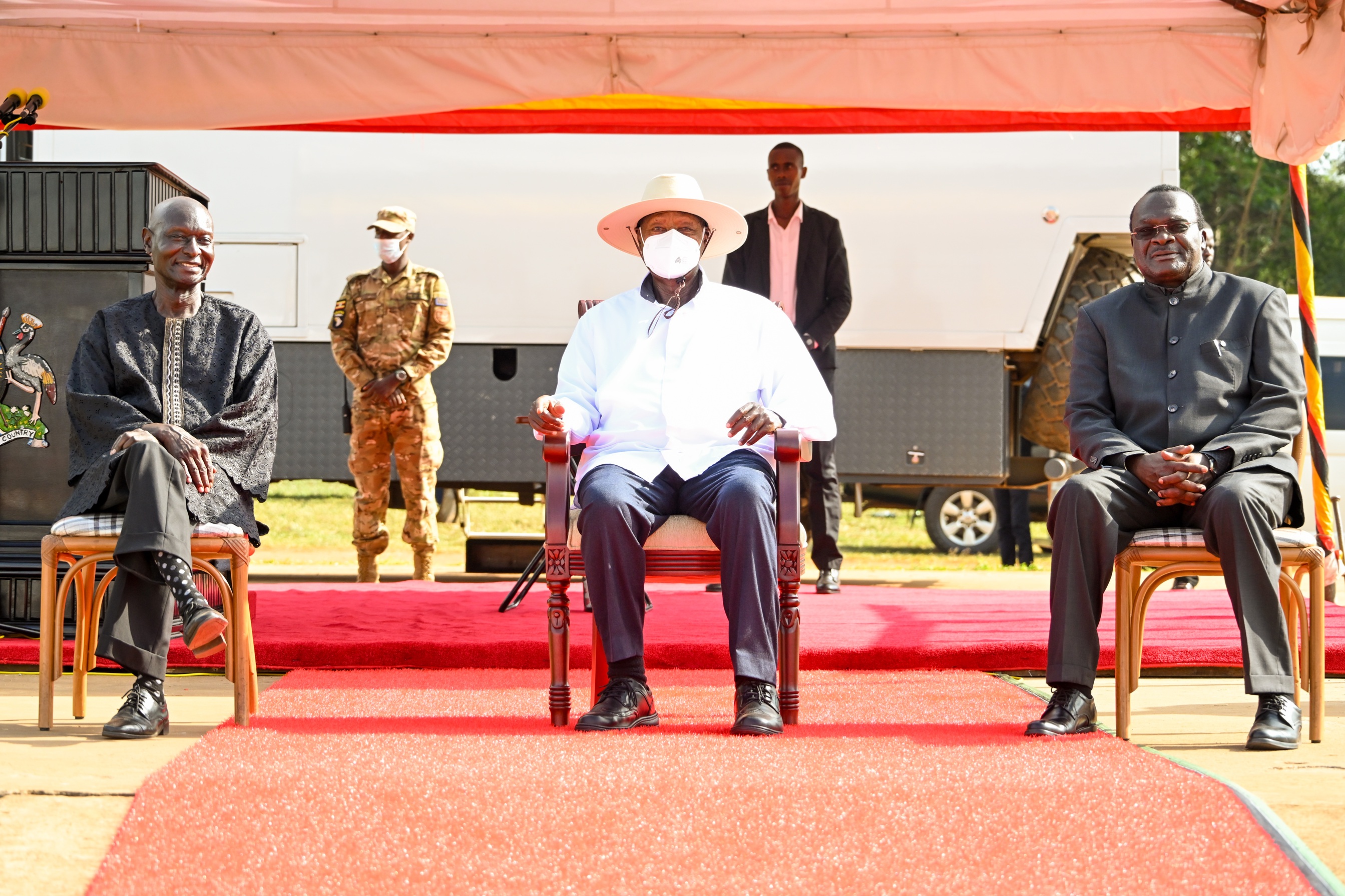
President Yoweri Kaguta Museveni has promised to support salon operators across the country with a revolving fund of Shs85 billion to boost their businesses. He made the commitment today at Kololo Ceremonial Grounds while officiating at the launch of the Federation of Uganda Salon Operators and Beauty Professionals. President Museveni congratulated salon operators for the vital services they provide to Ugandans, noting that their work plays a key role in society, especially as urbanisation increases and people become busier. He reflected on the colonial era when African identity and beauty were undermined, stressing that Africans were made to believe they were not beautiful and had to imitate Europeans. He said this mindset was defeated and Africans have since asserted their own beauty, which is appreciated in its diversity, particularly in the Great Lakes region. President Museveni welcomed the fact that salon operators are developing and defining their own beauty products, describing this as a positive step towards self-reliance. On financing, the President explained that the government will provide support through a revolving fund by allocating Shs100 million per SACCO annually. With about 850 SACCOs countrywide, he noted that this would amount to approximately Shs85 billion in a year. He said the revolving fund model has worked under the Parish Development Model because beneficiaries borrow the money, use it productively and repay it with minimal interest. The President added that salon operators have a unique business model compared to crop farmers under PDM, suggesting that instead of a two-year repayment period, salon operators could be given loans for one year, use the money and return it with a small interest. The Deputy Speaker of Parliament, Rt. Hon. Thomas Tayebwa, thanked the President for always remembering ordinary Ugandans, saying many leaders often overlook the poor. He also commended Gen. Salim Saleh and Operation Wealth Creation, noting that his office was among the first to engage and support the salon operators. Rt. Hon. Tayebwa further observed that funds for the salon industry and other groups are often provided for in the national budget but are not released by the responsible institutions, particularly the Microfinance Support Centre. The Minister of State for Youth and Children Affairs, Hon. Balaam Barugahara, noted that the informal sector includes not only salon operators but also other groups such as tailors and artisans operating in different parts of the country. He also urged the youth to continue supporting President Museveni, saying his leadership remains key to lifting Ugandans out of poverty. The Chairperson of the Federation of Uganda Salon Operators and Beauty Professionals, Mr. Kamanyire Celestine, thanked the President for prioritising grassroot entrepreneurs. He requested the President to formally launch their 850 SACCOs across the country, grant the federation a mandate to operate, and provide financial support of at least Shs100 million per SACCO, noting that each SACCO has more than 50 members. He also appealed for the establishment of a common user facility.

img
14 December 2025
PRESIDENT MUSEVENI MEETS INVESTORS FROM UAE'S SHARJAH CHAMBER OF COMMERCE AND INDUSTRY

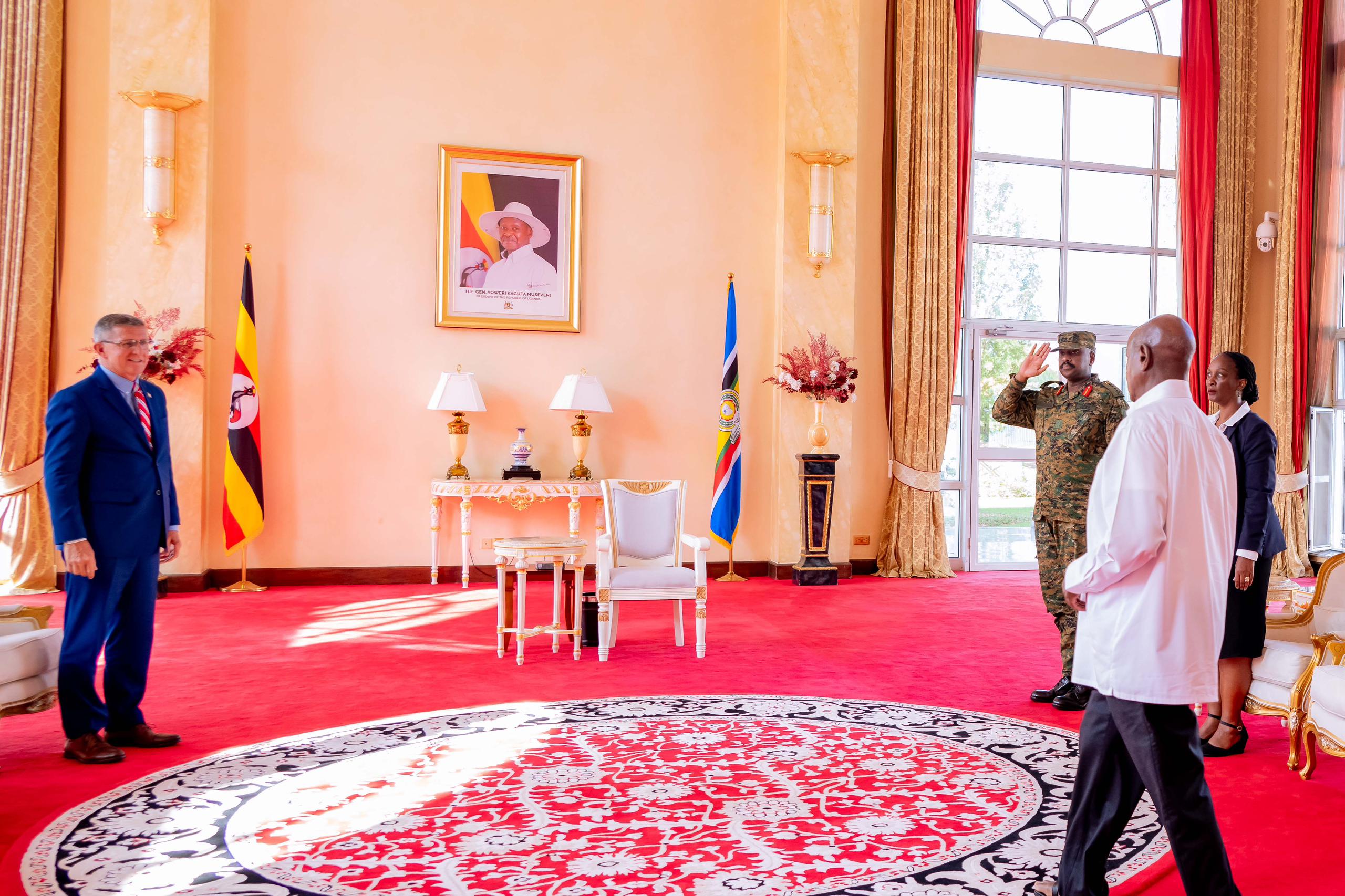
President Yoweri Kaguta Museveni today met a delegation of investors from the Sharjah Chamber of Commerce and Industry, United Arab Emirates (UAE), who expressed interest in boosting Uganda’s cargo transport sector through the construction of an inland port. Sharjah Chamber of Commerce and Industry was established by an Amiri decree issued in 1970 by His Highness the Ruler of Sharjah in order to effectively and vitally participate in the organization of economic life and the prosperity of its trade, industry, agricultural, digital and the professions sectors on all levels and in cooperation with the concerned establishments and bodies and local departments. The President met the investors at State Lodge, Nakasero and they were led by Mr. Farid Belbouab, the Chief Executive Officer of Gulftainer Co Ltd. During the meeting, the investors presented their proposal aimed at improving the handling of goods before and after arrival at dry ports, with the objective of lowering the cost of doing business and enhancing efficiency in regional trade. The investors informed the President that they are currently negotiating with the Government of Uganda and expect to finalise the first phase of the project within the next six months. President Museveni advised them to expedite the process. He also emphasised the importance of such infrastructure projects, noting that they create employment opportunities and increase the consumption of essential services such as electricity and water. “Uganda benefits from jobs as these projects employ many people, use electricity and water, and also stimulate local commerce,” President Museveni said. The President further observed that dry ports play a critical role in easing the movement of goods and should primarily focus on facilitating efficient logistics rather than taxation. He welcomed the initiative and pledged government support for its implementation. “I welcome the initiative and will support it,” President Museveni remarked. The meeting focused on enhancing trade facilitation, improving logistics infrastructure, and attracting investment into Uganda’s transport and storage sector as part of the broader efforts to promote regional integration and economic growth.

img
13 December 2025
“NOBODY WILL CREATE CHAOS HERE,” PRESIDENT MUSEVENI WARNS AS UGANDA HOLDS NATIONAL PRAYERS

President Yoweri Kaguta Museveni has assured that nobody will create chaos in Uganda because the National Resistance Movement (NRM) government has all the necessary infrastructure to ensure peace in the country. The President explained that many of the problems in Africa are caused by parasite groups backed by foreigners who are trying to create violence in countries like Uganda. “These groups are not part of the wealth creators, they don’t care, that's why you hear them talking of violence. You can’t start conflicts in your kitchen. Even if you have issues and you want to fight, you go into the compound and fight from there,” he warned. President Museveni, accompanied by the First Lady and Minister of Education and Sports, Maama Janet Museveni, made the remarks yesterday during the end of year national prayers held at State House, Entebbe. He assured that whoever tries to disrupt Uganda’s peace, will end up badly. “These groups are mainly pushed by foreigners to create chaos which of course will not happen in Uganda.” President Museveni also cautioned against sectarianism and called for peace, patriotism, Pan-Africanism and socio-economic transformation, describing them as pillars of Uganda’s continued growth. “I want to congratulate the religious people for forming the Inter-Religious Council, I think they formed it when NRM took over because the NRM rejected the bankruptcy of religious sectarianism. In the past, these religious groups were part of the problems in Uganda and part of the problem of Africa,” he remarked. According to the President, many African countries have been destroyed because of sectarianism. “When you come to me and you waste my time with sectarianism of religion or tribe, nkugambirawo sitani nvako [Satan, leave me alone].” President Museveni also highlighted some of the government’s interventions like the Parish Development Model (PDM) which he said have helped to strengthen the country’s economy. “We have got the basics here. We have food of all types as you can see, we have many of the industrial products which we used to import, they are now made here, the economy is strong,” he said. President Museveni further reiterated that corruption undermines service delivery and economic growth. “When we were preparing for our revolutionary movement, we said let administrators be there but let’s have our own elected people LC1 to LC5, Members of Parliament and all the other elected members. These are the ones to supervise and to watch for the interest of the population so that when the money comes in the area it should not be diverted,” he said. President Museveni also emphasised the importance of wealth creation as a cornerstone of Uganda’s progress. “This is an area of wealth creation and I'm very proud to belong to that culture. We depend on our wealth,” he said. President Museveni further assured Ugandans that the country’s economy was progressing. “Uganda is moving at a very high rate. I think this year we shall grow at 7 percent and when we start our oil production, we shall grow by double digits more than 10 percent. Therefore, the future is bright and I would like to appeal to everybody to stick to the values,” he noted. “We need to agree on those values. We the NRM have said patriotism, why? Love Uganda because you need it for your own good, don't only love your tribe and your religious group because these may not help you so much, Uganda helps you better than the subgroups. Pan-Africanism is number two, love Africa, why? Because you need it for your own prosperity, where would we be selling our cement now if we didn’t have the Pan-African community? And the third is socio-economic transformation.” On the other hand, he noted that the country is peaceful because of the NRM government’s right ideology. “We have the infrastructure to ensure that there is peace” he noted. On her part, Maama Janet thanked God for the peace, freedom of worship and the good climate as well as the natural resources in Uganda. “Dear Lord, you have brought peace to Uganda, we thank You for the peace we continue to enjoy. We have so much to give thanks to, we thank you Lord for our great climate, natural resources all which contribute to boosting our economy,” she said. “We thank you Lord for the young people who are the majority in our population, and we give you all the glory and honour for our men in uniform who safeguard our country,” she added. The Archbishop of the Church of Uganda and Chair of the Council of Presidents for the Inter-Religious Council of Uganda (IRCU), The Most Reverend Dr. Stephen Samuel Kaziimba Mugalu, appreciated President Museveni and Maama Janet for organizing the event for the nation to thank God. “I’m so grateful that we are here to give thanks to God; the God who knows our end before the beginning.” He also preached about integrity and honesty, calling upon Ugandans to always do the right thing even when no one is seeing. “Do the right thing even when no one is watching you, it brings you glory and when you do good, you feel good, when you feel good, you do good,” he added. Dr. Joseph Serwadda, the Presiding Apostle of the Born-again faith prayed for peace in Uganda during the upcoming elections. “Lord, grant our leaders the clarity of thought and guidance, establish peace throughout our communities, calm every restless heart and shield every citizen from harm.” Pr. Samuel Kajoba the Archbishop of the Seventh- Day Adventist Uganda also prayed for the country. The Minister for Presidency, Hon. Babirye Milly Babalanda thanked God for strengthening and protecting President Museveni who has steered Uganda’s development. “I also thank God for Maama Janet who has stood with the President with dignity,” she said. The function was also attended by the Vice President, H.E Jessica Alupo, ministers, Members of Parliament, members of the diplomatic corps, religious leaders, among other dignitaries.

img
13 December 2025
PRESIDENT MUSEVENI HAILS KAGADI'S RELIGIOUS UNITY, WARNS AGAINST SECTARIANISM

President Yoweri Kaguta Museveni has commended religious leaders in Kagadi District for promoting unity and peaceful coexistence, warning that sectarianism based on religion, tribe or gender does not contribute to national development. The President made the remarks today while addressing a campaign rally at Muhorro BCS playground , Kagadi District. “I am happy to find religious leaders in Kagadi working together. Discriminating on the basis of religion or tribe does not add anything to development. The NRM line is to look for the good Samaritan and leave sectarianism,” President Museveni said as he presented the NRM Manifesto, outlining the seven contributions the movement has made to Uganda over the last 40 years. He highlighted peace, development, wealth creation and job creation as some of the key contributions, noting that peace had collapsed in Uganda before the NRM came to power. “Peace had failed, but the NRM organized the country by the way we think. We despise sectarian politics, despising women or dividing people,” he said. On development, President Museveni pointed to visible progress in Kagadi District, including improved road networks, electricity, health facilities, schools, water supply and government poverty alleviation programmes such as the Parish Development Model. He pledged continued investment in infrastructure and specifically committed to upgrading the Muhorro–Ndaiga road in the coming term. The President placed strong emphasis on wealth creation, urging residents to move from subsistence to commercial production. He advised those with small landholdings to practice intensive agriculture using the four-acre model, where farmers plant coffee on the first acre, fruits on the second, pasture on the third and food for the family on the fourth, alongside poultry, piggery for non-Muslims and fish farming near wetlands. He said those with large landholdings should engage in extensive agriculture such as tea growing, ranching, cotton, tobacco and sugarcane farming, citing Bugangaizi West MP Hon. Fred Byamukama as an example of a leader who transformed his household by adopting the four-acre model. On job creation, President Museveni clarified that jobs do not come from government offices but from commercial agriculture, factories, services and ICT. “Talent (omwoga) and skills create jobs. My own talent is cattle keeping,” he said, adding that skilling centres are vital for youth who are not interested in agriculture. He pledged to construct another skilling hub in the southern part of Bunyoro Sub-region, noting that the existing facility in Masindi is too far for many young people. The Second National Vice Chairperson (Female) and Speaker of Parliament, Rt. Hon. Anita Annet Among, thanked President Museveni for the key projects in Bunyoro including the state-of-the-art Hoima Stadium, Bunyoro University, Kabalega International Airport and improved road network. She raised concerns about absentee landlords and requested the government to fast-track compensation through the Uganda Land Fund so that affected residents can acquire land titles. The Prime Minister, Rt. Hon. Robinah Nabbanja assured the President of massive support in the coming elections, saying many of the challenges raised by the people of Kagadi would be addressed in the next term. NRM Vice Chairperson for Western Region, Eng. Jonard Asiimwe, called on residents of Bunyoro to remain united and peaceful during the election period. Kagadi District NRM Chairperson, Mr. Karungi Erukana Mpoza thanked the President for the steady development registered in the district, particularly the improved road network and expansion of electricity. However, he raised concern over unstable and costly power supply, saying it affects households, traders and small industries, and appealed to the government to stabilize electricity and make it more affordable to support local economic growth.

img
11 December 2025
PRESIDENT MUSEVENI STRESSES SUSTAINABLE USE OF OIL WEALTH AS HE WOOS BULIISA VOTERS

President Yoweri Kaguta Museveni has urged Ugandans to treat the country’s oil resources as a temporary economic booster rather than a permanent source of income, warning that petroleum wealth must be carefully managed to create “durable wealth” for present and future generations. Speaking to enthusiastic supporters in Buliisa Town Council on Thursday, December 11, 2025, during his campaign trail in the Bunyoro sub-region, President Museveni, the National Resistance Movement (NRM) National Chairman and Presidential flagbearer for the 2026 elections, emphasized that the new petroleum discoveries must not lure citizens into complacency or consumption-driven expenditure. “There is new wealth in petroleum. Some people just shout ‘oil this, oil that.’ I am the one who discovered the oil, and I know more about it,” said President Museveni who was accompanied by the First Daughter, Mrs. Natasha Museveni Karugire. “The issue about petroleum is that it is exhaustible. We have 6.5 billion barrels that we can mine for about 25 years,” the President added, stressing that countries that treat oil as a consumable income source eventually face economic decline. “You must use it to create durable wealth. We can’t keep eating the money from oil while importing items like perfumes and whiskey.” President Museveni cited countries such as Norway and Saudi Arabia as examples of prudent oil management, in which revenues are put in sustainable wealth funds and nations rely primarily on the interest generated rather than spending the principal oil revenues at once. Buliisa District in Uganda is a central location for the country's oil and gas development, particularly within the massive Tilenga Project, operated by TotalEnergies, which aims for up to 190,000 barrels per day, while Kingfisher, operated by the Chinese company CNOOC, aims at 40,000 barrels per day. Addressing the fishing crisis around Lake Albert: Fishing remains the backbone of livelihoods in Buliisa District, particularly around Lake Albert, but the sector has been hit by depletion caused by overfishing, illegal gear, and enforcement challenges. President Museveni promised to meet leaders and traditional fishing families to discuss a sustainable path forward, assuring fishermen that the government would support the revival of the industry. He directed the UPDF Fisheries Protection Unit (FPU) to return motorcycles, boats, and engines that were confiscated from fishermen during operations. However, he insisted that illegal and destructive fishing nets should not be returned. “The bad fishing gear should be shown publicly and recorded, but not given back,” he said. The President called on the people of Buliisa to continue supporting the NRM, which he said has delivered peace, development, and job creation — the core pillars upon which the ruling party seeks a new mandate. “Regarding peace, you, the people of Buliisa, are the best witnesses because you know what is happening in Congo. When there is no peace, there is nothing we can do,” he noted. He praised the government’s infrastructure achievements in the region, including tarmac roads from Hoima to Buliisa and within Buliisa Town Council, which have facilitated trade and movement. Wealth Creation: The President’s message in Buliisa was anchored on the third pillar of the NRM’s 2026–2031 manifesto: Wealth Creation, with a specific focus on household income enhancement through commercial agriculture, manufacturing/ artisanship, services, and ICT. President Museveni reiterated his long-standing advocacy for the 4-acre model, designed for families with small pieces of land seeking to generate consistent income through intensive agriculture. “For families with limited land, I propose one acre for coffee, one acre for fruits, one acre for pasture for dairy, and the fourth acre for food for the family,” he said. For those near water bodies, he recommended adding poultry, piggery, and fish farming for additional income streams. The President showcased the highly successful Kamanyire Demonstration Farm in Kakumiro District, run by Minister Fred Byamukama, as proof that the model can transform rural livelihoods. According to Byamukama, the farm currently operates coffee, bananas, pineapples, poultry, dairy, and piggery enterprises- with over 200 pigs, more than 25,000 layers producing 300 trays of eggs daily, and eight dairy cows giving about 120 liters of milk every day. “Byamukama is a good witness that what we are saying is true,” President Museveni said. “But if you have big land, you can do other things such as maize, tea, cotton, sugar cane, but I’m concerned about those with small land.” The NRM candidate further emphasized that he practices what he preaches, referencing his Barlege 4-acre model farm in the Lira–Lango sub-region, where he raises dairy cattle under zero-grazing, practices fish farming, and grows coffee, fruits, bananas, and other food crops. “That is my testimony,” President Museveni told the supporters. “From my fishpond of 50 meters by 100, I get 100 million shillings per year. After removing costs, I remain with 70 million shillings. You can have two such ponds on one acre.” He said similar opportunities await communities in Teso, Busoga, Lango, Buliisa, and Madi-Okollo, especially in wetland areas suitable for profitable fish farming. Using the example of Limoto wetland, he said farmers there earn up to Shs 60 million per acre from properly managed fishponds. On job creation, President Museveni emphasized that most jobs come from the private sector, not the government. He highlighted success stories like Jeka Poultry Farm in Kamuli, owned by Johnson Basangwa, which employs 300 workers, as well as the Sino-Mbale Industrial Park, which now employs 12,000 people. He also cited Namanve Industrial Park, which hosts 273 factories employing 24,000 people, as evidence of NRM’s sustained investments in industrialization as a path to mass employment. Earlier, Rt. Hon. Anita Among, the NRM’s 2nd National Vice Chairperson and Speaker of Parliament, thanked the President for approving funding for the Masindi–Biso–Buliisa road. The Prime Minister, Rt. Hon. Robinah Nabbanja and the NRM Vice Chairperson for Western Uganda, Eng. Asiimwe Jonard also addressed supporters and pledged overwhelming support for President Museveni in Buliisa and the wider Bunyoro region in the 2026 polls. Buliisa District currently has 10 sub-counties and town councils, 39 parishes, and 131 villages. According to the 2024 census, the district’s population stands at 167,894. In the 2021 presidential election, Buliisa had 44,869 registered voters, of whom 28,326 cast ballots. President Museveni garnered 19,316 votes (72.5%), while the opposition National Unity Platform secured 6,152 votes (23.1%). Other candidates shared 1,162 votes (4.36%). Ahead of the 2026 elections, the district’s voter register has significantly expanded. Buliisa now has 61,122 registered voters, an increase of 16,253 from the 2021 cycle, and 148 polling stations, up from 96. President Museveni continues his campaigns in the Bunyoro sub-region, where oil development, agriculture, and job creation remain central issues shaping voter expectations.

img
11 December 2025
HOIMA: PRESIDENT MUSEVENI EMPHASIZES PEACE, DEVELOPMENT AND WEALTH CREATION AS CORNERSTONE OF UGANDA’S TRANSFORMATION

President Yoweri Kaguta Museveni today received a warm welcome at Booma Grounds in Hoima City, where he addressed a massive campaign rally in the company of the First Daughter, Mrs. Natasha Museveni Karugire and senior National Resistance Movement (NRM) leaders. The President presented the NRM Manifesto to residents of Hoima District and city, outlining the seven key contributions the movement has made to Uganda over the last 40 years. He emphasized peace, development, wealth creation and job creation as the foundations of Uganda’s transformation. “Thank you for coming in big numbers. I am here with other NRM leaders to present to you the contributions the NRM has put on Uganda for the last 40 years. The first contribution is peace—and that one we don’t need to explain,” he said. The President explained that development has two components: economic infrastructure and social infrastructure. He cited the improved road network in Hoima and the wider Bunyoro region, the expansion of telecommunication services, and the electrification programme which has already connected 12 out of the 14 Sub-counties/Town Councils in Hoima District, with the remaining two—Kiganja and Kijongo—set for connection in the next term. President Museveni highlighted the government investments in social services, pointing out the growth of education and health facilities in the region. Hoima District now has 64 government primary schools and 6 government secondary schools, while Hoima City has 33 government primary schools and 5 government secondary schools. All these government secondary schools offer Universal Secondary Education and Universal Post-O-Level Education and Training. Four Seed Secondary Schools are under construction and will reduce the number of Sub-counties without a government secondary school from 8 to 4. In the health sector, Hoima District has 1 HCIV, 9 HCIIIs and 9 HCIIs, with several upgrades ongoing or planned, including elevating Kigorobya HCIV to a General Hospital and constructing new HCIIIs in underserved Sub-counties. Hoima City benefits from Hoima Regional Referral Hospital, which has a functional CT scan, a new X-ray machine under shipment, 4 radiologists, a functional ICU with 6 beds and a 15m³ oxygen plant. The President stressed that development must be accompanied by wealth creation at household level. “Development is good, but it’s not enough without wealth creation. We have been advising you to stop working only for the stomach but also work for the pocket,” he said. He again advised small landholders to adopt the four-acre model and large landowners to invest in tea, ranching and cotton. On oil, the President urged responsible management of Uganda’s new resource. “In Uganda now we have new wealth—oil. We have confirmed 6.5 billion barrels of crude oil in the Albertine region, and we are still exploring. But some people want us to misuse this money. Oil will only last about 20 years, so we must invest it in long-term projects,” he said. President Museveni further assured Bunyoro residents that, in addition to Kabalega Industrial Park for petroleum products, the government will construct a separate industrial park for agro-processing since food and petroleum industries cannot operate in the same location. The President also noted that job creation will come from commercial agriculture, factories, services and ICT and encouraged youth in Hoima to take advantage of the skilling centres to acquire employable skills. Rt. Hon. Anita Annet Among, the NRM Second National Vice Chairperson (Female) and Speaker of Parliament, applauded President Museveni for projects such as Hoima Stadium, Bunyoro University and improved road network, saying the President was not in Bunyoro to campaign but to celebrate NRM’s achievements. Prime Minister, Rt. Hon. Robinah Nabbanja thanked the President for championing the emancipation of women, giving her own rise as the first female Prime Minister from the Bunyoro Sub-region as evidence of the opportunities created under the NRM. NRM Vice Chairperson- Western Uganda, Hon. Asiimwe Jonard thanked mobilisers for working hard to secure overwhelming support for the President and reaffirmed the region’s strong backing for the NRM. The NRM Chairperson of Hoima District, Mr. Vincent Muhumuza Savannah, thanked the President for major developments in Hoima including Hoima International Airport and the Regional Blood Bank but raised concerns about widespread land evictions. He appealed to the President to intervene and ensure residents receive affordable and secure land titles.

Latest Press Releases

Opinion Posts

author's photo
12 December 2025
WHAT YOU NEED TO KNOW ABOUT BVVK KIT AS WE NEAR TO THE 2026 GENERAL ELECTIONS

In just 34 days, Uganda will hold a general election. As the country approaches the polls scheduled for January 15, 2026, focus will turn to the Biometric Voter Verification Kit that will be used to confirm voters’ identities. The Biometric Voter Verification Kit (BVVK) is a portable, electronic device used to verify a voter’s identity by comparing their physical features (biometrics), such as fingerprints and facial features, against a pre-existing voter database. The BVVK will be assigned to the polling station before opening to scan the voters’ register’s Quick Response (QR) code. The station details will then appear on the device. The BVVK is to be used by the operator and the presiding officer to scan voters’ National IDs or Voter Location Slips (VLS) and verify their fingerprints for the voter to use the machine at the polling station. If fingerprints are unavailable or of poor quality, facial verification will be used. Biometric verification is mandatory; therefore, no voter will be allowed to cast their vote without having their fingerprints or facial recognition verified. It should be noted that the machine can only scan original National IDs and Voter Location Slips. In the absence of BVVK, the voter register at each polling station will be referenced, and the QR code on the voter’s register will be used. At this point, the BVVK operator will select the type of ballot displayed on the kit’s screen, such as “Scan Presidential Ballot.” Subsequently, they will scan the QR code from one ballot paper taken from the corresponding ballot paper booklet, which will be carefully removed and handed to the voter. They will then proceed with the other categories, following the same procedure. This process will be repeated for all election rounds. Since each ballot paper is scanned immediately before being distributed to a voter, there is no link between the voter and the ballot they submit. This is because the data of verified voters and scanned ballot papers are stored in separate databases on the machine, thus protecting the secrecy of the vote as mandated by law. Consequently, voters need not worry that their choices at the polling station will be disclosed to anyone. Voting will begin at polling stations once at least ten (10) voters are present to observe the opening of the polls. Each of the ten witnesses is required to have their National IDs scanned and their fingerprints or facial images captured, similar to the procedure used for officials. Each voter will be verified individually until all ten (10) witness positions are filled. Ugandans are advised that all three ballot papers will be distributed at the table of the presiding officer (Table 1). This is because the BVVK will be utilized at this table to confirm voter identities. However, aside from the presidential or chairperson’s ballot (depending on the situation), which will be given directly to the voter, the remaining two ballots will be provided in a pouch to prevent voters from mistakenly placing them in the incorrect transparent ballot boxes. If a voter accidentally damages their ballot, the legislation, as outlined in Section 54 of the PEA (as amended), permits the issuance of a new ballot paper. Nonetheless, alongside the previous procedure, the voter’s identification, VLS, or their QR code from the register will undergo re-scanning, and biometric data will be collected. Subsequently, the spoiled ballot paper will be scanned to ensure its cancellation within the system (kit) before scanning a new one as a replacement. Once all voters present in the queue by 4 pm have submitted their ballots, the officials will proceed to close the polls. The presiding officer and/or the BVVK operator will select the CLOSE POLLS option and follow the prompts as outlined in section 2.2 to finalize the polling process on the kit. Come January 15, 2026, exercise your constitutional right by casting your vote for the candidate you believe will best represent your interests. It is every Ugandan’s constitutional right to vote for their preferred candidate, as stated in the constitution, which declares that “Every citizen of Uganda of eighteen years of age or above has a right to vote.”

author's photo
08 December 2025
2026 ELECTIONS: THE RIDING OF A ‘MAD TIGER’ CALLED UGANDA

Seasoned politician and Democratic Party (DP) President who is also the Minister for Justice and Constitutional Affairs, Norbert Mao in one of those philosophical and witty remarks described leading/ruling Uganda is as tough as riding a mad tiger. Meaning you have to be very brave and extra ordinary skilled to remain on the back of the mad tiger or else the tiger using its rare energy throw you off in a second and you die in pieces. Mao made the observation in positive praise of President Yoweri Museveni who has led Uganda for close to 40 years now. To Mao, this no mean achievement given Uganda’s history and therefore urged Ugandans to give him the respect he totally deserves. Mao could not have described Uganda in any other phraseology than that. Imagine, from 1962 when Uganda attained her independence to 1986 when President Yoweri Museveni came to power, Uganda had changed presidents for a record seven times. And all those changes were either through violent military interventions. The reason Uganda became ‘a mad tiger’ are largely associated with her history. Uganda was never a single political entity at the time of its creation by the British colonialists. The colonizers forcefully created the Ugandan state through merging several kingdoms, several chiefdoms, several tribes and clans to form a country called Uganda. In fact, these kingdoms and chiefdoms were always at war with each other. Therefore, the colonialists forced us into a union that literally became difficult to unite. Consequently, the post-independence elites who took the reins of power failed to achieve that much needed unity and coexistence. People like Dr Milton Obote, Sir Edward Mutesa, Grace Ibingira, and John Kakonge etal failed to achieve unity of these nations that made the entity called Uganda and what followed until 1986 is everybody’s knowledge. While canvassing for votes across the country in the ongoing electoral campaigns, Museveni’s catch word is preserving peace that Ugandans a have enjoyed for sometime time now. In fact, it is the biggest gain that must be jealously protected because it is the anchor for other gains in our socioeconomic transformation journey. Without a doubt, for Uganda to witness radical transformation, we have to keep on attracting foreign capital because we are still a small economy to do it ourselves. It took a lot of persuasions and guaranteeing security in Uganda for investors to begin flocking in and bringing capital and the much needed expertise that Ugandans are benefiting from. Investors provide numerous benefits to developing economies, primarily through capital injection, job creation, and the transfer of essential skills and technology, which act as a catalyst for broader economic development and global integration. All these facilitate the growing of the economy for the benefit of all the citizens. Peace is a fundamental component of development, acting as both a prerequisite and a result of progress, as violent conflict disrupts essential systems like education, healthcare, and commerce. A peaceful environment fosters social stability, trust, and cooperation, which are essential for development to occur. This relationship is recognized in global frameworks like the Sustainable Development Goals (SDGs), specifically SDG 16, which aims to promote peaceful and inclusive society. For some time, none of the global investors thought of investing in Uganda. Uganda was synonymous with civil wars and military coups. All that skepticism has since changed. Big investors are comfortably flocking the country for big investments. Take the example of companies like Total and CNOOC and until recently Tullow. These are investing billions of dollars in the oil extraction in the Albertine Region. The construction of the East African Crude Oil Pipeline (EACOP) from Hoima to Tanga in Tanzania is one of the milestone investments Uganda is experiencing because of guaranteed peace. The cost of the East African Crude Oil Pipeline (EACOP) from Hoima, Uganda to Tanga, Tanzania has risen to $5 billion. Its benefits to Uganda include significant job creation, opportunities for local businesses, increased foreign investment, technology transfer, and the potential to de-risk other oil and gas projects in the country. Uganda has witnessed massive Foreign Direct Investments (FDIs) in the telecoms sector, in the banking sector, agro industrialization, manufacturing and the services sector. All these are taking place because of the prevailing peace in the country. Uganda remains the island of peace in the region. It is no wonder that Uganda the second country in the whole world hosting the biggest number of refugees. These trek into from across the world because of guaranteed peace and of course the best and hospitable refugee policy that Uganda extends to refugees. Question is, as we roll to January 15th 2026 to elect our leaders, should we retain the status quo to maintain this progress or……? My honest take is that Ugandans should to maintain the status quo since the driver is still full of stamina and the correct vision. The writer is the Ag. Executive Director Uganda Media Centre

author's photo
06 December 2025
THE POLICE TACKLES COULD BOLSTER BOBI WINES ELECTION PROFILE

Forty days left for the heavy-dark election curtain to draw on candidates especially, presidential ones-Robert Kyagulanyi (NUP), Nathan Nandala Mafabi (FDC) and UPDF retired Maj. Gen. Gregory Mugisha Muntu (ANT) who had billed themselves. It had been, so-far-so smooth, on the election campaign trails, that has denied the rumbling, but ineffectual opposition groups the sensational media headlines they crave. There are groups with deceitful foolishness who believe rules should be suspended for Kyagulanyi gangsters to have their own way. In the US, UK and much of developed countries no one dare speak rudely, disobey, let alone tough the uniform of a police officer on duty. Tis week’s police tackle on the well-calculated, deliberate and violent provocations by NUP hoodlums, could foul the campaign, and cast shadows on the electoral process. Police must act firmly, and decisively but evenly. They, however, should know that the henchmen have realized their ground has slipped away, and are now on a deliberate mission to incite, provoke, spread harmful propaganda and violent confrontation to shore-up dwindling fortunes. Police should expose NUP political machinations to the public. Kyagulanyi and NUP after their internal leadership contradictions, failure to deliver the high false expectations, open greed for money and ostentatious soft life, now know that Buganda, their base, is fast slipping away. As a tribal chauvinistic group, the fallout with Mathias Mpuuga who enjoys good relations with Mengo cultural leadership, and the catholic church in Buganda seem to have alienated Kyagulanyi. Equally, his apparent disdain for the so-called educated and enlightened within NUP, also appears to be rubbing him wrong in this election. It is evident that NUP has spectacularly failed to craft a credible manifesto or election message that would help them expand their current political reach which they are finding difficulties to keep grip on, actually losing out. This is partly the reason they have chosen the whirlwind style of roadside shows and rowdy processions that conflicts with the electoral guidelines they signed. They are on an overdrive with AI generated campaign rally crowds, scary manipulated photoshops, images and insults they post on various social media platforms. So, these political strawmen ought to be left to drown by themselves, and the police should be watching them from a safe distance. Otherwise, inflexible policing of NUP electioneering activities could generate more ugly confrontations, and be the tipping points they are desperately yearning for so much. Traveling, while monitoring the ongoing election campaign trails of the different so-called presidential candidates, one comes to the unmistakable conclusion that NRM candidate, Yoweri Tibuhaburwa Kaguta Museveni is atop, destined to win decisively on 15 January 2026. With forty days left, Museveni had personally campaigned in West Nile, Acholi, Lango, Teso, Karamoja, Elgon, Bukedi, Busoga. Kigezi, Ankole, Rwenzori, Tooro, and now entering Bunyoro, much of which are his, and NRM strongholds, it’s unlikely he is stoppable. The NRM, currently holding the stables in parliament and local governments, is going to stretch its margin as it already has thirteen MPs elected unopposed out of the 419-seater parliament. All the clatter on the campaigns is actually background noise from potentially bad-losers but whom Ugandans are familiar with. As the campaigns enter the final stretch, and Museveni’s well-attended, the various NRM teams must close ranks and loopholes. In particular NRM cadres must now move out and focus more on first-time voters, young and rising affluent people, and non-traditional supporters to persuade them as to why, of all the presidential pretenders, Museveni still holds the key to Uganda’s steady transformation journey. NRM should banish the pettiness among its leaders, and bicker over campaign facilitations, especially money. And with the village, door-door, and person-to-person engagements, NRM must conduct civic and voter education so that all potential NRM supporters actually come out massively on polling day 15 January 2026.

author's photo
30 November 2025
2026 GENERAL ELECTIONS: GUARDING THE VOTES MIGHT BE TRICKY ON VOTING DAY

As the country prepares to go for the general elections, come January 15, 2026 some political actors are urging their supporters to come out in big numbers and cast their vote and at the same time guard the votes, by not leaving the polling stations when they have finished casting their votes. Urging people to turn up and vote for their preferred candidates is in itself a fantastic idea, but telling them not to leave the polling stations, on the pretext of guarding the votes, is tricky and might be dangerous to the voters, as it probably could disrupt the very voting and counting processes they intend to protect. Organizing popular elections is indisputably a challenging task. Bodies in charge of administering elections have the demanding function of ensuring that many complex election and related processes are managed efficiently, impartially and transparently. This is because the whole process has a direct impact on the quality and integrity of electoral processes and is one of the keys to ensuring the rights of voters and contestants. Having a flawless voting process is, therefore, the main guardian of democratic elections, and their activities are central to fostering public confidence. However, for a country to deliver such a clean election to the satisfaction of the voters and the candidates, it must facilitate and equip the Electoral Commission (EC) with all the required logistical support it requires, to deliver a seamless believable exercise. As required by law, the EC will gazette the polling guidelines to Ugandans a few days before the polling date. These guidelines are meant to educate our people about the entire voting process and how they should conduct themselves during the voting period. Such guidelines are not made in their boardrooms only, they look and compare other best practices, across other democratic nations around the world and then design those that suit our system. The EC has been financed and facilitated to benchmark the rest of the world, on how to deliver a smooth, flawless and impartial election. Therefore, it is very unfair for one to create mistrust about EC’s competence to deliver uncontested results. Consequently, all participants in the voting processes will be required to observe EC guidelines. It is perilous for one to ignore these guidelines and these are the reasons. Firstly, telling people not to leave the polling stations after voting means that you are publicly declaring that you do not trust the EC and, therefore, the voters are now going to manage the voting process! This is dangerous. You cannot have people, who have been emotionally charged during the campaign season, gathering in their thousands at polling stations and you expect them to remain cool, calm and collected when the presiding officer begins announcing the winning candidates, to the detriment of the losers. What will you do if a nasty fight breaks out? Won’t the one police officer deployed, at the polling station, be overwhelmed? And what might follow? Probably death and grievous bodily injuries. For the purposes of guarding against any form of mischief, at any polling station, the EC deploys 8 polling officials at every polling station and each candidate (whether they are presidential or parliamentary) are allowed to deploy 2 polling agents to closely observe the whole process from material delivery, voting, vote counting and announcement. On top of these are journalists and observer groups, as long as they are accredited by the Electoral Commission, to witness the entire exercise. Secondly, I do not think the EC has the capacity to provide sanitary requirements for hundreds of people gathering in over 30,000 polling stations across the country! Many people overcrowding the polling stations, after voting, poses health risks as there might not be places of convenience nearby. Why subject your supporters to such a nightmarish day, if indeed you value them? Therefore, voters are required to vote, return home and follow the results from the many mediums of communication like radio, television and the new media. The argument that they must stay at the polling stations to guard the votes is misleading and not tenable. After all, the entire close observer roles are carried out by agents and the media. Any actions to the contrary will make the agents refuse to sign the Declarations Forms and this is always good weapon for the aggrieved litigant to use in court and cause what had been declared a nullity. Trust in public institutions is a cornerstone of a functional society, because when that trust erodes, it can lead to significant disillusionment and a feeling of disempowerment. Healthy civic engagement often involves questioning institutions and holding them accountable for their performance and adherence to their mandates. Losing trust more often than not leads to mob justice and none of us wants this dear country to degenerate. The writer is the Acting Executive Director Uganda Media Centre

author's photo
29 November 2025
FR. GAETANO TIBANYENDA, FR. MUSAALA; BALANCING BIRDS OF A FEATHER

Two controversial Catholic priests, Fr. Gaetano Batanyenda of Kigezi, and Fr. Anthony Musaala of Buganda are making the political heads turn this election campaign season, both on the ground and social media, and am saying Kigezi and Buganda, broadly to paint with a thick brush. It reminds of another Catholic priest photographed holding a calculator in front of President Yoweri Museveni towards the 2021 elections. For those who didn’t know, Fr. Batanyenda, first came to the partisan political limelight in 1994 when President Museveni nominated him among the ten Special nominees to the Constituent Assembly (CA) that debated and promulgated the 1995 Constitution. He was, a controversial CA delegate and member of the then NRM caucus who steadfastly defended the NRM political line to the end including shutting out the immediate return to multiparty democracy, and Mengo’s quest for Federo (tribal federalism). Along the way, for undisclosed reasons, he fell-out with Museveni and much of NRM, although some people speculate that he could have expected to climb higher which Museveni did not offer. So, he later turned his support to Warren Smith Kizza Besigye who had become the opposition supremo, later Forum for Democratic Change (FDC) guru, and four-time unsuccessful presidential candidate whose ambitions stumbles on. Batanyenda has been so publicly often unnecessarily vitriolic, toxic and unrestrained that his new change of the political election heart, offering ‘blessing’ to NRM Presidential candidate, YK Museveni, this week at a public campaign rally in Kabale came as a surprise, and should be taken with a pinch of salt. Attention-seeking or relevance are both in order. And well, if the tidings are genuine and positive, there should be little reason to complain. Love at first, second and third sight. At another pole, Fr. Musaala, once excommunicated from priestly duties by Archbishop Cyprian Kizito Lwanga (RIP), for advocating ending celibacy, is making rumbling innuendoes on social media, that he posts especially on Tik Tok platform. A few weeks ago, to the surprise of many election watchers, Musaala said, sarcastically, that there was no impeding downpour from the skies, and therefore, Ugandans don’t need an umbrella to shelter under. In Uganda’s political speak, the umbrella, is the election symbol for the buoyant, main political opposition party, the National Unity Platform (NUP) whose leader, Robert Kyagulanyi aka, Bobi Wine is a presidential candidate for the second time, although with little, if no chance of winning. For context, Musaala, was among catholic priests in Buganda, who during the 2021 elections were publicly against Museveni, and routing for Kyagulanyi and NUP. A confession, at the public box, though not near redemption, isn’t bad. Many have understood Fr. Musaala’s sarcasm, to be admonishing NUP leadership, perhaps out of disappointment. And since then, Fr. Musaala continues posting more political sarcasm pointedly towards the opposition. But whatever is lying behind or underneath these developments, NRM supporters should smile. Museveni, a long-experienced political-chess player, could be proving, once more, that he is a political magician, even a witch. No one ever expected that Aggrey Awori (RIP), Beti Olive Namisango Kamya, Beatrice Anywar, Norbert Mao, or Dr Patrick Wakida, after so much and prolonged angry verbose, could join, and now, Lt. Gen. (rtd) Henry Tumukunde would rejoin Museveni, and running for parliament on NRM flag! Welcome back, comrade Tumukunde. So, with Kyagulanyi, and his sideshow men Louis Rubongoya and Benjamin Katana, it is advisable to move cautiously while tackling them, because tomorrow, perhaps, even now, could be on Museveni’s bidding. The grapevine. And when you see, five presidential candidates against Museveni in previous elections, Beti Kamya, Abed Bwanika, Prof. Venacious Baryamureba, Amama Mbabazi, Tumukunde, and Patrick Oboi Amuriat now cozying up, you have to put your hat off for Museveni.

National News

article img

PRESIDENT MUSEVENI PLEDGES SHS85 BILLION REVOLVING FUND FOR SALON OPERATORS

President Yoweri Kaguta Museveni has promised to support salon operators across the country with a revolving fund of Shs85 billion to boost their businesses. He made the commitment today at Kololo Ceremonial Grounds while officiating at the launch of the Federation of Uganda Salon Operators and Beauty Professionals. President Museveni congratulated salon operators for the vital services they provide to Ugandans, noting that their work plays a key role in society, especially as urbanisation increases and people become busier. He reflected on the colonial era when African identity and beauty were undermined, stressing that Africans were made to believe they were not beautiful and had to imitate Europeans. He said this mindset was defeated and Africans have since asserted their own beauty, which is appreciated in its diversity, particularly in the Great Lakes region. President Museveni welcomed the fact that salon operators are developing and defining their own beauty products, describing this as a positive step towards self-reliance. On financing, the President explained that the government will provide support through a revolving fund by allocating Shs100 million per SACCO annually. With about 850 SACCOs countrywide, he noted that this would amount to approximately Shs85 billion in a year. He said the revolving fund model has worked under the Parish Development Model because beneficiaries borrow the money, use it productively and repay it with minimal interest. The President added that salon operators have a unique business model compared to crop farmers under PDM, suggesting that instead of a two-year repayment period, salon operators could be given loans for one year, use the money and return it with a small interest. The Deputy Speaker of Parliament, Rt. Hon. Thomas Tayebwa, thanked the President for always remembering ordinary Ugandans, saying many leaders often overlook the poor. He also commended Gen. Salim Saleh and Operation Wealth Creation, noting that his office was among the first to engage and support the salon operators. Rt. Hon. Tayebwa further observed that funds for the salon industry and other groups are often provided for in the national budget but are not released by the responsible institutions, particularly the Microfinance Support Centre. The Minister of State for Youth and Children Affairs, Hon. Balaam Barugahara, noted that the informal sector includes not only salon operators but also other groups such as tailors and artisans operating in different parts of the country. He also urged the youth to continue supporting President Museveni, saying his leadership remains key to lifting Ugandans out of poverty. The Chairperson of the Federation of Uganda Salon Operators and Beauty Professionals, Mr. Kamanyire Celestine, thanked the President for prioritising grassroot entrepreneurs. He requested the President to formally launch their 850 SACCOs across the country, grant the federation a mandate to operate, and provide financial support of at least Shs100 million per SACCO, noting that each SACCO has more than 50 members. He also appealed for the establishment of a common user facility.

2025-12-14

article img

PRESIDENT MUSEVENI MEETS INVESTORS FROM UAE'S SHARJAH CHAMBER OF COMMERCE AND INDUSTRY

President Yoweri Kaguta Museveni today met a delegation of investors from the Sharjah Chamber of Commerce and Industry, United Arab Emirates (UAE), who expressed interest in boosting Uganda’s cargo transport sector through the construction of an inland port. Sharjah Chamber of Commerce and Industry was established by an Amiri decree issued in 1970 by His Highness the Ruler of Sharjah in order to effectively and vitally participate in the organization of economic life and the prosperity of its trade, industry, agricultural, digital and the professions sectors on all levels and in cooperation with the concerned establishments and bodies and local departments. The President met the investors at State Lodge, Nakasero and they were led by Mr. Farid Belbouab, the Chief Executive Officer of Gulftainer Co Ltd. During the meeting, the investors presented their proposal aimed at improving the handling of goods before and after arrival at dry ports, with the objective of lowering the cost of doing business and enhancing efficiency in regional trade. The investors informed the President that they are currently negotiating with the Government of Uganda and expect to finalise the first phase of the project within the next six months. President Museveni advised them to expedite the process. He also emphasised the importance of such infrastructure projects, noting that they create employment opportunities and increase the consumption of essential services such as electricity and water. “Uganda benefits from jobs as these projects employ many people, use electricity and water, and also stimulate local commerce,” President Museveni said. The President further observed that dry ports play a critical role in easing the movement of goods and should primarily focus on facilitating efficient logistics rather than taxation. He welcomed the initiative and pledged government support for its implementation. “I welcome the initiative and will support it,” President Museveni remarked. The meeting focused on enhancing trade facilitation, improving logistics infrastructure, and attracting investment into Uganda’s transport and storage sector as part of the broader efforts to promote regional integration and economic growth.

2025-12-14

article img

“NOBODY WILL CREATE CHAOS HERE,” PRESIDENT MUSEVENI WARNS AS UGANDA HOLDS NATIONAL PRAYERS

President Yoweri Kaguta Museveni has assured that nobody will create chaos in Uganda because the National Resistance Movement (NRM) government has all the necessary infrastructure to ensure peace in the country. The President explained that many of the problems in Africa are caused by parasite groups backed by foreigners who are trying to create violence in countries like Uganda. “These groups are not part of the wealth creators, they don’t care, that's why you hear them talking of violence. You can’t start conflicts in your kitchen. Even if you have issues and you want to fight, you go into the compound and fight from there,” he warned. President Museveni, accompanied by the First Lady and Minister of Education and Sports, Maama Janet Museveni, made the remarks yesterday during the end of year national prayers held at State House, Entebbe. He assured that whoever tries to disrupt Uganda’s peace, will end up badly. “These groups are mainly pushed by foreigners to create chaos which of course will not happen in Uganda.” President Museveni also cautioned against sectarianism and called for peace, patriotism, Pan-Africanism and socio-economic transformation, describing them as pillars of Uganda’s continued growth. “I want to congratulate the religious people for forming the Inter-Religious Council, I think they formed it when NRM took over because the NRM rejected the bankruptcy of religious sectarianism. In the past, these religious groups were part of the problems in Uganda and part of the problem of Africa,” he remarked. According to the President, many African countries have been destroyed because of sectarianism. “When you come to me and you waste my time with sectarianism of religion or tribe, nkugambirawo sitani nvako [Satan, leave me alone].” President Museveni also highlighted some of the government’s interventions like the Parish Development Model (PDM) which he said have helped to strengthen the country’s economy. “We have got the basics here. We have food of all types as you can see, we have many of the industrial products which we used to import, they are now made here, the economy is strong,” he said. President Museveni further reiterated that corruption undermines service delivery and economic growth. “When we were preparing for our revolutionary movement, we said let administrators be there but let’s have our own elected people LC1 to LC5, Members of Parliament and all the other elected members. These are the ones to supervise and to watch for the interest of the population so that when the money comes in the area it should not be diverted,” he said. President Museveni also emphasised the importance of wealth creation as a cornerstone of Uganda’s progress. “This is an area of wealth creation and I'm very proud to belong to that culture. We depend on our wealth,” he said. President Museveni further assured Ugandans that the country’s economy was progressing. “Uganda is moving at a very high rate. I think this year we shall grow at 7 percent and when we start our oil production, we shall grow by double digits more than 10 percent. Therefore, the future is bright and I would like to appeal to everybody to stick to the values,” he noted. “We need to agree on those values. We the NRM have said patriotism, why? Love Uganda because you need it for your own good, don't only love your tribe and your religious group because these may not help you so much, Uganda helps you better than the subgroups. Pan-Africanism is number two, love Africa, why? Because you need it for your own prosperity, where would we be selling our cement now if we didn’t have the Pan-African community? And the third is socio-economic transformation.” On the other hand, he noted that the country is peaceful because of the NRM government’s right ideology. “We have the infrastructure to ensure that there is peace” he noted. On her part, Maama Janet thanked God for the peace, freedom of worship and the good climate as well as the natural resources in Uganda. “Dear Lord, you have brought peace to Uganda, we thank You for the peace we continue to enjoy. We have so much to give thanks to, we thank you Lord for our great climate, natural resources all which contribute to boosting our economy,” she said. “We thank you Lord for the young people who are the majority in our population, and we give you all the glory and honour for our men in uniform who safeguard our country,” she added. The Archbishop of the Church of Uganda and Chair of the Council of Presidents for the Inter-Religious Council of Uganda (IRCU), The Most Reverend Dr. Stephen Samuel Kaziimba Mugalu, appreciated President Museveni and Maama Janet for organizing the event for the nation to thank God. “I’m so grateful that we are here to give thanks to God; the God who knows our end before the beginning.” He also preached about integrity and honesty, calling upon Ugandans to always do the right thing even when no one is seeing. “Do the right thing even when no one is watching you, it brings you glory and when you do good, you feel good, when you feel good, you do good,” he added. Dr. Joseph Serwadda, the Presiding Apostle of the Born-again faith prayed for peace in Uganda during the upcoming elections. “Lord, grant our leaders the clarity of thought and guidance, establish peace throughout our communities, calm every restless heart and shield every citizen from harm.” Pr. Samuel Kajoba the Archbishop of the Seventh- Day Adventist Uganda also prayed for the country. The Minister for Presidency, Hon. Babirye Milly Babalanda thanked God for strengthening and protecting President Museveni who has steered Uganda’s development. “I also thank God for Maama Janet who has stood with the President with dignity,” she said. The function was also attended by the Vice President, H.E Jessica Alupo, ministers, Members of Parliament, members of the diplomatic corps, religious leaders, among other dignitaries.

2025-12-13

article img

PRESIDENT MUSEVENI HAILS KAGADI'S RELIGIOUS UNITY, WARNS AGAINST SECTARIANISM

President Yoweri Kaguta Museveni has commended religious leaders in Kagadi District for promoting unity and peaceful coexistence, warning that sectarianism based on religion, tribe or gender does not contribute to national development. The President made the remarks today while addressing a campaign rally at Muhorro BCS playground , Kagadi District. “I am happy to find religious leaders in Kagadi working together. Discriminating on the basis of religion or tribe does not add anything to development. The NRM line is to look for the good Samaritan and leave sectarianism,” President Museveni said as he presented the NRM Manifesto, outlining the seven contributions the movement has made to Uganda over the last 40 years. He highlighted peace, development, wealth creation and job creation as some of the key contributions, noting that peace had collapsed in Uganda before the NRM came to power. “Peace had failed, but the NRM organized the country by the way we think. We despise sectarian politics, despising women or dividing people,” he said. On development, President Museveni pointed to visible progress in Kagadi District, including improved road networks, electricity, health facilities, schools, water supply and government poverty alleviation programmes such as the Parish Development Model. He pledged continued investment in infrastructure and specifically committed to upgrading the Muhorro–Ndaiga road in the coming term. The President placed strong emphasis on wealth creation, urging residents to move from subsistence to commercial production. He advised those with small landholdings to practice intensive agriculture using the four-acre model, where farmers plant coffee on the first acre, fruits on the second, pasture on the third and food for the family on the fourth, alongside poultry, piggery for non-Muslims and fish farming near wetlands. He said those with large landholdings should engage in extensive agriculture such as tea growing, ranching, cotton, tobacco and sugarcane farming, citing Bugangaizi West MP Hon. Fred Byamukama as an example of a leader who transformed his household by adopting the four-acre model. On job creation, President Museveni clarified that jobs do not come from government offices but from commercial agriculture, factories, services and ICT. “Talent (omwoga) and skills create jobs. My own talent is cattle keeping,” he said, adding that skilling centres are vital for youth who are not interested in agriculture. He pledged to construct another skilling hub in the southern part of Bunyoro Sub-region, noting that the existing facility in Masindi is too far for many young people. The Second National Vice Chairperson (Female) and Speaker of Parliament, Rt. Hon. Anita Annet Among, thanked President Museveni for the key projects in Bunyoro including the state-of-the-art Hoima Stadium, Bunyoro University, Kabalega International Airport and improved road network. She raised concerns about absentee landlords and requested the government to fast-track compensation through the Uganda Land Fund so that affected residents can acquire land titles. The Prime Minister, Rt. Hon. Robinah Nabbanja assured the President of massive support in the coming elections, saying many of the challenges raised by the people of Kagadi would be addressed in the next term. NRM Vice Chairperson for Western Region, Eng. Jonard Asiimwe, called on residents of Bunyoro to remain united and peaceful during the election period. Kagadi District NRM Chairperson, Mr. Karungi Erukana Mpoza thanked the President for the steady development registered in the district, particularly the improved road network and expansion of electricity. However, he raised concern over unstable and costly power supply, saying it affects households, traders and small industries, and appealed to the government to stabilize electricity and make it more affordable to support local economic growth.

2025-12-13

article img

PRESIDENT MUSEVENI STRESSES SUSTAINABLE USE OF OIL WEALTH AS HE WOOS BULIISA VOTERS

President Yoweri Kaguta Museveni has urged Ugandans to treat the country’s oil resources as a temporary economic booster rather than a permanent source of income, warning that petroleum wealth must be carefully managed to create “durable wealth” for present and future generations. Speaking to enthusiastic supporters in Buliisa Town Council on Thursday, December 11, 2025, during his campaign trail in the Bunyoro sub-region, President Museveni, the National Resistance Movement (NRM) National Chairman and Presidential flagbearer for the 2026 elections, emphasized that the new petroleum discoveries must not lure citizens into complacency or consumption-driven expenditure. “There is new wealth in petroleum. Some people just shout ‘oil this, oil that.’ I am the one who discovered the oil, and I know more about it,” said President Museveni who was accompanied by the First Daughter, Mrs. Natasha Museveni Karugire. “The issue about petroleum is that it is exhaustible. We have 6.5 billion barrels that we can mine for about 25 years,” the President added, stressing that countries that treat oil as a consumable income source eventually face economic decline. “You must use it to create durable wealth. We can’t keep eating the money from oil while importing items like perfumes and whiskey.” President Museveni cited countries such as Norway and Saudi Arabia as examples of prudent oil management, in which revenues are put in sustainable wealth funds and nations rely primarily on the interest generated rather than spending the principal oil revenues at once. Buliisa District in Uganda is a central location for the country's oil and gas development, particularly within the massive Tilenga Project, operated by TotalEnergies, which aims for up to 190,000 barrels per day, while Kingfisher, operated by the Chinese company CNOOC, aims at 40,000 barrels per day. Addressing the fishing crisis around Lake Albert: Fishing remains the backbone of livelihoods in Buliisa District, particularly around Lake Albert, but the sector has been hit by depletion caused by overfishing, illegal gear, and enforcement challenges. President Museveni promised to meet leaders and traditional fishing families to discuss a sustainable path forward, assuring fishermen that the government would support the revival of the industry. He directed the UPDF Fisheries Protection Unit (FPU) to return motorcycles, boats, and engines that were confiscated from fishermen during operations. However, he insisted that illegal and destructive fishing nets should not be returned. “The bad fishing gear should be shown publicly and recorded, but not given back,” he said. The President called on the people of Buliisa to continue supporting the NRM, which he said has delivered peace, development, and job creation — the core pillars upon which the ruling party seeks a new mandate. “Regarding peace, you, the people of Buliisa, are the best witnesses because you know what is happening in Congo. When there is no peace, there is nothing we can do,” he noted. He praised the government’s infrastructure achievements in the region, including tarmac roads from Hoima to Buliisa and within Buliisa Town Council, which have facilitated trade and movement. Wealth Creation: The President’s message in Buliisa was anchored on the third pillar of the NRM’s 2026–2031 manifesto: Wealth Creation, with a specific focus on household income enhancement through commercial agriculture, manufacturing/ artisanship, services, and ICT. President Museveni reiterated his long-standing advocacy for the 4-acre model, designed for families with small pieces of land seeking to generate consistent income through intensive agriculture. “For families with limited land, I propose one acre for coffee, one acre for fruits, one acre for pasture for dairy, and the fourth acre for food for the family,” he said. For those near water bodies, he recommended adding poultry, piggery, and fish farming for additional income streams. The President showcased the highly successful Kamanyire Demonstration Farm in Kakumiro District, run by Minister Fred Byamukama, as proof that the model can transform rural livelihoods. According to Byamukama, the farm currently operates coffee, bananas, pineapples, poultry, dairy, and piggery enterprises- with over 200 pigs, more than 25,000 layers producing 300 trays of eggs daily, and eight dairy cows giving about 120 liters of milk every day. “Byamukama is a good witness that what we are saying is true,” President Museveni said. “But if you have big land, you can do other things such as maize, tea, cotton, sugar cane, but I’m concerned about those with small land.” The NRM candidate further emphasized that he practices what he preaches, referencing his Barlege 4-acre model farm in the Lira–Lango sub-region, where he raises dairy cattle under zero-grazing, practices fish farming, and grows coffee, fruits, bananas, and other food crops. “That is my testimony,” President Museveni told the supporters. “From my fishpond of 50 meters by 100, I get 100 million shillings per year. After removing costs, I remain with 70 million shillings. You can have two such ponds on one acre.” He said similar opportunities await communities in Teso, Busoga, Lango, Buliisa, and Madi-Okollo, especially in wetland areas suitable for profitable fish farming. Using the example of Limoto wetland, he said farmers there earn up to Shs 60 million per acre from properly managed fishponds. On job creation, President Museveni emphasized that most jobs come from the private sector, not the government. He highlighted success stories like Jeka Poultry Farm in Kamuli, owned by Johnson Basangwa, which employs 300 workers, as well as the Sino-Mbale Industrial Park, which now employs 12,000 people. He also cited Namanve Industrial Park, which hosts 273 factories employing 24,000 people, as evidence of NRM’s sustained investments in industrialization as a path to mass employment. Earlier, Rt. Hon. Anita Among, the NRM’s 2nd National Vice Chairperson and Speaker of Parliament, thanked the President for approving funding for the Masindi–Biso–Buliisa road. The Prime Minister, Rt. Hon. Robinah Nabbanja and the NRM Vice Chairperson for Western Uganda, Eng. Asiimwe Jonard also addressed supporters and pledged overwhelming support for President Museveni in Buliisa and the wider Bunyoro region in the 2026 polls. Buliisa District currently has 10 sub-counties and town councils, 39 parishes, and 131 villages. According to the 2024 census, the district’s population stands at 167,894. In the 2021 presidential election, Buliisa had 44,869 registered voters, of whom 28,326 cast ballots. President Museveni garnered 19,316 votes (72.5%), while the opposition National Unity Platform secured 6,152 votes (23.1%). Other candidates shared 1,162 votes (4.36%). Ahead of the 2026 elections, the district’s voter register has significantly expanded. Buliisa now has 61,122 registered voters, an increase of 16,253 from the 2021 cycle, and 148 polling stations, up from 96. President Museveni continues his campaigns in the Bunyoro sub-region, where oil development, agriculture, and job creation remain central issues shaping voter expectations.

2025-12-11

article img

HOIMA: PRESIDENT MUSEVENI EMPHASIZES PEACE, DEVELOPMENT AND WEALTH CREATION AS CORNERSTONE OF UGANDA’S TRANSFORMATION

President Yoweri Kaguta Museveni today received a warm welcome at Booma Grounds in Hoima City, where he addressed a massive campaign rally in the company of the First Daughter, Mrs. Natasha Museveni Karugire and senior National Resistance Movement (NRM) leaders. The President presented the NRM Manifesto to residents of Hoima District and city, outlining the seven key contributions the movement has made to Uganda over the last 40 years. He emphasized peace, development, wealth creation and job creation as the foundations of Uganda’s transformation. “Thank you for coming in big numbers. I am here with other NRM leaders to present to you the contributions the NRM has put on Uganda for the last 40 years. The first contribution is peace—and that one we don’t need to explain,” he said. The President explained that development has two components: economic infrastructure and social infrastructure. He cited the improved road network in Hoima and the wider Bunyoro region, the expansion of telecommunication services, and the electrification programme which has already connected 12 out of the 14 Sub-counties/Town Councils in Hoima District, with the remaining two—Kiganja and Kijongo—set for connection in the next term. President Museveni highlighted the government investments in social services, pointing out the growth of education and health facilities in the region. Hoima District now has 64 government primary schools and 6 government secondary schools, while Hoima City has 33 government primary schools and 5 government secondary schools. All these government secondary schools offer Universal Secondary Education and Universal Post-O-Level Education and Training. Four Seed Secondary Schools are under construction and will reduce the number of Sub-counties without a government secondary school from 8 to 4. In the health sector, Hoima District has 1 HCIV, 9 HCIIIs and 9 HCIIs, with several upgrades ongoing or planned, including elevating Kigorobya HCIV to a General Hospital and constructing new HCIIIs in underserved Sub-counties. Hoima City benefits from Hoima Regional Referral Hospital, which has a functional CT scan, a new X-ray machine under shipment, 4 radiologists, a functional ICU with 6 beds and a 15m³ oxygen plant. The President stressed that development must be accompanied by wealth creation at household level. “Development is good, but it’s not enough without wealth creation. We have been advising you to stop working only for the stomach but also work for the pocket,” he said. He again advised small landholders to adopt the four-acre model and large landowners to invest in tea, ranching and cotton. On oil, the President urged responsible management of Uganda’s new resource. “In Uganda now we have new wealth—oil. We have confirmed 6.5 billion barrels of crude oil in the Albertine region, and we are still exploring. But some people want us to misuse this money. Oil will only last about 20 years, so we must invest it in long-term projects,” he said. President Museveni further assured Bunyoro residents that, in addition to Kabalega Industrial Park for petroleum products, the government will construct a separate industrial park for agro-processing since food and petroleum industries cannot operate in the same location. The President also noted that job creation will come from commercial agriculture, factories, services and ICT and encouraged youth in Hoima to take advantage of the skilling centres to acquire employable skills. Rt. Hon. Anita Annet Among, the NRM Second National Vice Chairperson (Female) and Speaker of Parliament, applauded President Museveni for projects such as Hoima Stadium, Bunyoro University and improved road network, saying the President was not in Bunyoro to campaign but to celebrate NRM’s achievements. Prime Minister, Rt. Hon. Robinah Nabbanja thanked the President for championing the emancipation of women, giving her own rise as the first female Prime Minister from the Bunyoro Sub-region as evidence of the opportunities created under the NRM. NRM Vice Chairperson- Western Uganda, Hon. Asiimwe Jonard thanked mobilisers for working hard to secure overwhelming support for the President and reaffirmed the region’s strong backing for the NRM. The NRM Chairperson of Hoima District, Mr. Vincent Muhumuza Savannah, thanked the President for major developments in Hoima including Hoima International Airport and the Regional Blood Bank but raised concerns about widespread land evictions. He appealed to the President to intervene and ensure residents receive affordable and secure land titles.

2025-12-11