Latest News Updates

img
05 December 2025
PRESIDENT MUSEVENI PLEDGES COCOA PROCESSING FACTORY FOR BUNDIBUGYO

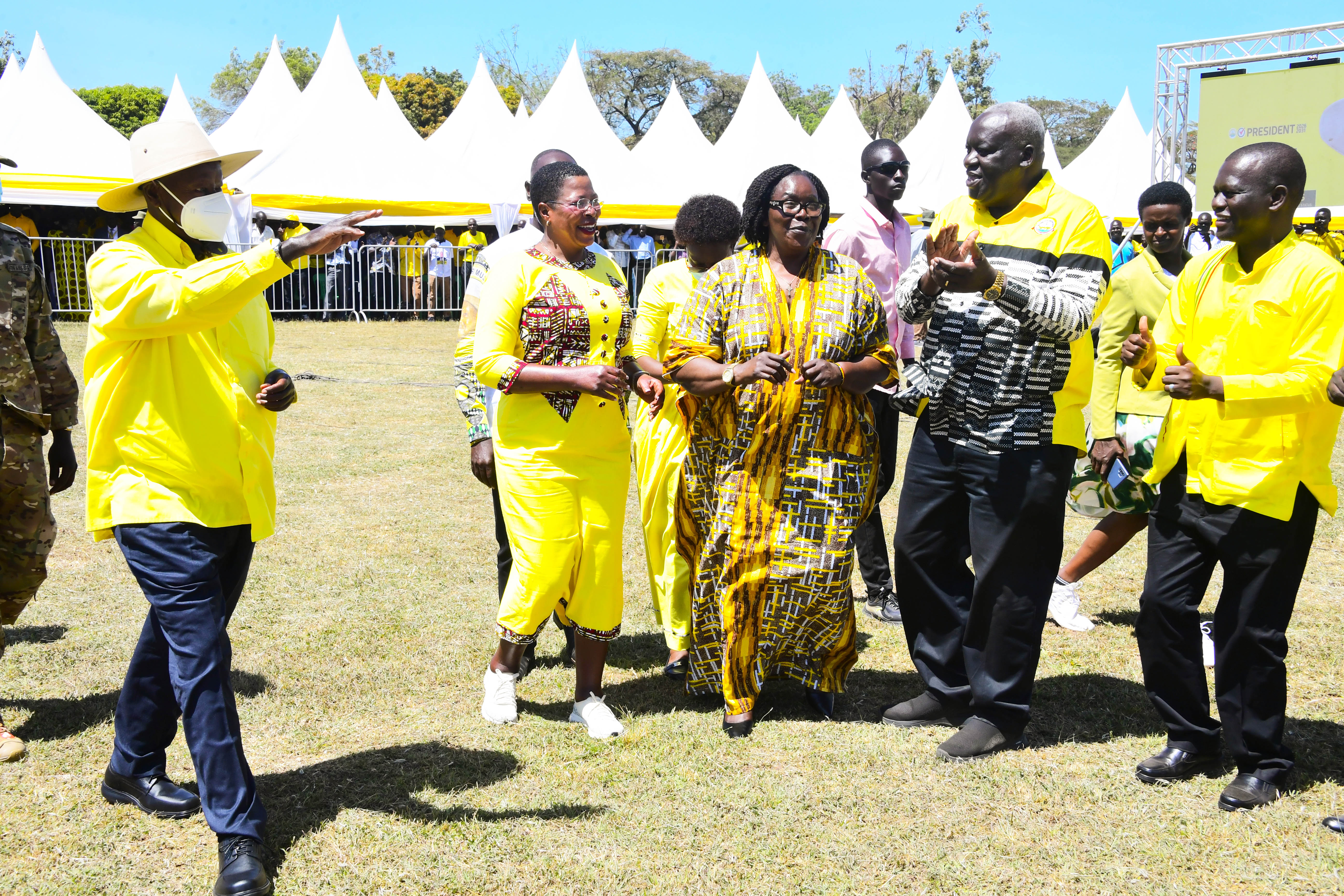
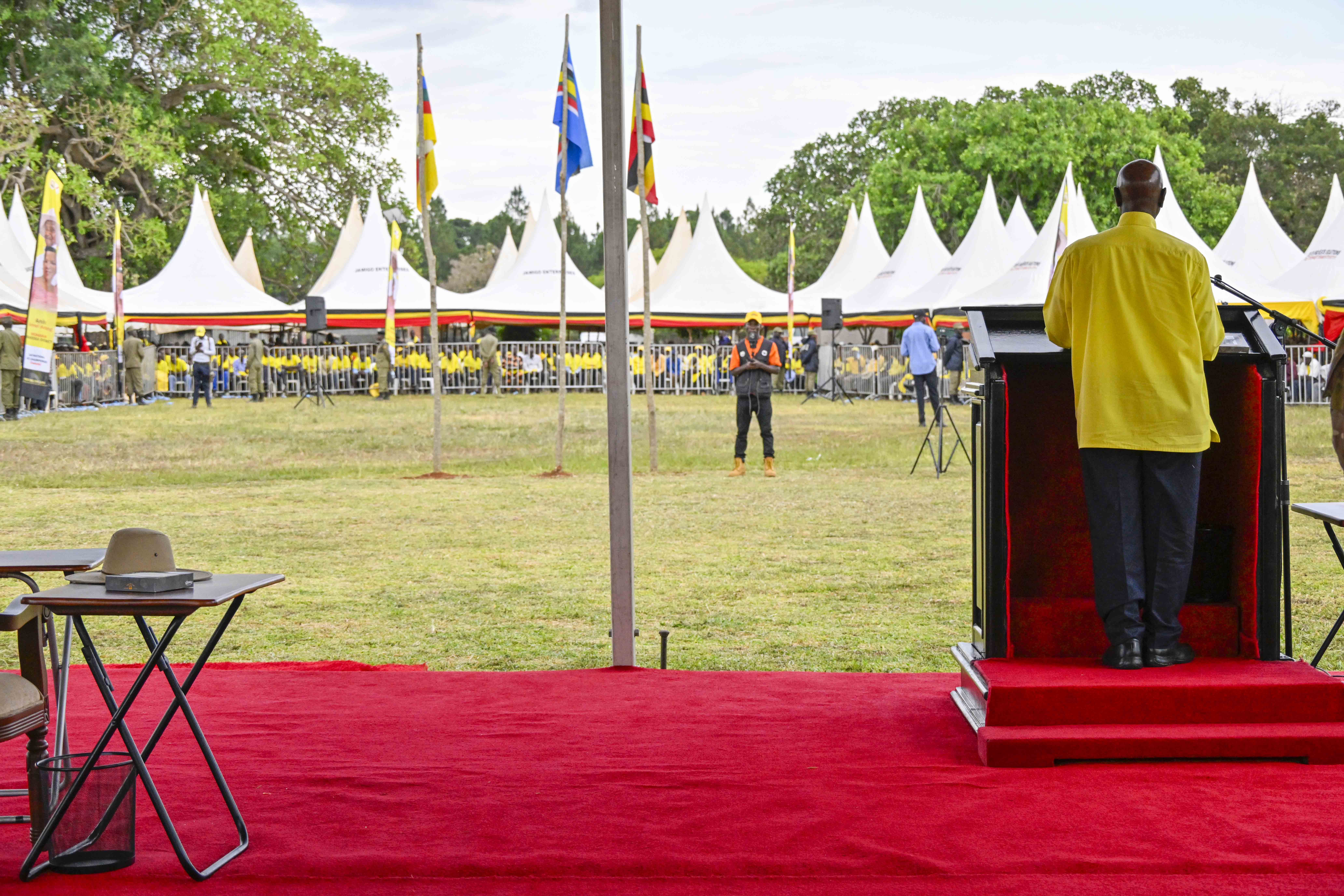
President Yoweri Kaguta Museveni on Friday, 5th December, 2025, promised to set up a cocoa processing factory in Bundibugyo, saying that the project will transform the district’s agricultural potential into industrial wealth and create thousands of jobs. Speaking during a campaign rally ahead of the 2026 general elections, the National Resistance Movement (NRM) presidential flag bearer said the government has secured committed investors and that the project will mark a turning point for Uganda’s biggest cocoa-producing district. “We’re going to establish a cocoa factory,” President Museveni said. “I went to America long ago and asked them to come and make chocolate here, but they refused. Now we have serious investors and we shall have our own factory.” Bundibugyo accounts for over 70% of Uganda’s cocoa exports, making it a critical source of foreign exchange. President Museveni said the factory will not only add value to cocoa but also anchor a broader industrial ecosystem. “We shall not put only one factory but a town of factories like Namanve and Mbale,” the President said, referring to Namanve Industrial Park, which employs 24,000 workers, and the Sino-Mbale Industrial Park which hosts 75 factories and employs 12,000 people. The NRM candidate reiterated his long-standing argument that Uganda’s job creation capacity lies in commercial agriculture, manufacturing, services, and ICT—not the public sector. “There are only 480,000 government jobs yet we are 50 million Ugandans. How will those jobs sustain us all?” he asked, giving examples of successful private-sector entrepreneurs like Johnson Basangwa of Kamuli whose poultry business employs 300 workers. He urged youth to embrace skills development and enterprise, praising testimonies from Ntoroko Industrial Hub graduates now running successful tailoring and carpentry businesses. The President also delivered his message around the NRM’s seven contributions to Uganda, beginning with peace. “Uganda had become ungovernable. People died, properties were destroyed. But when NRM came, peace returned,” he said, contrasting Uganda’s stability with security turbulence in neighbouring DR Congo. The second contribution, he noted, is development, recalling how Uganda once exchanged maize for road construction with Yugoslavia. He promised to rehabilitate the aging Mubende–Fort Portal–Bundibugyo road, now riddled with potholes. However, H.E. Museveni warned against “misplaced prioritization,” taking a swipe at public servants who demand salary increments before critical infrastructure is completed. “Teachers strike, wanting more salaries now. But what do I do first—fix the road for Bamba and Bakonjo or increase salaries? We must prioritize,” he said. On education, the President said Bundibugyo currently has 107 government primary schools and 12 secondary schools. Under the NRM plan, every parish should have a primary school and every sub-county a secondary school. Turning to health, President Museveni gave a detailed breakdown which included one government hospital, two HCIVs (Bwamba and Bughendera), each with two doctors, 14 HCIIIs and 10 sub-counties without a single HCIII or HCIV. He announced upgrades and new HCIII constructions in Ngite, Bundingoma, Busoru, Bulyambwa, Mabere, Mbatya, Ndugutu, Kagugu, Ntoroko, and Buganikere Town Council. Ongoing projects include Ntotoro HCIII, Kyondo HCIII, and a maternity complex at Nyahuka HCIV. President Museveni repeated his long-standing message that prevention remains Uganda’s strongest health pillar. “You see me, I’m 81 years old and have spent two months campaigning, but I’ve not been to hospital. Prevention is better than cure,” he said, urging citizens to embrace immunization, clean water, and healthy lifestyles. He criticized theft of medicines in health centres, saying local leaders and elected representatives must take responsibility:
 “I have given you the gun to shoot the thief, but you don’t know how to use it. Elect serious leaders who will supervise your interests.” Regarding wealth creation, the President revisited his hallmark distinction between development and wealth, urging residents to embrace commercial agriculture. He cited Bundibugyo cocoa farmer Benard Kacuro, who earns up to Shs 75 million per month during peak harvesting, which is proof that wealth can grow even before infrastructure arrives. He also mentioned a cattle farmer - George Matongo of Nakaseke, who milks 900 litres daily and earns about Shs 250 million annually, despite living 70 miles off a tarmac road. President Museveni reminded supporters of the NRM’s four-acre model introduced in the 1996 manifesto, encouraging households with small landholdings to grow coffee, fruits, food crops, and adopt zero-grazing dairy farming alongside poultry, piggery, and fish farming. “People of Bundibugyo had already understood this message,” he noted. Speaker of Parliament, Rt. Hon. Anita Among, also the NRM’s Second National Vice Chairperson, affirmed that the government has progressed on the creation of Bughendera District. “In the last cabinet meeting, the President pronounced himself on creating Bughendera District,” she said, warning local leaders against sowing division or mobilising people against government programmes. “You cannot refuse people to attend rallies over district issues that are already in process,” she said. Bundibugyo District NRM Chairperson, Mr. David Kabyanga applauded President Museveni for what he called “immense gains” under his leadership. He said the cocoa factory assessment team had completed its work, and the district now awaits actual construction. Mr. Kabyanga highlighted achievements under PDM and Emyooga. He said 40.6 billion shillings has been received under PDM for 130 parishes, while 36 Emyooga SACCOs have received 1.5 billion shillings. This is in addition to the 1 billion shillings allocated for repair of roads and bridges destroyed by floods. However, he asked the government for a special consideration due to frequent landslides that wash away infrastructure. “Before the roads are completed, landslides come and destroy the work. We need special facilitation for road funds,” he said.

img
05 December 2025
PRESIDENT MUSEVENI PLEDGES SWIFT ACTION FOR 9,000 NTOROKO FLOOD VICTIMS

President Yoweri Kaguta Museveni, the National Resistance Movement (NRM) Presidential flag bearer, has today announced firm government action to resolve the plight of over 9,000 people displaced by floods in Ntoroko District. Addressing thousands of supporters at Karugutu Secondary School, Ntoroko during a campaign rally, the President said he had already instructed his Principal Private Secretary (PPS) to coordinate an immediate response from top government officials. “I have directed the PPS to invite the Prime Minister and the Head of Public Service to come and deal with the issue of the 9,000 flood victims who are stuck here,” the President said. The displaced residents have been living in temporary shelters and IDP camps since 2019, after rising water levels of Lake Albert and the overflowing River Semliki submerged homes, schools and health facilities in Kanara Town Council and Kanara Sub-county. The President assured the community that the situation would be handled urgently. He added that the government would also review the budget for the Semliki Bridge, which remains a concern for residents. On the challenges surrounding access to Parish Development Model (PDM) funds, the President directed the Minister for Local Government, Hon. Raphael Magyezi, together with the PDM Secretariat, to meet affected persons and resolve the issue of expensive processing. Turning to national matters, the President reminded Ugandans that peace remains the foundation of the country’s development. “We have maintained peace under the NRM government. We border Congo, and today we host about 700,000 refugees from there. We are surrounded by wars in Congo, South Sudan and Somalia, but Uganda remains stable,” he said. He highlighted the government's efforts in expanding economic infrastructure like roads, electricity and security and noted that delays in some areas were caused by competing priorities. “We the soldiers have survived all these years on the principle of Kamu Kamu, gwe muganda,” he said. The President further applauded the education strides in Ntoroko District, noting that it now boasts 38 government primary schools, 44 private primary schools, five government secondary schools and nine private secondary schools. “Those who know where we have come from as a nation can testify,” he said. He further announced a series of major health sector upgrades to improve service deliver; upgrade Karugutu HCIV to a General Hospital, upgrade Musandama HCII in Nombe Sub-county to HCIII and construct new HCIIIs in Kibuku Town Council, Karugutu and Rwebisengo Sub-counties. The President noted that out of the 10 sub-counties in Ntoroko, four; Karugutu, Rwebisengo, Nombe and Kibuku still lack a HCIII, HCIV or hospital but said the government is moving to close this gap. Ntoroko District currently has two HCIVs in Ntoroko Constituency, staffed with six doctors and supported by an ambulance at Karugutu HCIV. President Museveni also reaffirmed government commitments to; continue nationwide immunisation programmes, work towards total malaria eradication, use ICT to track medicines and reduce health worker absenteeism and construct staff houses for health workers. The President further thanked the people of Ntoroko for their resilience and support to NRM. He also handed over the NRM flags to aspiring Members of Parliament, LC V chairperson, councillors, and other party candidates in Ntoroko District, formally endorsing their participation in the upcoming elections. The First Daughter, Mrs. Natasha Karugire Museveni representing the First Lady and Minister of Education and Sports, Maama Janet Kataaha Museveni, thanked supporters for turning up in large numbers. “Thank you for coming, I want to thank Mzee. Many young people and I are grateful for your tireless work over the years day after day ensuring the peace of Uganda and our continued advancement and development,” she said. Mrs. Karugire reminded the gathering that the peace the country enjoys today was hard-earned and must be protected. “It is our responsibility to preserve it, and we do that by voting,” she noted. On behalf of the First Lady, Mrs. Karugire noted: “ Maama Janet’s message for 15th January is that each one of us should go out and vote, vote for Mzee, the old man with the hat, and for the NRM. Thank you, and God bless you all.” The Speaker of Parliament, Rt. Hon. Anitah Among, also the NRM Second National Vice Chairperson praised the President for restoring peace and security in Ntoroko District, saying the area had long suffered insecurity but now enjoys stability under his leadership. “Your Excellency, thank you for the work you have done in this district. This place has faced situations of insecurity, but you have ensured that our people now sleep in their homes and their property is protected,” she said. Rt. Hon. Among reaffirmed the government’s commitment to upgrading the Karugutu road, noting that the funds had been allocated for it, alongside Shs 22 billion that was provided in the supplementary budget for affected persons of the floods. She added that the most urgent priority now is the resettlement of the 9,634 people displaced by the floods, urging that the matter be fast-tracked. “Now that you know the problem, we believe you are going to resolve it,” she said. She also commended the Doctor Dee Project that has been rolled out in Ntoroko—an initiative she said is strengthening services in roads, health, schools, and border-related areas because of the district’s proximity to the DRC. Rt. Hon. Among further noted that the President’s leadership has been consistent and inclusive. “Before I came to western Uganda, I thought you were doing this only in the east and north. Now I know you love the whole of Uganda. You are the leader we are looking for—not one who just comes to try,” she said. “You are our only hope. You brought this country from instability to stability, from no hope to hope. Today, people even have PDM money.” The Ntoroko District NRM Chairperson and State Minister for Tourism, Wildlife and Antiquities, Hon. Martin Mugarra Bahinduka, highlighted the district’s development profile, noting that Ntoroko has 10 sub-counties and town councils, 46 parishes and 178 villages, with a population of 114,858, according to the 2024 census. He reported strong progress under the Parish Development Model programme. Ntoroko’s PDM SACCOs have so far received Shs 16.7 billion, of which Shs 14.5 billion (86.47%) has been disbursed to 14,509 households—representing 71.89% of the district’s 20,180 households. The district also benefits from 18 Emyooga SACCOs comprising 9,777 members, which have collectively received Shs 760 million. Hon. Mugarra noted that Ntoroko now has a solid education footprint, with 38 government primary schools and 44 private primary schools, spread across 46 parishes. Thirty parishes have at least one government primary school, while 16 still lack one, although some parishes host more than one institution. At the secondary level, the district has 5 government and 9 private secondary schools, with all five government schools offering Universal Secondary Education (USE) and Universal Post-O-Level Education and Training (UPOLET), serving a combined enrollment of 3,251 students. To address gaps, the district is benefiting from the construction of four Seed Secondary Schools, which will reduce the number of sub-counties without government secondary schools from five to just one. He also highlighted the Ntoroko Presidential Industrial Zonal Skilling Hub, where 937 youth have already been trained, and an additional 240 trainees are currently enrolled. Out of Ntoroko’s 178 villages, 111 now have access to safe water, representing 62.35% coverage. The remaining 67 villages, or 38%, are yet to be served. Completed water interventions include; expansion of piped water systems in Itojo, Rwebisengo–Kanara and Nyakatok, construction of 3 rainwater harvesting facilities , rehabilitation of 12 boreholes across several communities and construction of public sanitation facilities in Rwangara and Itojo. Operational piped water systems now serve tens of thousands. District sanitation interventions also included construction of public latrines, drilling of deep boreholes, spring well rehabilitation, and extension of piped water to underserved villages. Planned projects include expansion of piped water to Kanara and Karugutu sub-counties, solar-powered mini water schemes in flood-prone areas, and strengthening community engagement for sustainability. Under water for production, the district completed the Kiranga Small-Scale Irrigation Scheme, covering 12 acres and benefiting 24 households. The scheme produces 9.2 tonnes of watermelons, tomatoes and onions annually, earning farmers Shs 21.6 million per year. Ntoroko is connected to the national electricity grid. Out of the district’s 10 sub-counties, 7 already have power access. In the next term, the government plans to extend electricity to the remaining three areas; Kanara Sub-county, Kanara Town Council and Bweramule to achieve full district-wide electrification. The event was attended by NRM Central Executive Committee (CEC) members, Members of Parliament, religious and cultural leaders, as well as thousands of supporters.

img
04 December 2025
PRESIDENT MUSEVENI KICKS-OFF RWENZORI CAMPAIGN TRAIL, PLEDGES TO CONSTRUCT AN INTERNATIONAL AIRPORT IN KASESE TO BOOST TOURISM

President Yoweri Kaguta Museveni has today launched his Rwenzori Sub-region campaign trail starting with Kasese district at Nyakasanga Playground, Kasese Municipality. Addressing the gathering, President Museveni elaborated on some of the seven contributions the National Resistance Movement (NRM) has made to Uganda over the last 40 years, emphasizing peace, development, wealth creation and job creation as pillars that have transformed the country. He told residents that Kasese is among the best witnesses of peace because of its proximity to the Democratic Republic of Congo (DRC), noting that Uganda is currently hosting 700,000 refugees from Congo who cannot return to their country due to continued instability. The President said groups that attempted to destabilize the district were defeated and peace in Uganda “will remain like ripe bananas—you only see them but you cannot touch or eat them.” On development, the President highlighted both economic and social infrastructure. He said the government has worked on major roads in the area, including Fort Portal–Kasese (done twice), Katunguru–Ishaka, and Kikorongo–Bwera, which will soon be redone. President Museveni added that the government will also work on the Mityana–Kyegegwa road and many others. He further criticized leaders who fail to prioritize key issues, choosing salary increments over infrastructure, noting that prioritization enabled the government to deliver long stretches of tarmac such as Lyantonde–Kazo–Ibanda–Kamwenge. He explained that Kasese and Ntungamo districts require additional road machinery since their annual road fund allocation of Shs 1 billion is inadequate, assuring residents that more equipment will be provided. On electricity, President Museveni reaffirmed the government's vision of connecting every district and every sub-county in Uganda, saying that apart from Buvuma Island, all districts are connected and the next target is full sub-county coverage. He also announced that the government has started repairing the railway line from Malaba and that Kasese will instead receive a new Standard Gauge Railway. He added that after the Hoima airport built for the oil sector, the government will construct another international airport in Kasese to boost tourism. President Museveni said Kasese is doing well in social services, with 260 government primary schools and 25 government secondary schools providing Universal Secondary Education and Universal Post-O-Level Education and Training. He further noted that the district has two hospitals, with continued expansion and upgrading of health facilities planned. On wealth creation, the President reminded the population that development alone does not translate into prosperity unless households embrace productive activities. He re-echoed the four-acre model introduced in the 1996 Manifesto, advising residents to plant coffee, fruits, pasture, food crops, keep poultry or pigs, and practice fish farming where possible. He cited George Matongo of Ngoma as an example of someone who followed the NRM guidance and now earns Shs 21 million monthly from dairy farming despite living in an area without tarmac roads or electricity. He said only 30% of Ugandans remain outside the money economy and urged residents to help mobilise them. President Museveni also warned that he had received reports of individuals stealing the Parish Development Model (PDM) funds and vowed to investigate and arrest the culprits. On job creation, the President emphasized that employment comes mainly from commercial agriculture, services, ICT and factories—not government. He said factories alone have created 1.3 million jobs, compared to 480,000 government jobs. He encouraged youth to utilize skilling centres to acquire employable and wealth-generating skills. The 2nd National Vice Chairperson (Female) and Speaker of Parliament, Rt. Hon. Anita Annet Among, thanked the President for maintaining peace in Kasese despite its border with conflict-hit DRC. She asked the government to upgrade Kasese Airfield into an international airport and appreciated the President for funding interventions along River Nyamwamba, which has long caused flooding and displacement. Kasese District NRM Chairperson Mr. Mbahimba James also praised the President for restoring peace and spurring development, including schools, hospitals, business growth, increased population and improved access to safe water. He thanked him for wealth creation programs such as PDM and Emyooga, saying they have improved household incomes. He raised challenges in Lwehingo, Kabukero and Kyabatukura and requested the President’s intervention.

img
03 December 2025
PRESIDENT MUSEVENI CAMPAIGNS IN MITOOMA, HIGHLIGHTS NRM’S KEY CONTRIBUTIONS TO UGANDA

President Yoweri Kaguta Museveni, accompanied by First Lady and Minister of Education and Sports, Maama Janet Museveni, today held a campaign rally at Kirambe Market in Ijumo Parish, Mitooma Sub County, Mitooma District. During the rally, the President reiterated major contributions of the National Resistance Movement (NRM) to Uganda, starting with peace, which he said the party was able to bring because it rejected politics based on sectarianism—religion, tribe and gender. He said the second contribution is development, which comprises economic and social infrastructure. On social infrastructure, he noted that Mitooma is performing well, with 109 government primary schools and 16 government secondary schools. On health, he said the government will continue strengthening the sector. President Museveni also emphasised wealth creation as the third NRM contribution. He explained that while development benefits all, wealth creation benefits an individual and their family, and poverty remains a personal burden. He reminded those with small landholdings to use the four-acre model to maximise productivity. He noted that some people in the cattle corridor have already transformed their lives by abandoning subsistence farming. Those with large pieces of land, he said, can engage in crops such as cotton and tobacco. He announced that the government will create a revolving fund for tea farmers to help them buy fertilisers and boost production. The fourth contribution, he said, is job creation, which arises from wealth creation—whether through commercial agriculture, factories, services or ICT. President Museveni clarified that jobs do not come from the government as many assume. For those without land or those living in towns, he encouraged the use of skilling centres to acquire skills needed to start income-generating activities. The President promised to expand skilling centres so that more young people can be trained. President Museveni also responded to local concerns, promising to direct the Uganda Wildlife Authority to install an electric fence around the gazetted area to stop wild animals from destroying crops. On her part, Maama Janet thanked the people of Mitooma for their massive turnout and support to NRM. She thanked God for protecting the President and for guiding the NRM, which she said has led Uganda from difficult times to progress. The First Lady also called for continued prayers for the country. She also appreciated Deputy Speaker of Parliament, Rt. Hon. Thomas Tayebwa for reconciling NRM candidates after the party primaries, thus helping to maintain party stability, and the Minister of Internal Affairs, Gen. Kahinda Otafiire for offering wise counsel to the youth, noting that many have grown up under the current government and do not know the hardships of the past. Maama Janet further appealed to the people of Mitooma to vote for President Museveni and other NRM flagbearers. Rt. Hon. Tayebwa said one of the key gains Mitooma is protecting is the Parish Development Model (PDM), which has transformed lives. He thanked the President for granting Mitooma District status, which has brought services closer to the people. He also requested fertilisers to boost coffee production. Gen. Otafiire thanked the President for offering himself again, saying the NRM spent 20 years organising and stabilising Uganda, and the country is now witnessing enormous development from its 40 years in power. He cautioned the public not to be diverted from supporting the NRM, reminding them that many young people do not know what war means or what Uganda went through. Mitooma District NRM Chairperson, Mr. Moses Tumwekwese promised the President 98% support in the forthcoming elections, attributing this to the development the NRM government has delivered, including PDM funds, youth support programmes and improved road network in the district.

img
02 December 2025
PRESIDENT MUSEVENI RALLIES BUSHENYI TO VOTE NRM, WARNS PDM FUND THIEVES

President Yoweri Kaguta Museveni, accompanied by the First Lady and Minister of Education and Sports, Maama Janet Museveni, today addressed thousands of NRM supporters at Kizinda Market in Bushenyi – Ishaka Municipality, issuing a strong warning to Parish Development Model (PDM) officials who charge or steal from beneficiaries. He vowed to decisively deal with anyone sabotaging a programme meant to lift Ugandans out of poverty. During a massive campaign rally, President Museveni also revisited the seven NRM contributions to Uganda, stressing peace as the most critical. He said countries like Sudan—where people are “dying like flies”—are suffering because of sectarian politics based on tribe and religion. “Uganda was heading in the same direction, but when the NRM came, it stopped all that. We created a strong national party and strong institutions like the army and police. When you vote NRM, you are not helping Museveni; you are helping yourself,” he said. On development, the President highlighted achievements in economic infrastructure. Bushenyi District, which now has 17 sub-counties/town councils, 72 parishes, and 571 villages, has benefited from major road projects including the Ishaka–Kasese road and the Ishaka–Kagamba road. President Museveni announced that the government will construct the Mbarara–Ishaka road, with funds already available, and will upgrade the Bwizibwera–Nyakambu–Buhweju–Nyakashaka–Nyabirizi route. On electricity, he noted that 15 of the 17 sub-counties in Bushenyi are already connected, with the government set to extend power to Kyamuhunga Sub-county and Bitooma Town Council in the next term. President Museveni also highlighted progress in social infrastructure. Bushenyi District and Bushenyi–Ishaka Municipality have 151 government primary schools and 155 private primary schools, as well as 16 government secondary schools and 67 private secondary schools. Of these, 13 government secondary schools provide Universal Secondary Education (USE) and Universal Post-O-Level Education and Training (UPOLET), with a total enrolment of 9,470 students. The President also urged residents to differentiate between development and wealth creation. “Tarmac roads and electricity do not mean you have wealth. Wealth creation is for the individual,” he said. He encouraged adoption of the four-acre model, noting that although Bushenyi is known for dairy farming, many are reluctant to plant pasture, which limits productivity. He cited Joseph Ijara of Serere as an example of a farmer who increased output after planting pasture. President Museveni further reported that the number of households outside the money economy has reduced from 68% to 30%, thanks to increased production in coffee, milk, palm oil and growth of industrial parks. On job creation, he said jobs come from commercial agriculture, factories, ICT and the services sector. He cited Hon. Fred Byamukama, the Minister of State for Transport, who employs 26 people after embracing the four-acre model. Maama Janet thanked Bushenyi residents for turning up in large numbers and supporting the NRM. “The peace you have must be protected. The only way to protect these gains is by voting NRM and encouraging your family members and friends to vote. Do not stop at attending rallies—come and vote on polling day,” she urged. Bushenyi District NRM Chairperson, Hajji Hassan Basajjabalaba thanked the President for the enormous development in the district, including the banana factory and road network. He requested the introduction of a national medical insurance scheme and appealed for an industrial park in Bushenyi.

img
02 December 2025
SHEEMA: PRESIDENT MUSEVENI REINFORCES NRM ACHIEVEMENTS AND 2026 RE-ELECTION BID

President Yoweri Kaguta Museveni, the National Resistance Movement (NRM) National Chairperson and party flagbearer for the 2026 presidential elections, on Tuesday, 2nd December 2025 intensified his campaign drive with a major rally in Sheema District, where he defended the NRM’s record on peace, unity, development, and wealth creation while unveiling a range of new pledges for the district and wider country. In his address to the thousands of enthusiastic supporters who filled the Kabwohe Playground grounds, President Museveni who was accompanied by the First Lady and Minister of Education and Sports, Maama Janet Kataaha, placed significant emphasis on the NRM’s enduring theme of peace and unity, arguing that Uganda’s transformation from instability to economic progress is rooted in the elimination of sectarian politics and the creation of a national army built on patriotism rather than tribal or religious lines. President Museveni recounted scenes from his earlier Parish Development Model (PDM) tours, recalling how he encountered Ugandans socialising late into the night in village bars across the country. “People were enjoying themselves at 9 pm, drinking and happy. That is what they call peace,” he said. “But unfortunately, many did not know where the peace came from. It came from the good leadership of the NRM.” He argued that before 1986, politics of identity—particularly tribal and religious divisions—made the country ungovernable and robbed it of the opportunity for economic growth. The NRM’s rise to power, he said, shifted Uganda from chaos to stability. “There is no other party that would garner 50 per cent of the vote until the NRM brought unity of religions and tribes and gave affirmative action to women,” President Museveni said, adding that this unity created a mass political force that secured the nation and sustained long-term stability. The President urged Ugandans to continue supporting the “resistance way” of doing things, which he described as a process rooted in prioritisation and long-term planning. He criticized regimes before 1986 for collapsing as a result of attempting to address too many problems simultaneously. “The beauty is that God loves NRM, and He has been granting us more solutions with time. For instance, the discovery of oil. By next year, we shall be using oil money for infrastructure,” H.E. Museveni said, further announcing a major pledge to upgrade key roads in the district once oil revenues start flowing. He promised that the government will tarmac the road network from Buzibwera – Nyakambu – Busiika – Nyakashaka – Nyakabiriizi up to Kabwohe – Bugongi and Kitagata. “These roads will be worked on in the next term of office because we shall have more money from the oil,” President Museveni assured, drawing loud applause from the supporters. The pledge aligns with NRM’s broader infrastructure agenda, which the President described as a cornerstone of national development that enables socio-economic growth and service delivery. President Museveni also highlighted the district’s progress in electricity and water access, as well as education and health services. On water coverage, President Museveni learnt that out of Sheema’s 619 villages, 487 have safe water sources, representing 79% coverage, while 21% (132 villages) remain without access to safe water. President Museveni said these gaps would be addressed as resources increase. Regarding education, Sheema District and Municipality now host 133 government primary schools and 17 government secondary schools. The expansion, President Museveni said, reflects the government’s commitment to education access. On Health facilities, he noted that out of 15 sub-counties in Sheema, 1 has a hospital, 2 have Health Centre IVs, 12 have Health Centre IIIs and only one sub-county lacks any form of health facility. The President announced that the government will construct a new HCIII in Masheruka Sub-County and will consider establishing a district hospital as requested by local leaders. President Museveni also dedicated a significant portion of his speech to re-educating the public about the difference between government-led development and individual wealth creation. He explained that development refers to public goods such as roads, electricity, schools, and water facilities the state provides for national progress. Wealth, however, must be generated by individuals and households through productive economic activities. “That’s why we told you to differentiate between development and wealth,” he said. “Since 1963, the Mbarara–Kasese road has been tarmacked, but poor people are still there despite having a tarmac road.” To escape poverty, President Museveni said Ugandans must use these public goods to engage in commercial agriculture, manufacturing, services, and ICT. He emphasised that government initiatives like the Parish Development Model (PDM) exist to help individuals transition from subsistence to income-generating enterprises. President Museveni reinforced his argument by highlighting several successful Ugandans who used small government interventions or modest resources to build lucrative enterprises. Examples included George Matongo of Ngoma (Nakaseke), who sells 900 litres of milk daily, earning around Shs 21 million per month, despite living 70 miles from a tarmac road. Johnson Basangwa, a major poultry farmer in Kamuli earns about Shs 20 million per day from egg sales and employs over 300 workers. The President also revisited the longstanding 4-acre model, encouraging farmers with small landholdings to diversify into coffee, fruits, livestock pasture, and food crops, supplemented by backyard activities such as poultry and piggery. On the other hand, President Museveni reassured tea farmers that the government will stabilize prices and correct earlier missteps in the sector. He announced that a special financing scheme—similar to PDM—will be introduced to help tea farmers access loans for fertilizers and other inputs. “The funds will go crop by crop, including cocoa,” he said, promising broader support for commercial crop enterprises across Uganda. Turning to unemployment, President Museveni dismissed the notion that the government is the primary source of jobs. “Government jobs are few, only 480,000 altogether, but 1.3 million people are employed in factories and manufacturing,” he said, emphasizing that the private sector, especially commercial agriculture, industry, ICT, and services, is the true engine of job creation. He cited the example of factories in Mbale Industrial Park, which employ 12,000 Ugandans in just one square mile, three times fewer than those employed in Namanve. The President also championed the Presidential Skilling Hubs, which offer free vocational training and have already produced thousands of young entrepreneurs. Testimonies from beneficiaries included Nimusiima Ritah from Sheema, who dropped out in S.4 but trained in tailoring at the Mbarara skilling hub. She now runs her own business—God’s Mercy Super Tailors—employs two people, and earns Shs 650,000 in monthly profit. Similarly, Kakuru Polly from Sheema Municipality, who trained in hairdressing and now owns God’s Mercy Salon and employs two people. President Museveni further issued a stern warning to officials involved in the embezzlement of PDM funds meant for the poorest households. He vowed to order arrests for all perpetrators, citing reports that some beneficiaries were not receiving the mandated Shs 1 million. Sheema District and Municipality, which have 74 parishes, have so far received Shs 24.9 billion in PDM funds, of which Shs 21.47 billion (85.9%) has been disbursed to 22,062 households—representing 37.8% of all households. This means 62.2% of the district’s 58,374 households, totaling 36,312, have not yet received support. Maama Janet also addressed the gathering where she thanked residents for their overwhelming support and expressed gratitude for God’s protection over Uganda. “On the voting day, please turn up in such big numbers and vote for President Museveni and all NRM members as you have promised,” she urged. NRM Secretary General, Rt. Hon. Richard Todwong praised Sheema residents for their loyalty to the party and described the campaign rally as a learning session for citizens. “Thank you for the love you have shown. To me, this is a classroom. Ours is to prepare the classroom for the teacher to continue teaching us. The President is not just campaigning—he is teaching,” Rt. Hon. Todwong said. The rally was attended by several senior government and party officials, including Deputy Speaker of Parliament, Rt. Hon. Thomas Tayebwa, Members of the NRM Central Executive Committee, ministers, veteran NRM supporters, among others.

Latest Press Releases

Opinion Posts

author's photo
08 December 2025
2026 ELECTIONS: THE RIDING OF A ‘MAD TIGER’ CALLED UGANDA

Seasoned politician and Democratic Party (DP) President who is also the Minister for Justice and Constitutional Affairs, Norbert Mao in one of those philosophical and witty remarks described leading/ruling Uganda is as tough as riding a mad tiger. Meaning you have to be very brave and extra ordinary skilled to remain on the back of the mad tiger or else the tiger using its rare energy throw you off in a second and you die in pieces. Mao made the observation in positive praise of President Yoweri Museveni who has led Uganda for close to 40 years now. To Mao, this no mean achievement given Uganda’s history and therefore urged Ugandans to give him the respect he totally deserves. Mao could not have described Uganda in any other phraseology than that. Imagine, from 1962 when Uganda attained her independence to 1986 when President Yoweri Museveni came to power, Uganda had changed presidents for a record seven times. And all those changes were either through violent military interventions. The reason Uganda became ‘a mad tiger’ are largely associated with her history. Uganda was never a single political entity at the time of its creation by the British colonialists. The colonizers forcefully created the Ugandan state through merging several kingdoms, several chiefdoms, several tribes and clans to form a country called Uganda. In fact, these kingdoms and chiefdoms were always at war with each other. Therefore, the colonialists forced us into a union that literally became difficult to unite. Consequently, the post-independence elites who took the reins of power failed to achieve that much needed unity and coexistence. People like Dr Milton Obote, Sir Edward Mutesa, Grace Ibingira, and John Kakonge etal failed to achieve unity of these nations that made the entity called Uganda and what followed until 1986 is everybody’s knowledge. While canvassing for votes across the country in the ongoing electoral campaigns, Museveni’s catch word is preserving peace that Ugandans a have enjoyed for sometime time now. In fact, it is the biggest gain that must be jealously protected because it is the anchor for other gains in our socioeconomic transformation journey. Without a doubt, for Uganda to witness radical transformation, we have to keep on attracting foreign capital because we are still a small economy to do it ourselves. It took a lot of persuasions and guaranteeing security in Uganda for investors to begin flocking in and bringing capital and the much needed expertise that Ugandans are benefiting from. Investors provide numerous benefits to developing economies, primarily through capital injection, job creation, and the transfer of essential skills and technology, which act as a catalyst for broader economic development and global integration. All these facilitate the growing of the economy for the benefit of all the citizens. Peace is a fundamental component of development, acting as both a prerequisite and a result of progress, as violent conflict disrupts essential systems like education, healthcare, and commerce. A peaceful environment fosters social stability, trust, and cooperation, which are essential for development to occur. This relationship is recognized in global frameworks like the Sustainable Development Goals (SDGs), specifically SDG 16, which aims to promote peaceful and inclusive society. For some time, none of the global investors thought of investing in Uganda. Uganda was synonymous with civil wars and military coups. All that skepticism has since changed. Big investors are comfortably flocking the country for big investments. Take the example of companies like Total and CNOOC and until recently Tullow. These are investing billions of dollars in the oil extraction in the Albertine Region. The construction of the East African Crude Oil Pipeline (EACOP) from Hoima to Tanga in Tanzania is one of the milestone investments Uganda is experiencing because of guaranteed peace. The cost of the East African Crude Oil Pipeline (EACOP) from Hoima, Uganda to Tanga, Tanzania has risen to $5 billion. Its benefits to Uganda include significant job creation, opportunities for local businesses, increased foreign investment, technology transfer, and the potential to de-risk other oil and gas projects in the country. Uganda has witnessed massive Foreign Direct Investments (FDIs) in the telecoms sector, in the banking sector, agro industrialization, manufacturing and the services sector. All these are taking place because of the prevailing peace in the country. Uganda remains the island of peace in the region. It is no wonder that Uganda the second country in the whole world hosting the biggest number of refugees. These trek into from across the world because of guaranteed peace and of course the best and hospitable refugee policy that Uganda extends to refugees. Question is, as we roll to January 15th 2026 to elect our leaders, should we retain the status quo to maintain this progress or……? My honest take is that Ugandans should to maintain the status quo since the driver is still full of stamina and the correct vision. The writer is the Ag. Executive Director Uganda Media Centre

author's photo
30 November 2025
2026 GENERAL ELECTIONS: GUARDING THE VOTES MIGHT BE TRICKY ON VOTING DAY

As the country prepares to go for the general elections, come January 15, 2026 some political actors are urging their supporters to come out in big numbers and cast their vote and at the same time guard the votes, by not leaving the polling stations when they have finished casting their votes. Urging people to turn up and vote for their preferred candidates is in itself a fantastic idea, but telling them not to leave the polling stations, on the pretext of guarding the votes, is tricky and might be dangerous to the voters, as it probably could disrupt the very voting and counting processes they intend to protect. Organizing popular elections is indisputably a challenging task. Bodies in charge of administering elections have the demanding function of ensuring that many complex election and related processes are managed efficiently, impartially and transparently. This is because the whole process has a direct impact on the quality and integrity of electoral processes and is one of the keys to ensuring the rights of voters and contestants. Having a flawless voting process is, therefore, the main guardian of democratic elections, and their activities are central to fostering public confidence. However, for a country to deliver such a clean election to the satisfaction of the voters and the candidates, it must facilitate and equip the Electoral Commission (EC) with all the required logistical support it requires, to deliver a seamless believable exercise. As required by law, the EC will gazette the polling guidelines to Ugandans a few days before the polling date. These guidelines are meant to educate our people about the entire voting process and how they should conduct themselves during the voting period. Such guidelines are not made in their boardrooms only, they look and compare other best practices, across other democratic nations around the world and then design those that suit our system. The EC has been financed and facilitated to benchmark the rest of the world, on how to deliver a smooth, flawless and impartial election. Therefore, it is very unfair for one to create mistrust about EC’s competence to deliver uncontested results. Consequently, all participants in the voting processes will be required to observe EC guidelines. It is perilous for one to ignore these guidelines and these are the reasons. Firstly, telling people not to leave the polling stations after voting means that you are publicly declaring that you do not trust the EC and, therefore, the voters are now going to manage the voting process! This is dangerous. You cannot have people, who have been emotionally charged during the campaign season, gathering in their thousands at polling stations and you expect them to remain cool, calm and collected when the presiding officer begins announcing the winning candidates, to the detriment of the losers. What will you do if a nasty fight breaks out? Won’t the one police officer deployed, at the polling station, be overwhelmed? And what might follow? Probably death and grievous bodily injuries. For the purposes of guarding against any form of mischief, at any polling station, the EC deploys 8 polling officials at every polling station and each candidate (whether they are presidential or parliamentary) are allowed to deploy 2 polling agents to closely observe the whole process from material delivery, voting, vote counting and announcement. On top of these are journalists and observer groups, as long as they are accredited by the Electoral Commission, to witness the entire exercise. Secondly, I do not think the EC has the capacity to provide sanitary requirements for hundreds of people gathering in over 30,000 polling stations across the country! Many people overcrowding the polling stations, after voting, poses health risks as there might not be places of convenience nearby. Why subject your supporters to such a nightmarish day, if indeed you value them? Therefore, voters are required to vote, return home and follow the results from the many mediums of communication like radio, television and the new media. The argument that they must stay at the polling stations to guard the votes is misleading and not tenable. After all, the entire close observer roles are carried out by agents and the media. Any actions to the contrary will make the agents refuse to sign the Declarations Forms and this is always good weapon for the aggrieved litigant to use in court and cause what had been declared a nullity. Trust in public institutions is a cornerstone of a functional society, because when that trust erodes, it can lead to significant disillusionment and a feeling of disempowerment. Healthy civic engagement often involves questioning institutions and holding them accountable for their performance and adherence to their mandates. Losing trust more often than not leads to mob justice and none of us wants this dear country to degenerate. The writer is the Acting Executive Director Uganda Media Centre

author's photo
29 November 2025
FR. GAETANO TIBANYENDA, FR. MUSAALA; BALANCING BIRDS OF A FEATHER

Two controversial Catholic priests, Fr. Gaetano Batanyenda of Kigezi, and Fr. Anthony Musaala of Buganda are making the political heads turn this election campaign season, both on the ground and social media, and am saying Kigezi and Buganda, broadly to paint with a thick brush. It reminds of another Catholic priest photographed holding a calculator in front of President Yoweri Museveni towards the 2021 elections. For those who didn’t know, Fr. Batanyenda, first came to the partisan political limelight in 1994 when President Museveni nominated him among the ten Special nominees to the Constituent Assembly (CA) that debated and promulgated the 1995 Constitution. He was, a controversial CA delegate and member of the then NRM caucus who steadfastly defended the NRM political line to the end including shutting out the immediate return to multiparty democracy, and Mengo’s quest for Federo (tribal federalism). Along the way, for undisclosed reasons, he fell-out with Museveni and much of NRM, although some people speculate that he could have expected to climb higher which Museveni did not offer. So, he later turned his support to Warren Smith Kizza Besigye who had become the opposition supremo, later Forum for Democratic Change (FDC) guru, and four-time unsuccessful presidential candidate whose ambitions stumbles on. Batanyenda has been so publicly often unnecessarily vitriolic, toxic and unrestrained that his new change of the political election heart, offering ‘blessing’ to NRM Presidential candidate, YK Museveni, this week at a public campaign rally in Kabale came as a surprise, and should be taken with a pinch of salt. Attention-seeking or relevance are both in order. And well, if the tidings are genuine and positive, there should be little reason to complain. Love at first, second and third sight. At another pole, Fr. Musaala, once excommunicated from priestly duties by Archbishop Cyprian Kizito Lwanga (RIP), for advocating ending celibacy, is making rumbling innuendoes on social media, that he posts especially on Tik Tok platform. A few weeks ago, to the surprise of many election watchers, Musaala said, sarcastically, that there was no impeding downpour from the skies, and therefore, Ugandans don’t need an umbrella to shelter under. In Uganda’s political speak, the umbrella, is the election symbol for the buoyant, main political opposition party, the National Unity Platform (NUP) whose leader, Robert Kyagulanyi aka, Bobi Wine is a presidential candidate for the second time, although with little, if no chance of winning. For context, Musaala, was among catholic priests in Buganda, who during the 2021 elections were publicly against Museveni, and routing for Kyagulanyi and NUP. A confession, at the public box, though not near redemption, isn’t bad. Many have understood Fr. Musaala’s sarcasm, to be admonishing NUP leadership, perhaps out of disappointment. And since then, Fr. Musaala continues posting more political sarcasm pointedly towards the opposition. But whatever is lying behind or underneath these developments, NRM supporters should smile. Museveni, a long-experienced political-chess player, could be proving, once more, that he is a political magician, even a witch. No one ever expected that Aggrey Awori (RIP), Beti Olive Namisango Kamya, Beatrice Anywar, Norbert Mao, or Dr Patrick Wakida, after so much and prolonged angry verbose, could join, and now, Lt. Gen. (rtd) Henry Tumukunde would rejoin Museveni, and running for parliament on NRM flag! Welcome back, comrade Tumukunde. So, with Kyagulanyi, and his sideshow men Louis Rubongoya and Benjamin Katana, it is advisable to move cautiously while tackling them, because tomorrow, perhaps, even now, could be on Museveni’s bidding. The grapevine. And when you see, five presidential candidates against Museveni in previous elections, Beti Kamya, Abed Bwanika, Prof. Venacious Baryamureba, Amama Mbabazi, Tumukunde, and Patrick Oboi Amuriat now cozying up, you have to put your hat off for Museveni.

author's photo
22 November 2025
A vicious NUP; OTHER OPPOSITION LEADERS AT THE STAKE

For good measure, we should begin to like the fight that the National Unity Platform (NUP) has taken to the political courtyard of some opposition figures who have never had kind words for NRM and President Museveni’s leadership. Probably it is becoming pointless to keep arguing with strange fools on the internet. But unfortunately, it is also now the main channel for public communication in a rapidly changing world. A stranger, probably a bot, with a smartphone and some data, lampooning people, some proven experts in their own field. The internet has made public debate so fraught with almost everyone shouting angrily, and the election campaigns making it even worse especially if you treat every opinion seriously. It all started with the now infamous five hundred million shillings said to have been dubiously awarded to parliamentary commissioners almost five years ago as service award, even before they had completed one year on the job. Section of the leadership of the National Unity Platform (NUP), used that opportunity to cut the sculp of its then Leader of Opposition in Parliament (LoP), Mathias Nsamba Mpuuga. After a year-long dispute, NUP dismissed Mpuuga, who in-turn promptly founded his own political party now called the Democratic Front (DF), taking along with him a few NUP MPs among them the loud Abed Bwanika, Micheal Kakembo Mbwatekamwa, and Juliet Nakabuye Kakande who had seen the purge coming. Those who were his known allies within NUP, like Medard Lubega Ssegona, Joyce Bagala, among others although unhappy with the way Mpuuga was treated, grew cold-feet and stayed back hoping to pick NUP tickets for the ongoing parliamentary elections only to be kicked in the teeth by the vicious team now firmly in control. On social media, NUP trawls have gone bare knuckles, putting up a meme of a dog, mimicking Ssegona. In his constituency, they seem to have organised and staging hostile groups of presumed residents and voters who don’t even permit to address his own public rallies. But as cowardly pretenders, who sought to exploit Robert Kyagulanyi’s abrupt political rise for their own selfish gains, they have now found themselves in a difficult position unable to publicly and directly challenge his political methods of work. And while they loathe him, they nearby, fear to tackle him for fear of losing votes among his loyal constituents, and so have chosen to lie low in humiliation. The old adage, when you keep a dog, learn to have stick has not helped them. Muwanga Kivumbi and Betty Nambooze are now the whistle-dogs of the masterclass of the dark art, hired to demolish whoever tries to raise their political head, and appear to salivate holding the machete. The two are hitting a new low bar in tribal chauvinism, insults, political abrasion, vulgarity and whatever-else accompanies it. Both are running past their own destinations. And, they also have trawls on various social media platforms who repeat, amply and dredge up the worst possible that their rivals could have ever said or done ages back, just to ensure the dirt is flushed down the toilet. It appears they do not appreciate the possibility that where reasonable men disagree there may be some useful truth on both sides even if it is truth only as each one of them sees. It is unlikely that someone will come soon to save this opposition from the Svengalis. Let us all face it, at this rate, there should be no point putting up with NUP decline. And so as the adage goes, they made their bed, and should sleep in it. Mpuuga, Ssegona, Bwanika, Lubega Mukaku, Michael Mabiike, Ssemujju Nganda and Joyce Bagala should live with the effects of Kyagulunyi-mania.

author's photo
21 November 2025
EC’S BYABAKAMA MUGENYI: STAY RESOLUTE AND IGNORE BLACKMAIL

Vladimir Ilyich Ulyanov, better known as Lenin, once defined political blackmail as “the threat of exposing, or the actual exposure, of true, but more often invented, stories to cause an opponent political damage, of slandering him, or of depriving him of the possibility of engaging in political activity.” His words ring true today as Uganda’s Independent Electoral Commission (EC) faces a wave of unwarranted attacks. In recent days, the EC has come under intense criticism after declaring Hon. Phiona Nyamutoro, MP-elect for Nebbi District, unopposed on November 13, 2026. This followed the Commission’s decision to nullify the nomination of her sole challenger, Ms. Mercy Rebecca Abedican of the National Unity Platform (NUP). Nyamutoro currently serves as Minister of State for Energy and Mineral Development. Abedican, carrying the NUP flag, fell into trouble after a petitionfiled by one of Nyamutoro’s supporters, who alleged that several of the nominators she submitted had never consented to endorse her. Their signatures were reportedly forged, and in an even more troubling twist, some of those listed were registered supporters of the National Resistance Movement (NRM). The allegations were later confirmed. One Godfrey Ongeria testified before the EC Tribunal that he did not nominate Abedican, his signature was forged, and he was, in fact, an NRM member. With evidence proving beyond a reasonable doubt that the signatures had been falsified, the EC Tribunal had no legal alternative but to cancel Abedican’s nomination and declare Nyamutoro unopposed. What followed was a predictable storm: accusations, insults, and political outrage from NUP sympathizers and select civil society actors who have made a habit of shouting down any decision that does not favour them. Their argument,recycled at every opportunity, is that the EC is “in bed” with the ruling NRM to block opposition candidates.Yet the facts do not support their narrative. Just days earlier, on November 5, the EC also declared Mr. Ofwono Opondo unopposed after his opponent, Mr. Mpande Joram Kigenyi of the Democratic Party (DP), conceded and withdrew his candidature. Kigenyi was also found guilty of forging signatures and obtaining consent from ten of his nominators. The rules were applied consistently, regardless of political party. The Electoral Commission must not be intimidated or pressured into abandoning its responsibility to uphold the law and ensure fraudulent candidates do not make it to the ballot. There appears to be a deliberate and orchestrated effort, particularly among elements within NUP and certain activists, to blackmail the Commission and discourage strict adherence to electoral procedures. It is incumbent upon political parties themselves to conduct due diligence before endorsing candidates. Article 61(1)(f) of the Constitution of the Republic of Uganda empowers the EC to hear and determine election complaints arising before and during polling. The EC is therefore fully within its mandate. Unfortunately, a distorted political culture has taken root in Uganda’s political class. Too many aspirants are becoming shameless blackmailers, to avoidlegal requirements, yet demanding privileges. One cannot aspire to public office while engaging in forgery and still expect to be treated as a victim. The requirements set by the EC are designed to test integrity; if one cannot meet these basic standards, they cannot be trusted with public leadership. Those now attacking the EC, particularly some opposition actors and civil society organisations, appear to have abandoned any sense of shame. What exactly did they expect the EC to do? Ignore evidence of fraud? Look away when procedures are blatantly violated? If the Commission had done so, it would have violated the law. Political blackmail has become a thriving enterprise in this country. Hours of radio and television airtime are spent on indiscipline masquerading as political analysis. Many of these critics contribute nothing to national progress but dominate public platforms with noise and conspiracy theories. It is time the media denied space to such trivial schemers, whose only interest is to create chaos rather than build the nation. Doing so would offer a lesson to others who may be tempted to follow their path. Uganda urgently needs a shift in political culture,one that rewards diligence, integrity, and respect for the law. All political actors must be held to the same standard. And the Electoral Commission must remain steadfast, resist blackmail, and continue enforcing electoral laws without fear or favour. The writer is Ag. Executive Director Uganda Media Centre

National News

article img

PRESIDENT MUSEVENI PLEDGES COCOA PROCESSING FACTORY FOR BUNDIBUGYO

President Yoweri Kaguta Museveni on Friday, 5th December, 2025, promised to set up a cocoa processing factory in Bundibugyo, saying that the project will transform the district’s agricultural potential into industrial wealth and create thousands of jobs. Speaking during a campaign rally ahead of the 2026 general elections, the National Resistance Movement (NRM) presidential flag bearer said the government has secured committed investors and that the project will mark a turning point for Uganda’s biggest cocoa-producing district. “We’re going to establish a cocoa factory,” President Museveni said. “I went to America long ago and asked them to come and make chocolate here, but they refused. Now we have serious investors and we shall have our own factory.” Bundibugyo accounts for over 70% of Uganda’s cocoa exports, making it a critical source of foreign exchange. President Museveni said the factory will not only add value to cocoa but also anchor a broader industrial ecosystem. “We shall not put only one factory but a town of factories like Namanve and Mbale,” the President said, referring to Namanve Industrial Park, which employs 24,000 workers, and the Sino-Mbale Industrial Park which hosts 75 factories and employs 12,000 people. The NRM candidate reiterated his long-standing argument that Uganda’s job creation capacity lies in commercial agriculture, manufacturing, services, and ICT—not the public sector. “There are only 480,000 government jobs yet we are 50 million Ugandans. How will those jobs sustain us all?” he asked, giving examples of successful private-sector entrepreneurs like Johnson Basangwa of Kamuli whose poultry business employs 300 workers. He urged youth to embrace skills development and enterprise, praising testimonies from Ntoroko Industrial Hub graduates now running successful tailoring and carpentry businesses. The President also delivered his message around the NRM’s seven contributions to Uganda, beginning with peace. “Uganda had become ungovernable. People died, properties were destroyed. But when NRM came, peace returned,” he said, contrasting Uganda’s stability with security turbulence in neighbouring DR Congo. The second contribution, he noted, is development, recalling how Uganda once exchanged maize for road construction with Yugoslavia. He promised to rehabilitate the aging Mubende–Fort Portal–Bundibugyo road, now riddled with potholes. However, H.E. Museveni warned against “misplaced prioritization,” taking a swipe at public servants who demand salary increments before critical infrastructure is completed. “Teachers strike, wanting more salaries now. But what do I do first—fix the road for Bamba and Bakonjo or increase salaries? We must prioritize,” he said. On education, the President said Bundibugyo currently has 107 government primary schools and 12 secondary schools. Under the NRM plan, every parish should have a primary school and every sub-county a secondary school. Turning to health, President Museveni gave a detailed breakdown which included one government hospital, two HCIVs (Bwamba and Bughendera), each with two doctors, 14 HCIIIs and 10 sub-counties without a single HCIII or HCIV. He announced upgrades and new HCIII constructions in Ngite, Bundingoma, Busoru, Bulyambwa, Mabere, Mbatya, Ndugutu, Kagugu, Ntoroko, and Buganikere Town Council. Ongoing projects include Ntotoro HCIII, Kyondo HCIII, and a maternity complex at Nyahuka HCIV. President Museveni repeated his long-standing message that prevention remains Uganda’s strongest health pillar. “You see me, I’m 81 years old and have spent two months campaigning, but I’ve not been to hospital. Prevention is better than cure,” he said, urging citizens to embrace immunization, clean water, and healthy lifestyles. He criticized theft of medicines in health centres, saying local leaders and elected representatives must take responsibility:
 “I have given you the gun to shoot the thief, but you don’t know how to use it. Elect serious leaders who will supervise your interests.” Regarding wealth creation, the President revisited his hallmark distinction between development and wealth, urging residents to embrace commercial agriculture. He cited Bundibugyo cocoa farmer Benard Kacuro, who earns up to Shs 75 million per month during peak harvesting, which is proof that wealth can grow even before infrastructure arrives. He also mentioned a cattle farmer - George Matongo of Nakaseke, who milks 900 litres daily and earns about Shs 250 million annually, despite living 70 miles off a tarmac road. President Museveni reminded supporters of the NRM’s four-acre model introduced in the 1996 manifesto, encouraging households with small landholdings to grow coffee, fruits, food crops, and adopt zero-grazing dairy farming alongside poultry, piggery, and fish farming. “People of Bundibugyo had already understood this message,” he noted. Speaker of Parliament, Rt. Hon. Anita Among, also the NRM’s Second National Vice Chairperson, affirmed that the government has progressed on the creation of Bughendera District. “In the last cabinet meeting, the President pronounced himself on creating Bughendera District,” she said, warning local leaders against sowing division or mobilising people against government programmes. “You cannot refuse people to attend rallies over district issues that are already in process,” she said. Bundibugyo District NRM Chairperson, Mr. David Kabyanga applauded President Museveni for what he called “immense gains” under his leadership. He said the cocoa factory assessment team had completed its work, and the district now awaits actual construction. Mr. Kabyanga highlighted achievements under PDM and Emyooga. He said 40.6 billion shillings has been received under PDM for 130 parishes, while 36 Emyooga SACCOs have received 1.5 billion shillings. This is in addition to the 1 billion shillings allocated for repair of roads and bridges destroyed by floods. However, he asked the government for a special consideration due to frequent landslides that wash away infrastructure. “Before the roads are completed, landslides come and destroy the work. We need special facilitation for road funds,” he said.

2025-12-05

article img

PRESIDENT MUSEVENI PLEDGES SWIFT ACTION FOR 9,000 NTOROKO FLOOD VICTIMS

President Yoweri Kaguta Museveni, the National Resistance Movement (NRM) Presidential flag bearer, has today announced firm government action to resolve the plight of over 9,000 people displaced by floods in Ntoroko District. Addressing thousands of supporters at Karugutu Secondary School, Ntoroko during a campaign rally, the President said he had already instructed his Principal Private Secretary (PPS) to coordinate an immediate response from top government officials. “I have directed the PPS to invite the Prime Minister and the Head of Public Service to come and deal with the issue of the 9,000 flood victims who are stuck here,” the President said. The displaced residents have been living in temporary shelters and IDP camps since 2019, after rising water levels of Lake Albert and the overflowing River Semliki submerged homes, schools and health facilities in Kanara Town Council and Kanara Sub-county. The President assured the community that the situation would be handled urgently. He added that the government would also review the budget for the Semliki Bridge, which remains a concern for residents. On the challenges surrounding access to Parish Development Model (PDM) funds, the President directed the Minister for Local Government, Hon. Raphael Magyezi, together with the PDM Secretariat, to meet affected persons and resolve the issue of expensive processing. Turning to national matters, the President reminded Ugandans that peace remains the foundation of the country’s development. “We have maintained peace under the NRM government. We border Congo, and today we host about 700,000 refugees from there. We are surrounded by wars in Congo, South Sudan and Somalia, but Uganda remains stable,” he said. He highlighted the government's efforts in expanding economic infrastructure like roads, electricity and security and noted that delays in some areas were caused by competing priorities. “We the soldiers have survived all these years on the principle of Kamu Kamu, gwe muganda,” he said. The President further applauded the education strides in Ntoroko District, noting that it now boasts 38 government primary schools, 44 private primary schools, five government secondary schools and nine private secondary schools. “Those who know where we have come from as a nation can testify,” he said. He further announced a series of major health sector upgrades to improve service deliver; upgrade Karugutu HCIV to a General Hospital, upgrade Musandama HCII in Nombe Sub-county to HCIII and construct new HCIIIs in Kibuku Town Council, Karugutu and Rwebisengo Sub-counties. The President noted that out of the 10 sub-counties in Ntoroko, four; Karugutu, Rwebisengo, Nombe and Kibuku still lack a HCIII, HCIV or hospital but said the government is moving to close this gap. Ntoroko District currently has two HCIVs in Ntoroko Constituency, staffed with six doctors and supported by an ambulance at Karugutu HCIV. President Museveni also reaffirmed government commitments to; continue nationwide immunisation programmes, work towards total malaria eradication, use ICT to track medicines and reduce health worker absenteeism and construct staff houses for health workers. The President further thanked the people of Ntoroko for their resilience and support to NRM. He also handed over the NRM flags to aspiring Members of Parliament, LC V chairperson, councillors, and other party candidates in Ntoroko District, formally endorsing their participation in the upcoming elections. The First Daughter, Mrs. Natasha Karugire Museveni representing the First Lady and Minister of Education and Sports, Maama Janet Kataaha Museveni, thanked supporters for turning up in large numbers. “Thank you for coming, I want to thank Mzee. Many young people and I are grateful for your tireless work over the years day after day ensuring the peace of Uganda and our continued advancement and development,” she said. Mrs. Karugire reminded the gathering that the peace the country enjoys today was hard-earned and must be protected. “It is our responsibility to preserve it, and we do that by voting,” she noted. On behalf of the First Lady, Mrs. Karugire noted: “ Maama Janet’s message for 15th January is that each one of us should go out and vote, vote for Mzee, the old man with the hat, and for the NRM. Thank you, and God bless you all.” The Speaker of Parliament, Rt. Hon. Anitah Among, also the NRM Second National Vice Chairperson praised the President for restoring peace and security in Ntoroko District, saying the area had long suffered insecurity but now enjoys stability under his leadership. “Your Excellency, thank you for the work you have done in this district. This place has faced situations of insecurity, but you have ensured that our people now sleep in their homes and their property is protected,” she said. Rt. Hon. Among reaffirmed the government’s commitment to upgrading the Karugutu road, noting that the funds had been allocated for it, alongside Shs 22 billion that was provided in the supplementary budget for affected persons of the floods. She added that the most urgent priority now is the resettlement of the 9,634 people displaced by the floods, urging that the matter be fast-tracked. “Now that you know the problem, we believe you are going to resolve it,” she said. She also commended the Doctor Dee Project that has been rolled out in Ntoroko—an initiative she said is strengthening services in roads, health, schools, and border-related areas because of the district’s proximity to the DRC. Rt. Hon. Among further noted that the President’s leadership has been consistent and inclusive. “Before I came to western Uganda, I thought you were doing this only in the east and north. Now I know you love the whole of Uganda. You are the leader we are looking for—not one who just comes to try,” she said. “You are our only hope. You brought this country from instability to stability, from no hope to hope. Today, people even have PDM money.” The Ntoroko District NRM Chairperson and State Minister for Tourism, Wildlife and Antiquities, Hon. Martin Mugarra Bahinduka, highlighted the district’s development profile, noting that Ntoroko has 10 sub-counties and town councils, 46 parishes and 178 villages, with a population of 114,858, according to the 2024 census. He reported strong progress under the Parish Development Model programme. Ntoroko’s PDM SACCOs have so far received Shs 16.7 billion, of which Shs 14.5 billion (86.47%) has been disbursed to 14,509 households—representing 71.89% of the district’s 20,180 households. The district also benefits from 18 Emyooga SACCOs comprising 9,777 members, which have collectively received Shs 760 million. Hon. Mugarra noted that Ntoroko now has a solid education footprint, with 38 government primary schools and 44 private primary schools, spread across 46 parishes. Thirty parishes have at least one government primary school, while 16 still lack one, although some parishes host more than one institution. At the secondary level, the district has 5 government and 9 private secondary schools, with all five government schools offering Universal Secondary Education (USE) and Universal Post-O-Level Education and Training (UPOLET), serving a combined enrollment of 3,251 students. To address gaps, the district is benefiting from the construction of four Seed Secondary Schools, which will reduce the number of sub-counties without government secondary schools from five to just one. He also highlighted the Ntoroko Presidential Industrial Zonal Skilling Hub, where 937 youth have already been trained, and an additional 240 trainees are currently enrolled. Out of Ntoroko’s 178 villages, 111 now have access to safe water, representing 62.35% coverage. The remaining 67 villages, or 38%, are yet to be served. Completed water interventions include; expansion of piped water systems in Itojo, Rwebisengo–Kanara and Nyakatok, construction of 3 rainwater harvesting facilities , rehabilitation of 12 boreholes across several communities and construction of public sanitation facilities in Rwangara and Itojo. Operational piped water systems now serve tens of thousands. District sanitation interventions also included construction of public latrines, drilling of deep boreholes, spring well rehabilitation, and extension of piped water to underserved villages. Planned projects include expansion of piped water to Kanara and Karugutu sub-counties, solar-powered mini water schemes in flood-prone areas, and strengthening community engagement for sustainability. Under water for production, the district completed the Kiranga Small-Scale Irrigation Scheme, covering 12 acres and benefiting 24 households. The scheme produces 9.2 tonnes of watermelons, tomatoes and onions annually, earning farmers Shs 21.6 million per year. Ntoroko is connected to the national electricity grid. Out of the district’s 10 sub-counties, 7 already have power access. In the next term, the government plans to extend electricity to the remaining three areas; Kanara Sub-county, Kanara Town Council and Bweramule to achieve full district-wide electrification. The event was attended by NRM Central Executive Committee (CEC) members, Members of Parliament, religious and cultural leaders, as well as thousands of supporters.

2025-12-05

article img

PRESIDENT MUSEVENI KICKS-OFF RWENZORI CAMPAIGN TRAIL, PLEDGES TO CONSTRUCT AN INTERNATIONAL AIRPORT IN KASESE TO BOOST TOURISM

President Yoweri Kaguta Museveni has today launched his Rwenzori Sub-region campaign trail starting with Kasese district at Nyakasanga Playground, Kasese Municipality. Addressing the gathering, President Museveni elaborated on some of the seven contributions the National Resistance Movement (NRM) has made to Uganda over the last 40 years, emphasizing peace, development, wealth creation and job creation as pillars that have transformed the country. He told residents that Kasese is among the best witnesses of peace because of its proximity to the Democratic Republic of Congo (DRC), noting that Uganda is currently hosting 700,000 refugees from Congo who cannot return to their country due to continued instability. The President said groups that attempted to destabilize the district were defeated and peace in Uganda “will remain like ripe bananas—you only see them but you cannot touch or eat them.” On development, the President highlighted both economic and social infrastructure. He said the government has worked on major roads in the area, including Fort Portal–Kasese (done twice), Katunguru–Ishaka, and Kikorongo–Bwera, which will soon be redone. President Museveni added that the government will also work on the Mityana–Kyegegwa road and many others. He further criticized leaders who fail to prioritize key issues, choosing salary increments over infrastructure, noting that prioritization enabled the government to deliver long stretches of tarmac such as Lyantonde–Kazo–Ibanda–Kamwenge. He explained that Kasese and Ntungamo districts require additional road machinery since their annual road fund allocation of Shs 1 billion is inadequate, assuring residents that more equipment will be provided. On electricity, President Museveni reaffirmed the government's vision of connecting every district and every sub-county in Uganda, saying that apart from Buvuma Island, all districts are connected and the next target is full sub-county coverage. He also announced that the government has started repairing the railway line from Malaba and that Kasese will instead receive a new Standard Gauge Railway. He added that after the Hoima airport built for the oil sector, the government will construct another international airport in Kasese to boost tourism. President Museveni said Kasese is doing well in social services, with 260 government primary schools and 25 government secondary schools providing Universal Secondary Education and Universal Post-O-Level Education and Training. He further noted that the district has two hospitals, with continued expansion and upgrading of health facilities planned. On wealth creation, the President reminded the population that development alone does not translate into prosperity unless households embrace productive activities. He re-echoed the four-acre model introduced in the 1996 Manifesto, advising residents to plant coffee, fruits, pasture, food crops, keep poultry or pigs, and practice fish farming where possible. He cited George Matongo of Ngoma as an example of someone who followed the NRM guidance and now earns Shs 21 million monthly from dairy farming despite living in an area without tarmac roads or electricity. He said only 30% of Ugandans remain outside the money economy and urged residents to help mobilise them. President Museveni also warned that he had received reports of individuals stealing the Parish Development Model (PDM) funds and vowed to investigate and arrest the culprits. On job creation, the President emphasized that employment comes mainly from commercial agriculture, services, ICT and factories—not government. He said factories alone have created 1.3 million jobs, compared to 480,000 government jobs. He encouraged youth to utilize skilling centres to acquire employable and wealth-generating skills. The 2nd National Vice Chairperson (Female) and Speaker of Parliament, Rt. Hon. Anita Annet Among, thanked the President for maintaining peace in Kasese despite its border with conflict-hit DRC. She asked the government to upgrade Kasese Airfield into an international airport and appreciated the President for funding interventions along River Nyamwamba, which has long caused flooding and displacement. Kasese District NRM Chairperson Mr. Mbahimba James also praised the President for restoring peace and spurring development, including schools, hospitals, business growth, increased population and improved access to safe water. He thanked him for wealth creation programs such as PDM and Emyooga, saying they have improved household incomes. He raised challenges in Lwehingo, Kabukero and Kyabatukura and requested the President’s intervention.

2025-12-04

article img

PRESIDENT MUSEVENI CAMPAIGNS IN MITOOMA, HIGHLIGHTS NRM’S KEY CONTRIBUTIONS TO UGANDA

President Yoweri Kaguta Museveni, accompanied by First Lady and Minister of Education and Sports, Maama Janet Museveni, today held a campaign rally at Kirambe Market in Ijumo Parish, Mitooma Sub County, Mitooma District. During the rally, the President reiterated major contributions of the National Resistance Movement (NRM) to Uganda, starting with peace, which he said the party was able to bring because it rejected politics based on sectarianism—religion, tribe and gender. He said the second contribution is development, which comprises economic and social infrastructure. On social infrastructure, he noted that Mitooma is performing well, with 109 government primary schools and 16 government secondary schools. On health, he said the government will continue strengthening the sector. President Museveni also emphasised wealth creation as the third NRM contribution. He explained that while development benefits all, wealth creation benefits an individual and their family, and poverty remains a personal burden. He reminded those with small landholdings to use the four-acre model to maximise productivity. He noted that some people in the cattle corridor have already transformed their lives by abandoning subsistence farming. Those with large pieces of land, he said, can engage in crops such as cotton and tobacco. He announced that the government will create a revolving fund for tea farmers to help them buy fertilisers and boost production. The fourth contribution, he said, is job creation, which arises from wealth creation—whether through commercial agriculture, factories, services or ICT. President Museveni clarified that jobs do not come from the government as many assume. For those without land or those living in towns, he encouraged the use of skilling centres to acquire skills needed to start income-generating activities. The President promised to expand skilling centres so that more young people can be trained. President Museveni also responded to local concerns, promising to direct the Uganda Wildlife Authority to install an electric fence around the gazetted area to stop wild animals from destroying crops. On her part, Maama Janet thanked the people of Mitooma for their massive turnout and support to NRM. She thanked God for protecting the President and for guiding the NRM, which she said has led Uganda from difficult times to progress. The First Lady also called for continued prayers for the country. She also appreciated Deputy Speaker of Parliament, Rt. Hon. Thomas Tayebwa for reconciling NRM candidates after the party primaries, thus helping to maintain party stability, and the Minister of Internal Affairs, Gen. Kahinda Otafiire for offering wise counsel to the youth, noting that many have grown up under the current government and do not know the hardships of the past. Maama Janet further appealed to the people of Mitooma to vote for President Museveni and other NRM flagbearers. Rt. Hon. Tayebwa said one of the key gains Mitooma is protecting is the Parish Development Model (PDM), which has transformed lives. He thanked the President for granting Mitooma District status, which has brought services closer to the people. He also requested fertilisers to boost coffee production. Gen. Otafiire thanked the President for offering himself again, saying the NRM spent 20 years organising and stabilising Uganda, and the country is now witnessing enormous development from its 40 years in power. He cautioned the public not to be diverted from supporting the NRM, reminding them that many young people do not know what war means or what Uganda went through. Mitooma District NRM Chairperson, Mr. Moses Tumwekwese promised the President 98% support in the forthcoming elections, attributing this to the development the NRM government has delivered, including PDM funds, youth support programmes and improved road network in the district.

2025-12-03

article img

PRESIDENT MUSEVENI RALLIES BUSHENYI TO VOTE NRM, WARNS PDM FUND THIEVES

President Yoweri Kaguta Museveni, accompanied by the First Lady and Minister of Education and Sports, Maama Janet Museveni, today addressed thousands of NRM supporters at Kizinda Market in Bushenyi – Ishaka Municipality, issuing a strong warning to Parish Development Model (PDM) officials who charge or steal from beneficiaries. He vowed to decisively deal with anyone sabotaging a programme meant to lift Ugandans out of poverty. During a massive campaign rally, President Museveni also revisited the seven NRM contributions to Uganda, stressing peace as the most critical. He said countries like Sudan—where people are “dying like flies”—are suffering because of sectarian politics based on tribe and religion. “Uganda was heading in the same direction, but when the NRM came, it stopped all that. We created a strong national party and strong institutions like the army and police. When you vote NRM, you are not helping Museveni; you are helping yourself,” he said. On development, the President highlighted achievements in economic infrastructure. Bushenyi District, which now has 17 sub-counties/town councils, 72 parishes, and 571 villages, has benefited from major road projects including the Ishaka–Kasese road and the Ishaka–Kagamba road. President Museveni announced that the government will construct the Mbarara–Ishaka road, with funds already available, and will upgrade the Bwizibwera–Nyakambu–Buhweju–Nyakashaka–Nyabirizi route. On electricity, he noted that 15 of the 17 sub-counties in Bushenyi are already connected, with the government set to extend power to Kyamuhunga Sub-county and Bitooma Town Council in the next term. President Museveni also highlighted progress in social infrastructure. Bushenyi District and Bushenyi–Ishaka Municipality have 151 government primary schools and 155 private primary schools, as well as 16 government secondary schools and 67 private secondary schools. Of these, 13 government secondary schools provide Universal Secondary Education (USE) and Universal Post-O-Level Education and Training (UPOLET), with a total enrolment of 9,470 students. The President also urged residents to differentiate between development and wealth creation. “Tarmac roads and electricity do not mean you have wealth. Wealth creation is for the individual,” he said. He encouraged adoption of the four-acre model, noting that although Bushenyi is known for dairy farming, many are reluctant to plant pasture, which limits productivity. He cited Joseph Ijara of Serere as an example of a farmer who increased output after planting pasture. President Museveni further reported that the number of households outside the money economy has reduced from 68% to 30%, thanks to increased production in coffee, milk, palm oil and growth of industrial parks. On job creation, he said jobs come from commercial agriculture, factories, ICT and the services sector. He cited Hon. Fred Byamukama, the Minister of State for Transport, who employs 26 people after embracing the four-acre model. Maama Janet thanked Bushenyi residents for turning up in large numbers and supporting the NRM. “The peace you have must be protected. The only way to protect these gains is by voting NRM and encouraging your family members and friends to vote. Do not stop at attending rallies—come and vote on polling day,” she urged. Bushenyi District NRM Chairperson, Hajji Hassan Basajjabalaba thanked the President for the enormous development in the district, including the banana factory and road network. He requested the introduction of a national medical insurance scheme and appealed for an industrial park in Bushenyi.

2025-12-02

article img

SHEEMA: PRESIDENT MUSEVENI REINFORCES NRM ACHIEVEMENTS AND 2026 RE-ELECTION BID

President Yoweri Kaguta Museveni, the National Resistance Movement (NRM) National Chairperson and party flagbearer for the 2026 presidential elections, on Tuesday, 2nd December 2025 intensified his campaign drive with a major rally in Sheema District, where he defended the NRM’s record on peace, unity, development, and wealth creation while unveiling a range of new pledges for the district and wider country. In his address to the thousands of enthusiastic supporters who filled the Kabwohe Playground grounds, President Museveni who was accompanied by the First Lady and Minister of Education and Sports, Maama Janet Kataaha, placed significant emphasis on the NRM’s enduring theme of peace and unity, arguing that Uganda’s transformation from instability to economic progress is rooted in the elimination of sectarian politics and the creation of a national army built on patriotism rather than tribal or religious lines. President Museveni recounted scenes from his earlier Parish Development Model (PDM) tours, recalling how he encountered Ugandans socialising late into the night in village bars across the country. “People were enjoying themselves at 9 pm, drinking and happy. That is what they call peace,” he said. “But unfortunately, many did not know where the peace came from. It came from the good leadership of the NRM.” He argued that before 1986, politics of identity—particularly tribal and religious divisions—made the country ungovernable and robbed it of the opportunity for economic growth. The NRM’s rise to power, he said, shifted Uganda from chaos to stability. “There is no other party that would garner 50 per cent of the vote until the NRM brought unity of religions and tribes and gave affirmative action to women,” President Museveni said, adding that this unity created a mass political force that secured the nation and sustained long-term stability. The President urged Ugandans to continue supporting the “resistance way” of doing things, which he described as a process rooted in prioritisation and long-term planning. He criticized regimes before 1986 for collapsing as a result of attempting to address too many problems simultaneously. “The beauty is that God loves NRM, and He has been granting us more solutions with time. For instance, the discovery of oil. By next year, we shall be using oil money for infrastructure,” H.E. Museveni said, further announcing a major pledge to upgrade key roads in the district once oil revenues start flowing. He promised that the government will tarmac the road network from Buzibwera – Nyakambu – Busiika – Nyakashaka – Nyakabiriizi up to Kabwohe – Bugongi and Kitagata. “These roads will be worked on in the next term of office because we shall have more money from the oil,” President Museveni assured, drawing loud applause from the supporters. The pledge aligns with NRM’s broader infrastructure agenda, which the President described as a cornerstone of national development that enables socio-economic growth and service delivery. President Museveni also highlighted the district’s progress in electricity and water access, as well as education and health services. On water coverage, President Museveni learnt that out of Sheema’s 619 villages, 487 have safe water sources, representing 79% coverage, while 21% (132 villages) remain without access to safe water. President Museveni said these gaps would be addressed as resources increase. Regarding education, Sheema District and Municipality now host 133 government primary schools and 17 government secondary schools. The expansion, President Museveni said, reflects the government’s commitment to education access. On Health facilities, he noted that out of 15 sub-counties in Sheema, 1 has a hospital, 2 have Health Centre IVs, 12 have Health Centre IIIs and only one sub-county lacks any form of health facility. The President announced that the government will construct a new HCIII in Masheruka Sub-County and will consider establishing a district hospital as requested by local leaders. President Museveni also dedicated a significant portion of his speech to re-educating the public about the difference between government-led development and individual wealth creation. He explained that development refers to public goods such as roads, electricity, schools, and water facilities the state provides for national progress. Wealth, however, must be generated by individuals and households through productive economic activities. “That’s why we told you to differentiate between development and wealth,” he said. “Since 1963, the Mbarara–Kasese road has been tarmacked, but poor people are still there despite having a tarmac road.” To escape poverty, President Museveni said Ugandans must use these public goods to engage in commercial agriculture, manufacturing, services, and ICT. He emphasised that government initiatives like the Parish Development Model (PDM) exist to help individuals transition from subsistence to income-generating enterprises. President Museveni reinforced his argument by highlighting several successful Ugandans who used small government interventions or modest resources to build lucrative enterprises. Examples included George Matongo of Ngoma (Nakaseke), who sells 900 litres of milk daily, earning around Shs 21 million per month, despite living 70 miles from a tarmac road. Johnson Basangwa, a major poultry farmer in Kamuli earns about Shs 20 million per day from egg sales and employs over 300 workers. The President also revisited the longstanding 4-acre model, encouraging farmers with small landholdings to diversify into coffee, fruits, livestock pasture, and food crops, supplemented by backyard activities such as poultry and piggery. On the other hand, President Museveni reassured tea farmers that the government will stabilize prices and correct earlier missteps in the sector. He announced that a special financing scheme—similar to PDM—will be introduced to help tea farmers access loans for fertilizers and other inputs. “The funds will go crop by crop, including cocoa,” he said, promising broader support for commercial crop enterprises across Uganda. Turning to unemployment, President Museveni dismissed the notion that the government is the primary source of jobs. “Government jobs are few, only 480,000 altogether, but 1.3 million people are employed in factories and manufacturing,” he said, emphasizing that the private sector, especially commercial agriculture, industry, ICT, and services, is the true engine of job creation. He cited the example of factories in Mbale Industrial Park, which employ 12,000 Ugandans in just one square mile, three times fewer than those employed in Namanve. The President also championed the Presidential Skilling Hubs, which offer free vocational training and have already produced thousands of young entrepreneurs. Testimonies from beneficiaries included Nimusiima Ritah from Sheema, who dropped out in S.4 but trained in tailoring at the Mbarara skilling hub. She now runs her own business—God’s Mercy Super Tailors—employs two people, and earns Shs 650,000 in monthly profit. Similarly, Kakuru Polly from Sheema Municipality, who trained in hairdressing and now owns God’s Mercy Salon and employs two people. President Museveni further issued a stern warning to officials involved in the embezzlement of PDM funds meant for the poorest households. He vowed to order arrests for all perpetrators, citing reports that some beneficiaries were not receiving the mandated Shs 1 million. Sheema District and Municipality, which have 74 parishes, have so far received Shs 24.9 billion in PDM funds, of which Shs 21.47 billion (85.9%) has been disbursed to 22,062 households—representing 37.8% of all households. This means 62.2% of the district’s 58,374 households, totaling 36,312, have not yet received support. Maama Janet also addressed the gathering where she thanked residents for their overwhelming support and expressed gratitude for God’s protection over Uganda. “On the voting day, please turn up in such big numbers and vote for President Museveni and all NRM members as you have promised,” she urged. NRM Secretary General, Rt. Hon. Richard Todwong praised Sheema residents for their loyalty to the party and described the campaign rally as a learning session for citizens. “Thank you for the love you have shown. To me, this is a classroom. Ours is to prepare the classroom for the teacher to continue teaching us. The President is not just campaigning—he is teaching,” Rt. Hon. Todwong said. The rally was attended by several senior government and party officials, including Deputy Speaker of Parliament, Rt. Hon. Thomas Tayebwa, Members of the NRM Central Executive Committee, ministers, veteran NRM supporters, among others.

2025-12-02