img
16 August 2025

PRESIDENT MUSEVENI COMMISSIONS WAGAGAI GOLD MINING PROJECT

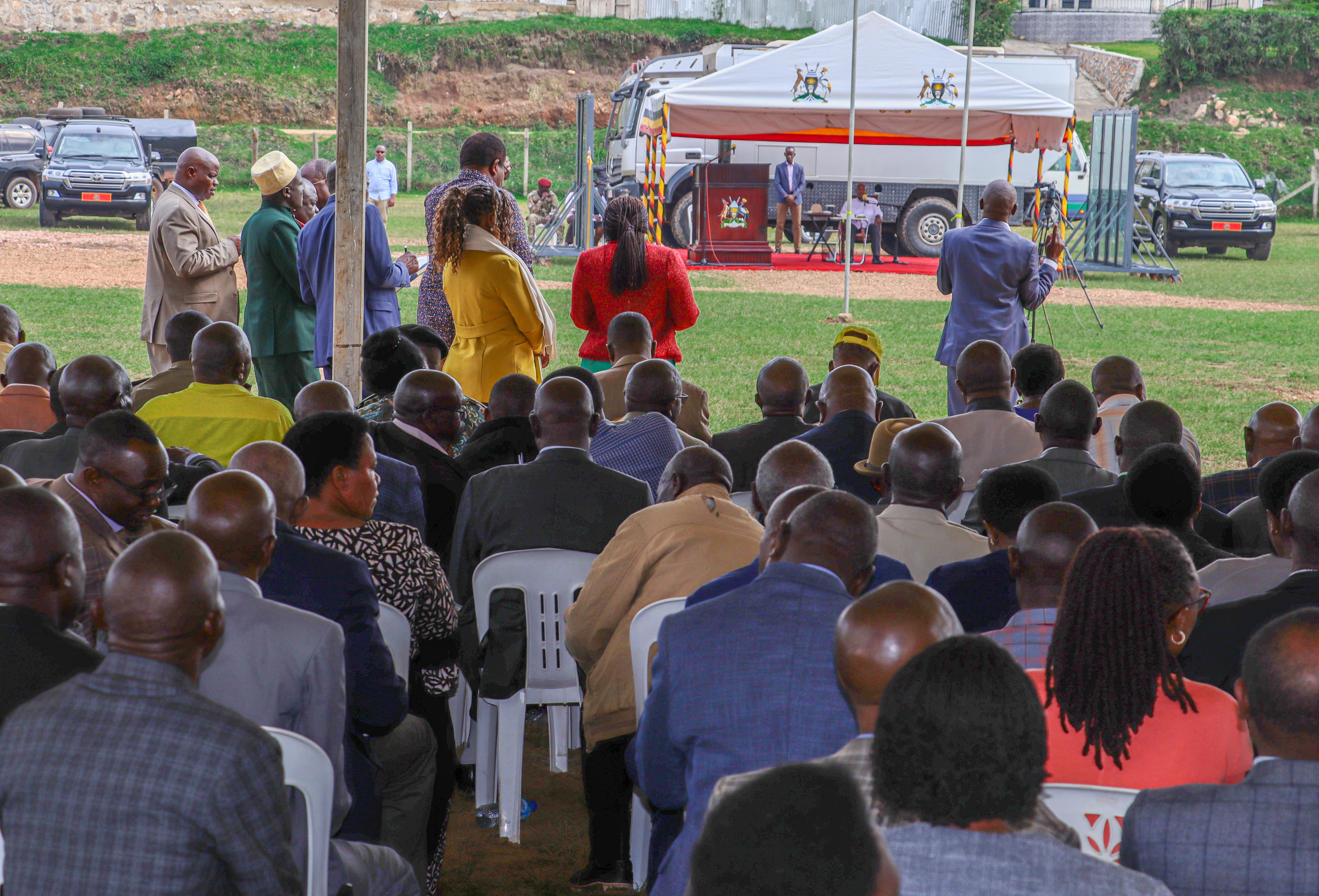
President Yoweri Kaguta Museveni has today commissioned the Wagagai Gold Mining Project in Busia District, describing it as a transformative milestone that will end the wasteful export of raw minerals and usher Uganda into a new era of value addition. During the commissioning, the President congratulated Wagagai Mining (U) Co., Ltd. for establishing a state-of-the-art refinery capable of producing 99.99% pure gold, noting that for decades Uganda only exported blister copper which was not pure enough for direct use and had to be refined abroad before being re-imported. He said this cycle was a loss to the country and praised Wagagai for being able to purify gold to 99.99% purity. “I want to thank Wagagai for listening to my message from the beginning and fully processing the gold. Uganda will get more money,” he noted. He cautioned that exporting raw materials amounts to cheating Uganda and urged artisanal miners to work with Wagagai so that their gold can be refined locally instead of being sold unprocessed. He added that refined gold can now be used in jewellery, electronics, and other industries and thanked Wagagai for being a “residential teacher” by helping others learn from its example. “When you export unprocessed minerals, you are cheating Uganda,” he said. President Museveni also thanked the Government of China for its continued support to Uganda, citing not only investors like Wagagai but also infrastructure projects financed through soft loans. He called on Ugandans to recognize that there is a time for everything and now it is time to utilize natural resources responsibly, stressing that money from non-renewable minerals and oil should be invested in permanent assets such as durable power stations and the railway. “This mineral money must give us permanent and most durable assets,” he urged. “In order to wake up in the minerals sector, we must have full value addition for all minerals like gold, lithium, tin among others. Why? Because we get more money, it creates more jobs, and it consumes more electricity.” The Ambassador of China to Uganda, H.E Zhang Lizhong, thanked the President for officiating at the launch and commended Uganda for fostering a conducive investment environment that has allowed Chinese companies to thrive. He said the project is not only a symbol of China–Uganda friendship but also a driver of industrial progress. Hon. Ruth Nankabirwa, the Minister of Energy and Mineral Development, said the Wagagai Gold Mining project reflects the government’s objective of promoting local value addition and job creation. She confirmed the plant’s capacity to refine gold to 99.99% purity and thanked Parliament for passing the regulatory framework that has made it possible. The Wagagai Gold Mining company General Manager, Tan Jiuchang, said the USD 150 million investment in Phase I of the project represents the beginning of a larger USD 250 million plan to build Uganda’s largest and most technologically advanced gold mine. The General Manager expressed gratitude to government entities and the Chinese Embassy for their support, noting that Wagagai’s progress in licensing and refining has set a benchmark for Uganda’s development. He said the completion of this phase has created over 2,000 jobs and aligns with the President’s vision of transforming Uganda’s economy. The General Manager also added that Busia, long known as the cradle of artisanal miners, now has a refinery that will help small-scale miners improve their livelihoods. Juichang urged artisanal miners to embrace registration and collaboration with the refinery, explaining that the project will open opportunities for income and training for hundreds of Ugandans. The Wagagai Gold Mine, located in Alupe, Busia District, covers 9.224 square kilometers with proven reserves of 30 million tons of gold ore at an average grade of 0.8–1 gram per ton, supporting 20 years of continuous production. Once at full capacity, the mine will process 5,000 tons of ore per day, or 1.5 million tons annually, to produce about 1.2 tons of refined gold each year at 99.99% purity. The project is expected to contribute approximately USD 10 million annually in tax revenue, create more than 5,000 jobs, and train over 500 skilled Ugandan workers.

img
15 August 2025

PRESIDENT MUSEVENI PROPOSES FAIR DISTRIBUTION OF TESO CATTLE COMPENSATION FUND TO BENEFIT ALL HOUSEHOLDS

President Yoweri Kaguta Museveni has today urged that the ongoing cattle compensation exercise in Teso sub-region should benefit all households, rather than concentrating the funds on a few claimants. Speaking at Soroti University during a meeting with some of the cattle compensation claimants, local leaders and stakeholders, the President said that the loss of cattle in Teso was caused by past wars, and what is often referred to as “compensation” should be regarded as rehabilitation. He noted that in previous exercises, lawyers received a large portion of the funds, reducing the amount that reached beneficiaries. To prevent this, the government now ensures that payments are directly delivered to households. President Museveni proposed that the outstanding UGX 169 billion should be shared equitably among all homesteads in Teso, rather than giving large sums to a few claimants. He illustrated his idea: that if each cow is valued at UGX 1 million, the fund could cover 169,000 cows. With roughly 69,000 households, each could receive about 2–3 cows, while the 28,000 households who have already benefited would be excluded from this allocation. To ensure fairness, the President suggested forming a committee of elders, youth, and women leaders to harmonize distribution and budget allocation. He added that, depending on calculations and phased disbursement, households could potentially receive up to five cows each. The Vice President, Hon. Jessica Alupo thanked President Museveni for visiting Teso Subregion to address the longstanding cattle issue. She praised him for maintaining peace in the region, attributing stability to his visionary leadership in guiding the Uganda People’s Defence Forces (UPDF). The Deputy Attorney General, Hon. Jackson Kafuuzi reported that the compensation process has been overhauled to ensure direct payments to verified claimants, moving away from court-mediated settlements. The verification now takes place at subregional and district levels, involving Local Council Committees (LC1, LC2), Chief Administrative Officers, District Government Officers, and local depots, deliberately avoiding centralized verification in Kampala. The Ministry of Justice and Constitutional Affairs issues data cards for claimants to fill in their bio-data, which is verified from the village level to the district registrar. The system started in 2016/17 when the United States Committee verified thousands of claimants, including 16,946 in various subregions. President Museveni launched the Cattle Compensation Initiative Series in March 2022 with a planned budget of UGX 200 billion. Since then, total payments have reached UGX 506.7 billion. Recent disbursements in the Lango Subregion alone included 12,389 payments worth UGX 48.7 billion, with additional allocations across other subregions bringing the total for this round to UGX 128.3 billion through 28,281 payments. However, 24,509 verified claimants remain unpaid, with outstanding claims totaling UGX 506.69 billion. These include 5,570 claimants in the Northern Subregion with claims worth UGX 191.5 billion, 8,284 claimants in the Eastern Subregion with claims amounting to UGX 119.26 billion, and 10,708 claimants in the Central Subregion with claims totaling UGX 165.9 billion. Delays are largely due to incorrect or duplicate account details, closed or blocked bank accounts, and mismatched claimant identification. Hon. Bosco Okiror, MP for Usuk Constituency, urged the government to enhance transparency in payments and resolve pending legal disputes. He cited three court cases involving claimant Elijah Okupa and others, with claims totaling about USD 207,000 annually, mostly from Teso. Hon. Okiror suggested that while some matters remain in court, negotiation could resolve issues faster. He proposed that large claims be settled through phased and sequential payments and emphasized that compensation extends beyond cattle losses to include loss of life and destruction of property, requiring a holistic settlement.

img
14 August 2025

SENIOR GOVERNMENT OFFICIALS MEET TO CURB GOLD FRAUD IN UGANDA


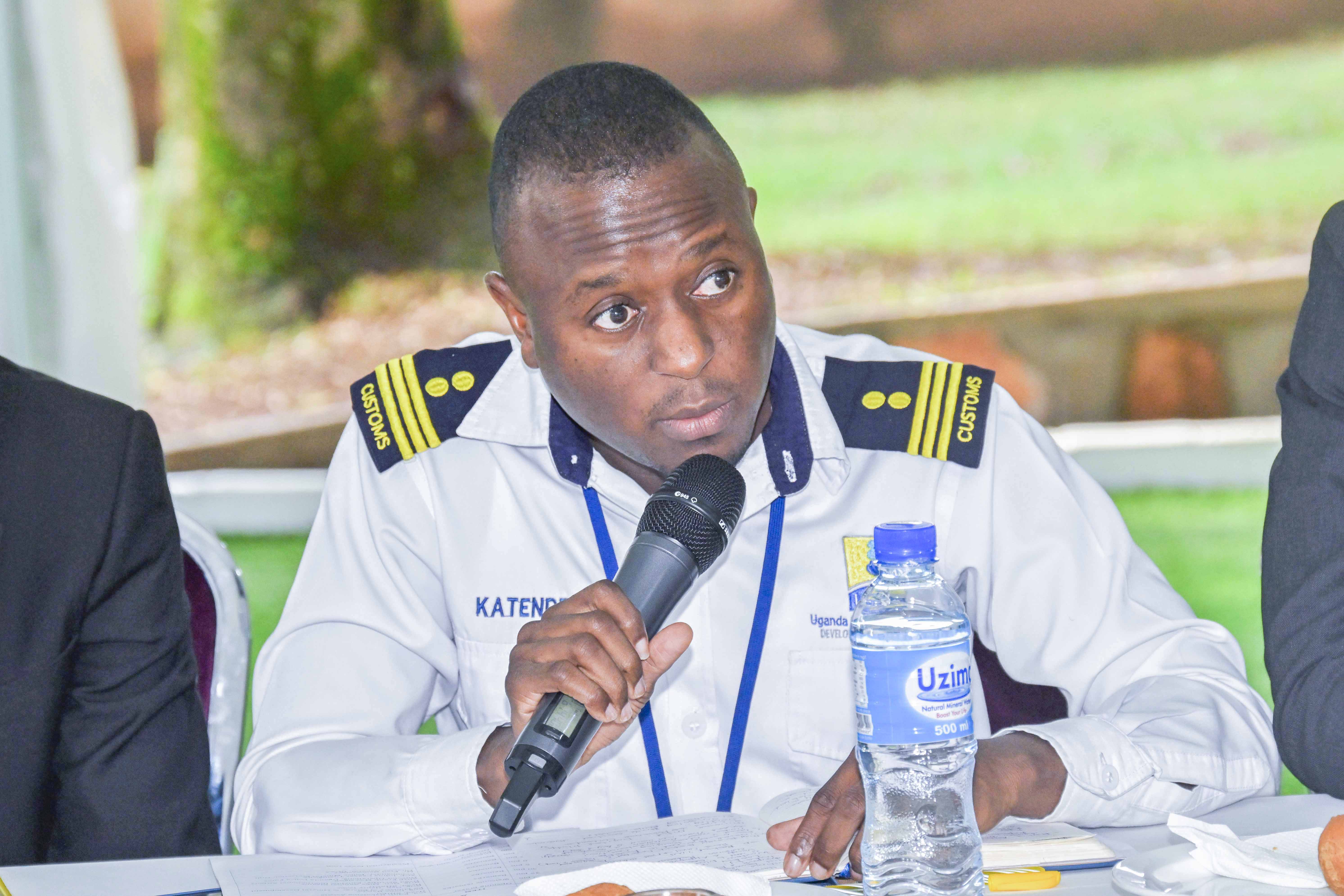
A team of senior government officials have come together to pave ways of stemming fraud in the minerals sector. During a follow up meeting on gold trade fraud in Uganda held on Wednesday 13th August 2025 at the State House Investors Protection Unit (SHIPU) offices in Kampala, the Permanent Secretary, Ministry of Energy and Mineral Development, Eng. Irene Batebe said fraudsters mainly deal in gold and a number of investors have fallen victim to fake gold deals. The first meeting was held in January 2025 and here the heads of government agencies agreed on the need to step up action to prevent fraud in order to redeem the image of the economy. Eng. Batebe called for more concerted efforts with various government entities such as Uganda Police to deal with the challenge. “We must really work together if we are to tackle this challenge. Efforts must be coordinated in an ecosystem arrangement so that in the future we can as well consolidate on them,” she urged. Eng. Batebe also highlighted some steps being taken by the Ministry of Energy and Mineral Development and stakeholders to streamline gold trade. She said so far, they have conducted a case study on Tanzania regarding regulation of business and were looking forward to benchmark in the near future. “Unlike Tanzania, Uganda lacks designated points of sale and purchase of gold. We are working with the Attorney General to come up with a law to enable us to set up designated places for mineral markets and buying centres to overcome black markets and fraud,” she said. “Like in Tanzania, you don't just sell to anyone, gold is recorded and tracked, even if they are exiting the country.” Eng. Batebe further revealed that they have already proposed designated centres for selling and buying of gold around the country. “We are proposing Entebbe and Busia as selling centres while Kassanda, Moroto or Kotido as buying centres. Whoever will be caught trading outside these places, will be marked as a criminal,” she said. “The Bank of Uganda gold purchase program will also bring in some good competition in gold trading by creating competitive prices. Black market dealers will join in, once the prices are competitive.” Eng. Batebe further expressed the need for close collaboration with security agencies to effectively execute the regulations that will be put in place to streamline gold trade. “We are also coming up with a digital platform which is supposed to support tracking and revenue management. Here revenue collection will be automatic.” On the issue of smuggling of gold, Eng. Batebe urged that border patrol should be strengthened. “For digital scams we must work together to deal with the issue,” she advised, as officials agreed to set up a cyber desk at the Uganda Police Force responsible for monitoring online mineral fraud. The officials also agreed to set up a search registry for mineral dealers and also constitute a technical committee whereby members will be meeting on a monthly basis to discuss key issues. The Head of the State House Anti-Corruption Unit, Brig. Gen. Henry Isoke advised that the government should come up with game changing regulations in order to fix the overwhelming issue, causing a disservice to Uganda as a country. “We should strengthen strategic collaboration among government agencies if we are to achieve our goal,” Brig. Gen. Isoke noted. “We need to move faster, timeline is key, engage the Attorney General, Cabinet and have a law in place to regulate the sector.” The Head of SHIPU, Col. Edith Nakalema urged that agencies need to be dedicated towards plugging the loopholes in the entire eco-system. “This calls for heightened vigilance along the gold fraud journey in each of our roles,” she said, further reminding the attendees that the role of SHIPU is to protect investors not only from unnecessary delays in the eco-system but also from fraudulent actors within the system. “To inform our collaborative endeavor, it is necessary for all of us to appreciate the urgency of curbing this vice as a national imperative. This will inspire proactive collaboration from which firm action is triggered.” Col. Nakalema also pointed out that as they move to deal with the scam, they should mainly focus on the origin of the fraud, managing risks along the payment processing value chain, empowering investors and decisive law enforcement. “In our first meeting in January, we spoke with one voice. What brings us here today again joined by other stakeholders is because we still have a common enemy. Therefore, we are all in agreement that we have a role to play in preventing and thwarting fraud,” she said. “However, to triumph over our adversary, we have to ensure that our strategic cooperation does not fizzle out into unconstructive combined effort. Such a lapse would only risk making our united front predictable to scammers.” On the other hand, Col. Nakalema commended Brig. Gen. Isoke and his unit for the recent operation where they arrested seven suspects accused of swindling a Nigerian businessman out of USD 70,000 in a sophisticated fake gold deal. Representing the Inspector General of Police, AIGP Frank Mwesigwa, Uganda Police Director of Operations described the gold scam as a big elephant in the house that must be dealt with as soon as possible. “In 4 months, 48 cases have been reported. We can only fight this scam when we are working together. With policy interventions in place, we will be able to overcome the issue.” Brig. Gen. Mike Kisame, the Head of Aviation Security at Entebbe International Airport said that most times fraud is committed through a chain of individuals who are well connected financially and politically. He therefore called for collaborative efforts among stakeholders if they are to win over the criminal act. Brig. Gen. Kisame however decried the bureaucracy in decision-making when it comes to taking action against the fraudsters. “If you don't act fast things may take a different twist,” he cautioned. The Police Minerals Protection Unit Commander, Assistant Commissioner of Police, Julius Caesar Tusingwire said that since January 2025, they have closed 15 illegal gold refineries in Muyenga, Buziga and neighboring areas. “We recovered a number of exhibits like fake gold, gas cylinders, money, genuine gold, among others. That operation was successful, and we agreed that every quarter we should conduct such an operation,” he said.

img
13 August 2025

PRESIDENT MUSEVENI CONCLUDES THREE-DAY WORKING VISIT TO EGYPT

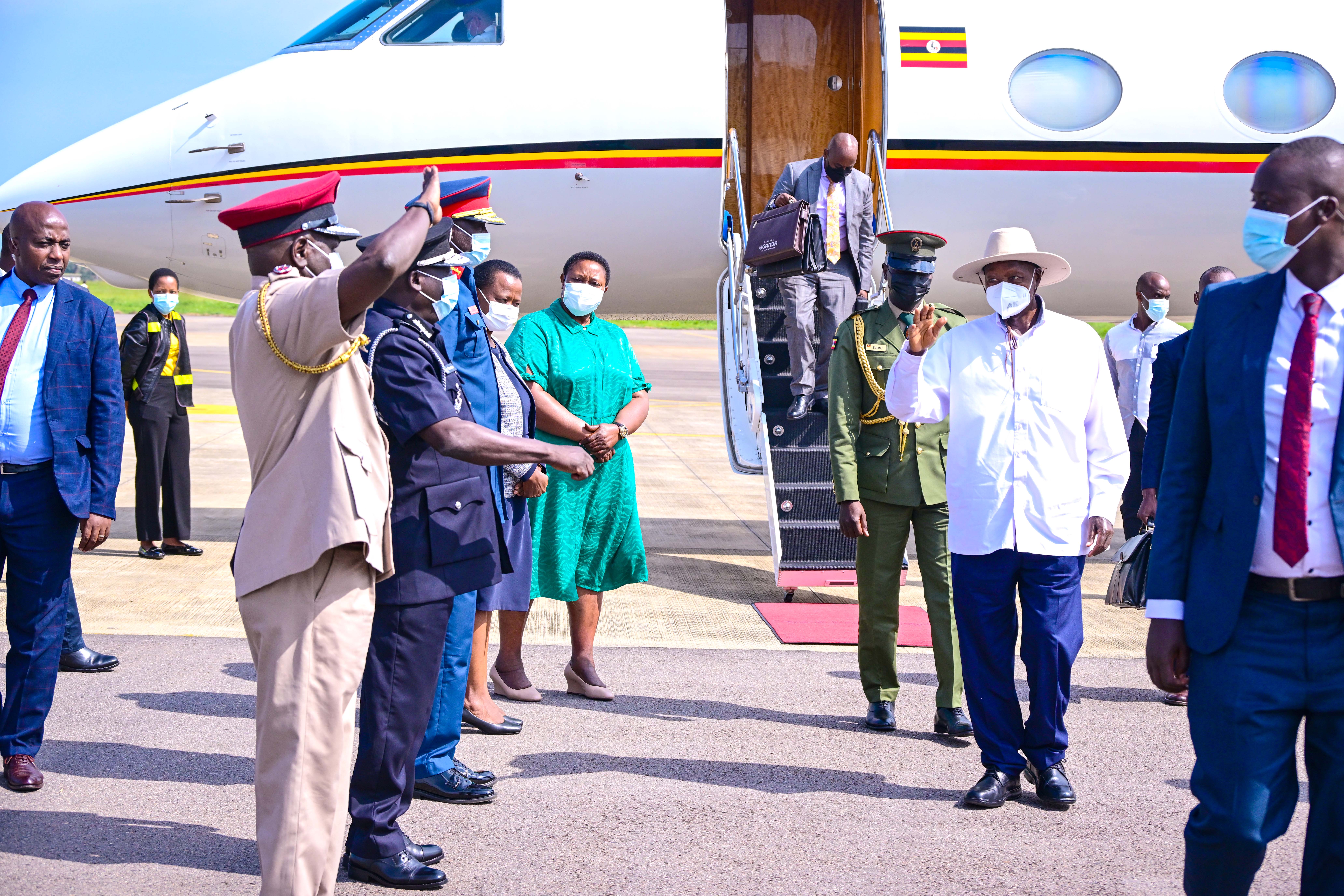
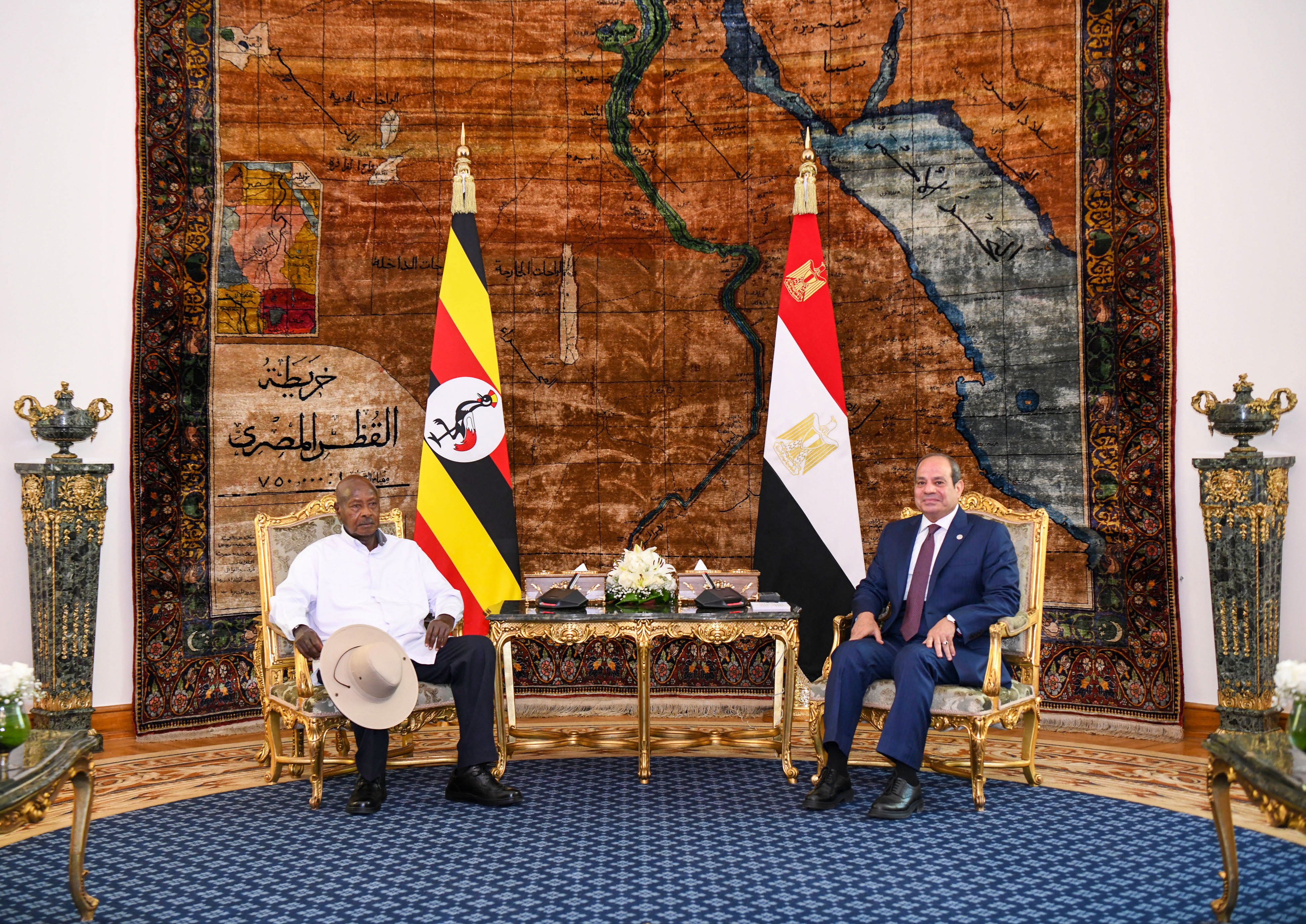
President Yoweri Kaguta Museveni returned to Uganda this afternoon after a fruitful three-day working visit to Egypt, where he engaged in high-level talks and bilateral meetings with his Egyptian counterpart, H.E Abdel Fattah El-Sisi. The discussions solidified a strategic partnership focused on the Nile, trade, and regional stability. During the meetings, the two leaders emphasized the significance of the Nile River, underlining the necessity for equitable sharing of its waters among all Nile Basin countries to foster prosperity and strengthen Pan-African unity. The bilateral discussions aimed at enhancing trade relations, regional cooperation, and economic integration among African nations and reducing reliance on European markets. At the Egypt-Uganda Business Forum, President Museveni extended an invitation to Egyptian investors to explore opportunities in Uganda, highlighting the potential for sustainable development and growth. The visit reaffirmed the historically strong ties between Uganda and Egypt, culminating in the signing of several landmark agreements designed to formalize their partnership. These agreements seek to bolster cooperation in key sectors including trade, investment, agriculture, water management, and governance. Additionally, the leaders addressed pressing regional issues, with President Museveni advocating for dialogue and stability in countries experiencing conflict, notably Libya, Sudan and Palestine. Upon his arrival at Entebbe International Airport, President Museveni was warmly welcomed by the Minister for the Presidency, Hon. Babirye Milly Babalanda; the Commander of the Air Force, Lt. Gen. Charles Okidi; Deputy Inspector General of Police, James Ochaya; and Deputy Commissioner General of Prisons, Mr. Samuel Akena.

img
13 August 2025

PRESIDENT MUSEVENI EXTENDS FINANCIAL SUPPORT TO LUKAYA ROADSIDE MARKET VENDORS


President Yoweri Kaguta Museveni has continued to financially empower roadside market vendors with an aim of helping them improve their household income. This time round the beneficiaries were vendors working from Lukaya Road Toll Market and Lukaya Highway Market, both on Masaka Road. At least 552 vendors benefited from the initiative. The vendors who ply their trade in roasted meat, roasted chicken, roasted plantain (gonja), beverages, among other fast foods, received Shs100,000 each. The business booster package is part of President Museveni’s broader initiative to empower roadside market vendors across the country. The support was delivered yesterday by officials from State House led by the Senior Presidential Advisor In-charge of the Elderly, Princess Pauline Nassolo and the Special Presidential Assistant on Women Affairs, Ms. Flora Kabibi. Princess Nassolo informed the vendors that President Museveni is very passionate about their wellbeing, citing it as one of the reasons he extended an additional capital for their businesses so that they can stabilize their household income. “When we first came here, you told us that you have never benefited from the Parish Development Model (PDM) or Emyooga so we took the report back to Mzee. He then decided to send you this support as you wait to benefit from other government programs,” she said. “Mzee has sent you this money directly. It may be little but if properly utilised, it can create a very big impact in your business,” she added. Princess Nassolo further urged the vendors to focus on improving their livelihoods through hard work. “The infrastructure such as good roads may be there but that will not take away the poverty in your homes. H.E the President is now focused on how he can help you improve your household income and fight poverty,” she urged. On the other hand, Princess Nassolo advised the vendors to vote for selfless leaders who have their interests at heart for effective service delivery. “You should hold your leaders accountable if you want to benefit from government programs.” On her part, Ms. Kabibi cautioned vendors against politicking, advising them that they should instead focus on improving their livelihoods through engaging in productive enterprises. “Politics should not divide us. By the end of the day, we all remain Ugandans. All we should care about is uplifting our lives,” she stated. Ms. Kabibi reiterated calls to the vendors to use the business booster package well so that they can grow their businesses. The Chairperson of Lukaya Road Toll market, Ms. Sylvia Zalwango expressed gratitude to President Museveni for the financial support to the vendors, saying that with such a kind gesture, they will continue supporting him and his NRM government. “I thank President Museveni for supporting ordinary Ugandans like us. It has been long without benefiting from government programs such as PDM and Emyooga. I'm so happy that we have finally benefited,” she said, further thanking him for sending a trustworthy team which fully delivered the package. “The money may seem little, but it has a big impact on us. I’m really grateful, Your Excellency.” Another vendor who sells roasted chicken, Mr. Ben Makanga also thanked the President for the support. “This money is so vital in our businesses. I really thank you for the support, President Museveni,” he noted. “We take this money in good faith, and we shall utilise it well to expand our businesses.” Ms. Nantumbwe Joyce, who sells roasted gonja in the same market also hailed President Museveni for the financial rescue, explaining that she had run out of capital but with this business booster package, the narrative is going to change since she is going to rejuvenate her business. The Chairperson of Lukaya Highway Market, Mr. Kakooza Godfrey hailed President Museveni for uplifting the vendors through the empowerment program. He however requested the government to come up with more poverty alleviation programs designed specifically for vendors.

img
12 August 2025

PRESIDENT MUSEVENI URGES EGYPT TO INVEST IN UGANDA’S CAPITAL AND ENTREPRENEURSHIP DRIVE

President Yoweri Kaguta Museveni has today called on Egyptian investors to channel capital and entrepreneurship opportunities into Uganda, saying the two countries can transform their centuries-old Nile connection into a powerful engine for economic growth. Speaking at the Egypt–Uganda Business Forum in Cairo alongside his host, H.E Abdel Fattah El-Sisi, President Museveni declared that his visit was driven by one overriding mission: attracting wealth. The Egypt -Uganda business Forum attracted about 200 participants under the theme: “Strengthening Trade and Investment Cooperation between Uganda and Egypt”. The high-level forum is focusing on five key areas, among which include Business-to-Business (B2B) engagements, Business-to-Government (B2G) dialogues, promotion of joint ventures and strategic partnerships. “I could not come to Egypt without seeking wealth. Egypt and Uganda are linked by the Nile since time immemorial, but our trade is still too small, only $133 million. That does not match our relationship. What we lack, and what Egypt can help us get, is capital and entrepreneurship,” he said. President Museveni explained that capital could come directly from Egyptian sources or through Egypt’s global networks, but the goal remains the same; to inject investment and business acumen into Uganda’s rapidly expanding economy. A Growing Economy Seeking Partners: The President highlighted Uganda’s economic progress, noting that it had recently moved into the low middle-income bracket. “We are no longer among the least developed countries,” he said. “Our economic growth is the result of careful packaging of philosophy, ideology and the economy but we need reinforcement just as investors from India and China have helped us, Egypt too can join in and benefit.” He reminded business leaders of the basics of production. “Business is about goods and services you don’t trade in words. You need land, labour, capital and entrepreneurship. Uganda has abundant land, fertile soils, fresh water, minerals and fisheries. We have a growing labour force, 46 million people today in Uganda, projected to be 106 million in the next 25 years. What we are looking for is more capital and entrepreneurship to unlock this potential.” President Museveni warned that production without a ready market leads to failure. Drawing lessons from history, he recounted his efforts to persuade Japan to assemble vehicles in Uganda. “They ignored us then. Now we manufacture our own vehicles, with only the lithium batteries imported. Those who missed the early chance missed a golden opportunity. The power of the pocket is crucial. Someone who buys from you is helping you.” The President linked this to Africa’s need for unity and market integration. “Our leaders realised, two decades after independence, that without a united African market, we would never get out of poverty. That is why we built COMESA, the East African Community, and now the African Continental Free Trade Area. I am glad Egypt joined COMESA. But first, let us work bilaterally, Uganda buying from Egypt, and Egypt buying from Uganda then we shall engage the rest of Africa.” He cautioned against political and economic fragmentation. “Latin America has more natural resources than the United States, yet people walk on foot to the US because of misery. Why? Because it is disorganised. The US succeeded because its leaders united 13 colonies into a single market. Shall we build a United States of Africa, or a fragmented Africa like Latin America?” he said. President Museveni also thanked President El-Sisi for agreeing to build a foot-and-mouth disease vaccine factory in Uganda. On his part, President El-Sisi reaffirmed Egypt’s commitment to deepening trade and investment ties with Uganda. “It gives me pleasure to welcome my brother, the President of Uganda. We see Uganda as a main partner in the Nile Basin and are keen to expand our trade beyond the current $133 million. This forum is a great step towards our shared goals,” President El-Sisi said. Egypt’s Minister of Investment and Foreign Trade, Hassan El Khatib, welcomed participants by highlighting the strong relationship between Egypt and Uganda, noting that both nations are working toward the same vision of prosperity for their citizens and the African continent. “This forum represents a new chapter in our cooperation,” Mr. El Khatib said, emphasizing that Egypt and Uganda share a common outlook on advancing industries, harnessing human resources, and creating more partnerships, particularly in agriculture and transformational industries. He cited Egypt’s recent successes in infrastructure, especially railways, power plants, and modern agricultural systems as proof of what collaborative effort can achieve. “Our engagement today is about integration and collaboration on the international economic map. Together, we can drive sustainable development, stabilize our economies, and strengthen intra-African trade, with the African Continental Free Trade Area as a key pillar,” he added. Uganda's Minister of Finance, Planning and Economic Development, Hon. Matia Kasaija, echoed the sentiment, recalling that in May 2018, both countries agreed to deepen bilateral relations and build private-sector partnerships rooted in trade and investment. “I am pleased to see that our discussions have matured into this business forum,” Hon. Kasaija said. “It is encouraging to witness the growing trade between our two countries, which reached $138 million in 2024. Egypt’s exports to Uganda rose to $112 million, while Ugandan exports are also growing but this is still below our potential.” He pointed to Uganda’s vast opportunities in cassava production, dairy products, and other agricultural sectors, urging Egyptian companies to invest in the country’s value-addition industries. Hon. Kasaija expressed confidence that the Memoranda of Understanding (MOUs) signed during the forum would open new opportunities for cooperation in various sectors. “This forum gives our private sectors a platform to network, create partnerships, and turn potential into real economic transformation,” he said.

img
12 August 2025

UGANDA, EGYPT AGREE ON STRATEGIC PARTNERSHIP FOR THE NILE, TRADE & REGIONAL STABILITY

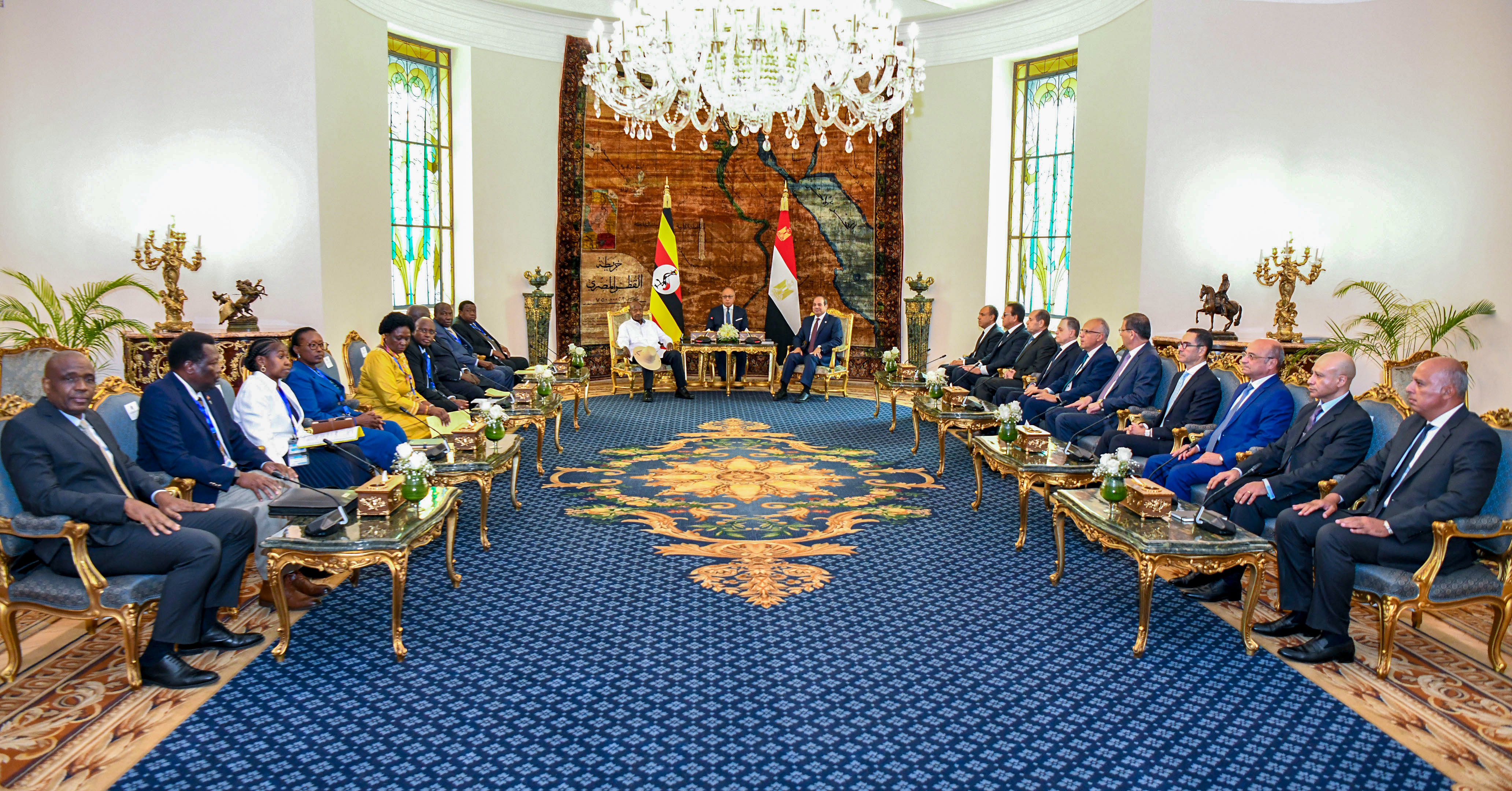
President Yoweri Kaguta Museveni and his Egyptian counterpart, H.E Abdel Fattah El-Sisi have pledged to deepen the historic ties between Uganda and Egypt, anchored by the River Nile and strengthened through decades of Pan-African solidarity. The two leaders made the revelation today during a joint press conference in Cairo on the second day of President Museveni’s three-day working visit at the invitation of President El-Sisi. President Museveni began by recalling the deep historical linkages between the two nations, both geographical and political. “Uganda and the Great Lakes region are linked to Egypt by the Nile from ancient times. Politically, our closeness began in 1952 when President Nasser took leadership here. Before that, we had little contact, but Nasser, as an Africanist, worked closely with our leaders, Julius Nyerere, Kwame Nkrumah and supported the anti-colonial movement,” he said. “When we came into government, we started working with the leaders at that time.” The President stressed that the future of the Nile must be approached with a wider vision. “Sometimes, the problem is the approach. Instead of limiting ourselves to historical rights, we should focus on the global needs of all Nile Basin countries,” he said. “Prosperity for all, electricity for all, irrigation for all, and clean drinking water for all. If we include these in our framework, we can then use the most scientific and fair methods to achieve them,” he noted. President Museveni also challenged the perception that Uganda is landlocked, saying its natural connection to the Mediterranean through the Nile has only been hindered by political instability in Sudan. “If there were no problems in Sudan, we would not be called landlocked. We are connected to Egypt because of the Nile.” On bilateral cooperation, President Museveni praised Egypt’s support in supplying Uganda with foot-and-mouth disease vaccines and welcomed the decision to establish a vaccine factory in Uganda. “I am very happy about that,” he said, adding that economic cooperation should be at the heart of Africa’s progress. “Business is about two things, producing a good or service, and someone buying it. If leaders don’t understand this, there can be no prosperity. If you buy what I produce, you are supporting me, and vice versa. That’s why I am glad His Excellency is emphasizing business. Together, we will see how to produce, trade, create jobs, and develop electricity and irrigation for our people,” President Museveni remarked. He further warned against Africa’s overdependence on trade with Europe. “Some African countries made the mistake of focusing on trading only with Europe, but that’s risky; they can block you at any time. Why can’t we trade more among ourselves?” he inquired. The two leaders also discussed regional challenges, including the situations in Libya, Sudan, and Palestine, with President Museveni emphasizing the need for dialogue and peace. President El-Sisi, in his remarks, underscored the Nile River’s central role in the shared destiny of Egypt and Uganda. “The Nile binds us together. The bilateral ties between our two countries have recently witnessed growing cooperation, and I look forward to more partnerships,” he said. President El-Sisi highlighted cooperation in water resource management, agriculture, veterinary disease control, natural resource development, and the energy sector. He stressed that Egypt will always uphold international law to protect the Nile while supporting the development of other Basin countries. “Egypt has no other water source; we don’t have rainfall. The Nile is life for us. We are not against development in any Basin country, but we call for equitable sharing of water resources. We must coexist and ensure that development does not harm the people who depend entirely on this river,” he said. He revealed that the Nile annually carries more than 160 billion cubic meters of water, with 85 billion cubic meters coming from the Blue Nile, much of which is used for agriculture. “This is why water is extremely critical for Egypt. Our people are deeply concerned about it, and we trust Uganda’s role in fostering agreements among Basin countries,” he added. President El-Sisi closed by expressing gratitude to his Ugandan counterpart. “I thank President Museveni and welcome him to Egypt. Our discussions have demonstrated great understanding and a shared vision for the future.” Meanwhile, earlier on, a series of landmark Memoranda of Understanding (MOUs) covering key sectors from trade and investment to agriculture, water management, and community development were signed. Presiding over the event, the two Heads of State looked on as ministers from both countries appended their signatures, committing their nations to closer cooperation. Uganda’s Minister of Internal Affairs, Maj. Gen. (Rtd) Kahinda Otafiire, signed the first agreement with Egypt’s Minister of Foreign Affairs, Emigration, and Expatriates, H.E. Dr. Badr Abdelatty, paving the way for stronger collaboration in governance, security, and diplomatic engagement. This was followed by the signing of a foreign affairs cooperation framework between Uganda’s Minister of State for Foreign Affairs, Hon. Henry Okello Oryem, and Dr. Abdelatty, aimed at strengthening political dialogue and regional coordination. The spirit of collaboration extended to rural transformation and agriculture, with Hon. Alice Kaboyo, Uganda’s Minister of State for Luwero Triangle and Rwenzori Region, joining hands with Egypt’s Minister of Agriculture and Land Reclamation, Hon. Alaa Farouk, to formalize partnerships in agricultural technology transfer, land reclamation, and community development projects. Economic growth took center stage as Uganda’s Minister of Finance, Planning, and Economic Development, Hon. Matia Kasaija, and Egypt’s Minister of Investment and Foreign Trade, Hon. Hassan El Khatib, signed an agreement to promote trade, investment, and joint ventures, promising to unlock new opportunities for business communities in both nations. Water security and environmental sustainability were also high on the agenda where Hon. Beatrice Anywar, Uganda’s Minister of State for Water and Environment, signed with Prof. Dr. Hani Sewilam, Egypt’s Minister of Water Resources and Irrigation, cementing cooperation in water resource management, irrigation development, and environmental protection.

img
12 August 2025

PRESIDENT MUSEVENI WOOS EGYPTIAN INVESTORS IN CAIRO

President Yoweri Kaguta Museveni yesterday met and welcomed Egyptian investors to explore opportunities in Uganda, saying the country is ready to work with those bringing practical solutions and investments that can spur more development. The President is in Cairo, Egypt on a three-day working state visit at the invitation of his host and counterpart, H.E. Abdel Fattah El-Sisi. After being received at Cairo International Airport on Monday 11th, August 2025, he proceeded to Al-Qubbah Palace where he met various groups of Egyptian investors led by H.E. Ambassador Mohamed El-Hamzawi. First to meet the President were Mr. Tamer Shafik and Mr. Gamal Farid of Orascom Construction, one of the largest construction companies in Africa and the Middle East. They presented proposals to ease traffic congestion in Kampala through modern transport systems, including light rail, elevated mono-rail, and underground metro lines. Recalling his first visit to Cairo in 1969, President Museveni said he was familiar with the challenge of heavy traffic and appreciated the solutions being proposed. “You are most welcome. Come to Uganda and we will discuss,” he told the delegation. “We are losing a lot of money in fuel in traffic without moving and poisoning the environment. The impact is not good, damaging the roads,” the President added. Insurance Package for Travellers: Hon. Moustafa El Gendy, Vice President and Chief Advisor to the President of the Pan-African Parliament, and President of Eugenie Investment Group for Tourism and Cruises, shared details of Egypt’s travellers’ insurance system. Under the plan, he said that an Egyptian travelling abroad pays a one-time fee that covers them for ten years the lifespan of their passport in case of accidents, sickness, or repatriation needs, noting that this is an idea he would like to bring to Uganda. “This is a very good idea. Come and meet the Foreign Affairs Ministry and make your proposal,” he said. Plans for a Regional Public University: Prof. Dr. Ashraf Mansour, Prime Founder and Chairman of the Board of Trustees of the German University in Cairo, expressed interest in establishing a joint public university to serve Uganda, Kenya, and Tanzania. President Museveni said it was a good idea, and they would look into it. Expanding Dairy Production and Industry: The President also met Mr. Mohamed Mohamed Khalil El-Tahan, Chairman of El-Tahan International Food Industries, who praised Uganda as the safest country in East Africa. He said his company, which produces cheese in Mbarara for export to the Middle East, Europe, and the USA, was interested in returning to expand operations and introduce new hot cheese products. He also proposed developing an agricultural and industrial city. President Museveni responded,” You come, I will give you land near Mbarara, we shall be waiting for you.” On the city proposal, he said they would study it further, noting it may not be possible in Jinja but could be elsewhere. Meanwhile, the President’s programme in Cairo continues with more high-level talks and key bilateral meetings. The meeting was also attended by the Ugandan government officials including; the Minister of Internal Affairs, Maj. Gen (Rtd) Kahinda Otafiire, the Minister of State for Animal Industry, Lt. Col. (Rtd). Bright Rwamirama, Maj. Gen. Apollo Kasiita-Gowa, the Director of Citizenship and Immigration Control and Lt. Gen. Charles Angina, the Deputy Head of Mission at the Ugandan Embassy in Cairo.

img
11 August 2025

PRESIDENT MUSEVENI ARRIVES IN CAIRO FOR A THREE -DAY WORKING STATE VISIT

President Yoweri Kaguta Museveni has this afternoon arrived in Cairo, Egypt, for a three-day working state visit at the invitation of his host and counterpart, H.E. Abdel Fattah El-Sisi. Touching down at Cairo International Airport, the President was warmly welcomed by Dr. Hani Sewilam, Egypt’s Minister of Water Resources and Irrigation, and Uganda’s delegation led by State Minister for Foreign Affairs, Hon. Okello Oryem, alongside Lt Gen. Charles Angina, the Deputy Ambassador of Uganda to Egypt. Over the next two days, President Museveni and President El-Sisi will hold high-level bilateral talks aimed at strengthening cooperation between the two countries. The leaders are expected to witness the signing of key agreements, address a joint press conference, and preside over a business forum to unlock new opportunities in trade, investment and mutual development. Earlier at Entebbe International Airport, President Museveni was seen off by the Minister for the Presidency, Hon. Babirye Milly Babalanda; Head of Public Service and Secretary to Cabinet, Ms. Lucy Nakyobe; Lt. Gen. Charles Okidi, Commander of the UPDF Air Force; Mr. James Ochaya, Deputy Inspector General of Police; and Mr. Samuel Akena, Deputy Commissioner General of Uganda Prisons.

img
08 August 2025

PRESIDENT MUSEVENI RETIRES SEVEN UPDF GENERALS AS HE CAUTIONS THEM AGAINST INVESTING IN RISKY VENTURES

President Yoweri Kaguta Museveni, also Commander-in-Chief of the Uganda People’s Defence Forces (UPDF) has today presided over the retirement ceremony of seven army officers at State House, Entebbe. The retirees included Lt. Gen. Peter Elwelu, Lt. Gen. Francis Ben Okello, Maj. Gen. Hudson Mukasa, Maj. Gen. George Igumba, Brig. Gen. John Byuma, Brig. Gen. Dominic B. Twesigomwe and Brig. Gen. Augustine Kamyuka Kyazze. Addressing the retirees, President Museveni thanked them and other officers who died during the liberation struggle for their contribution to Uganda. “We shall all die but die after having done what? When I come here and I see you people, I praise God that you and all of us; the population which supported us, took the right side of history that is why Uganda is now where it is.” He further noted that since inception, the work of the UPDF was blessed by God, explaining that the army started small to now a modern and professional force. “You can see that this work is really blessed by God. Therefore, when we are here, the first thing we should do is to thank God for blessing us in all those efforts,” he said. On the other hand, Gen. Museveni revealed that the government has been able to offer a good retirement package to the retirees because the economy has now improved. “I don't want my generals to retire in poverty. We said since the economy has improved, now it's time to do something about the salaries and retirement benefits of the soldiers. Now this the good money we are talking about,” said President Museveni as he advised the retirees to use their package wisely and avoid investing in risky ventures. The Minister of Defence and Veteran Affairs, Hon. Jacob Oboth Oboth commended the generals for serving their nation diligently, saying that God has been on their side throughout their entire journey of service. “We thank God for you. We also thank God for your families,” he said. The Deputy Chief of Defence Forces (D/CDF), Lt. Gen. Samuel Okiding thanked President Museveni for the visionary leadership that has enabled him to steer Uganda’s development. He thanked the Ministry of Defence leadership for always supporting the UPDF and also hailed the CDF, Gen. Muhoozi Kaneirugaba for his strategic leadership that has transformed the army. Lt. Gen. Okiding also thanked the retirees for serving Uganda with dedication and sacrifice up to the time of their retirement. Lt. Gen. Elwelu, the most senior officer, spoke on behalf of the retirees. He thanked God for the gift of life and for enabling them to serve their nation for all these years until today as they retire honorably. “Your Excellency, this is a great day for the seven of us who are retiring today,” he said, as he thanked President Museveni for the mentorship and giving them a chance to serve under the UPDF. The event was also attended by the Ministry of Defence officials, UPDF leadership, family members of the retirees, among others.

img
07 August 2025

PRESIDENT MUSEVENI TO TURN HIS DEMONSTRATION FARMS INTO CENTERS OF EXCELLENCE

Commends Busoga for supporting the liberation struggle that brought NRM government into power President Yoweri Kaguta Museveni has unveiled a new national initiative to transform his demonstration farms into centers of excellence for the 4-acre agricultural model, aimed at eliminating household poverty through structured, small-scale commercial farming. The President announced on Thursday, 7th August, 2025, while addressing residents of Kityerera Parish at his State Lodge in Mayuge District, that the farms will not only demonstrate modern farming practices but also serve as distribution centers for free agricultural inputs to interested households. “We’re going to develop this farm here according to plan, but at the same time, start giving materials to you people. Those who want coffee, pigs, chicken, or fingerlings for fish, we shall give them directly,” President Museveni said. He reiterated the longstanding government recommendation of the “4-acre model,” a strategic plan that promotes diversification within small landholdings. The model prescribes one acre for coffee, one acre for food crops, one acre for fruits (such as mangoes, pineapples, and oranges), and one acre for pasture for livestock. Additionally, small backyard spaces should accommodate poultry for eggs, piggery, or fish farming, especially for residents living near wetlands. “These seven activities can generate sufficient income for any homestead. If you do them well, you’ll not only escape poverty but also create employment and wealth,” President Museveni stressed. The President recalled the genesis of his agricultural advocacy from the 1960s, when he and colleagues in the student movement began campaigning for homestead-based income solutions, contrary to political parties at the time, which focused mainly on power and leadership. “You don’t sleep on roads or in schools or hospitals unless you are sick. You go back home, and poverty is waiting there with your wife and children. So that’s where we must begin,” he said. He narrated how the strategy had been successful in the cattle corridor by 1995, leading to a transformation from indigenous to Friesian cows and boosting domestic milk production, which replaced imports from Kenya, New Zealand, and Australia. This success inspired President Museveni to advocate for similar models across the country, including in the Busoga sub-region, although uptake has been inconsistent. To underscore the model’s viability, President Museveni cited multiple examples of individuals who have embraced the approach and reaped significant rewards. He singled out Joseph Ijala, a former taxi driver in Serere District, who started poultry and dairy farming on 2.5 acres in 2012. Ijala now sells 310 trays of eggs daily, earns over Shs 3 million per day, produces more than 300 liters of milk, and earns over Shs 1 billion annually retaining around Shs 800 million in net profit after expenses. Another example was Nyakana from Fort Portal, who operates on just 1.2 acres. He sells 120 trays of eggs daily and earns over Shs 130 million annually in profits from poultry and dairy. His success has enabled him to employ 15 workers. “These are people who simply picked two of the seven activities. Imagine what can happen if more adopt all seven,” President Museveni noted. On the other hand, the President revealed that he bought the land in Kityerera with the vision of creating a zonal center that reflects the success achieved in places like Kisozi and the cattle corridor. However, he lamented previous management failures and promised a fresh start. “We’re going to make this place a center of excellence of the 4-acre model, having all seven activities, including livestock and fish farming,” he pledged. He advised against environmentally damaging practices like rice farming in wetlands, pointing out that fish farming in peripheral wetland areas is not only sustainable but also significantly more profitable. “Fish farming can earn you Shs 66 million from just one acre with 8 ponds. That’s more than you can get from growing rice while damaging the environment,” Museveni explained. He highlighted scientific advancements, noting that while most Banyankore farmers in Bushenyi harvest 5 tons of matooke per acre, Prof. Florence Muranga achieves up to 53 tons with proper management. To support implementation, President Museveni urged residents to form SACCOs to access financial assistance and pledged direct government provision of inputs, especially for livestock and fish farming, similar to what was done in the Limoto Rice Scheme. President Museveni reaffirmed his belief that small-scale, intensive agriculture is the most direct route to household prosperity. “These seven activities, we have been telling you since 1996. Those who listened are now wealthy. Those who didn’t are still struggling,” he urged. President Museveni also addressed community concerns over theft, especially livestock theft, which residents said hampers commercial farming efforts. “We are enforcing the sub-county policing model. Each sub-county will have 18 policemen, and if needed, more will be added. Police dogs and surveillance cameras will help track criminals even if they flee in vehicles,” he assured. Additionally, President Museveni hailed the people of Busoga for taking part in the protracted struggle that brought the National Resistance Movement government into power in 1986. The President pointed out Bush war heroes such as James Mbigit, William Nkoko, Rashid Ntale and Sam Kasadha who were brutally murdered by former President Idi Amin for their sacrifice towards Uganda’s liberation. According to President Museveni, Busoga contributed a lot to the prevailing peace Uganda is enjoying currently. The meeting was also attended by key government officials, including the third Deputy Prime Minister, Rt. Hon. Rukia Nakadama Isanga; the Minister for the Presidency, Hon. Babirye Milly Babalanda, among others. Rt. Hon. Nakadama thanked President Museveni for not forgetting Kityerera and the people who supported him during the liberation struggle. She also praised the President for his vision, saying, “You told us that you don’t want poor neighbors, and that’s why you’ve brought us here.” Ms. Janet Nkoko and her residents of Kityerera requested the President for support especially in terms of agricultural input and financial empowerment, a plea President Museveni responded to in the affirmative.

img
06 August 2025

PRESIDENT MUSEVENI ANNOUNCES PLAN TO BUY MAYUGE SUGAR FACTORY FOR BUSOGA SUGARCANE FARMERS

Cabinet to decide fate for two sugar factories which were stopped due to operational issues President Yoweri Kaguta Museveni has announced that the government will purchase the Mayuge Sugar Factory for Busoga sugarcane farmers. The President made the announcement on Wednesday August 6, 2025, while meeting sugarcane growers, millers, and sugar manufacturers from across Uganda at Kityerera State Lodge, Mayuge. The move is in fulfilment of the government's pledge to build a sugarcane processing plant for Busoga sugarcane farmers. During the meeting, the farmers gave the government a green light to go into purchase negotiations with the sugar factory. The new ownership model is expected to restore fairness in the sugar industry and ensure that profits return directly to the farmers. “I pledged to build a sugar factory for you. Recently, the people of Mayuge Sugar Factory came and wanted to sell it to me and give it to the poor people. Do you agree?” President Museveni asked, receiving a resounding “Yes!” from the farmers. “Okay, we shall negotiate with them and buy it for you,” the President assured. The meeting brought together key stakeholders from Uganda’s major sugarcane growing regions — Busoga, Buganda, Western, and Northern Uganda — and is part of President Museveni’s wider agenda to reform the agro-industrial sector and uplift communities from poverty. In the same meeting, President Museveni revealed that the cabinet will decide the fate of CN Sugar Ltd and Shakti Sugar limited which were closed due operational issues. He said the issue should be handled next week on Monday. On the other hand, President Museveni directed the Minister for Trade, Industry and Cooperatives, Hon. Francis Mwebesa, to ensure the long-awaited Sugar Council is established in accordance with the Sugarcane (Amendment) Act, 2023, passed by Parliament in April, 2025. He ordered that the names of the council members should be confirmed by next week. The council is expected to regulate the industry and represent the interests of growers and millers alike. The council will consist of a chairperson, four representatives of sugarcane out-growers, four from sugar millers, and Permanent Secretaries from the Ministries of Agriculture, Finance, and Trade. During the same meeting, Mr. Budugo Isa, Chairperson of the Uganda National Association of Sugarcane Growers, expressed concern over the continued deduction of a 5% levy from farmers delivering sugarcane to factories, a cost management charge that was supposed to be scrapped under the new law. “We had hope in this council, but the Ministry of Trade is taking too long to implement it,” Mr. Budugo lamented. President Museveni responded firmly, directing that the charge should stop and urged the sugar manufacturers to reject sugarcane deliveries that are mixed with husks and tops, which degrade processing efficiency. “Can we now agree? Reject the unclean sugarcane,” President Museveni said. “And the 5% charge must stop.” Minister Mwebesa pledged to enact new regulations in line with the President’s directive. He also disclosed that the government has secured funds to compensate suppliers of the Atiak Sugar Factory, and the payments would be effected next week. Delving into Uganda’s historical struggles with poverty, President Museveni shared personal insights on wealth creation, the challenges of land fragmentation, and the transformation of traditional communities. “The idea of transformation was not clear in the 1960s. Some people believed that poverty must exist — that some be rich while others stay poor. I refused that logic,” he said. “When I went to school, I compared traditional systems with capitalist economies and saw how industrial revolutions changed societies,” he added. H.E. Museveni said his early efforts in the cattle corridor focused on ending nomadic lifestyles, promoting food production, and introducing income-generating activities. However, the long years of war against Idi Amin disrupted economic progress and led to further land fragmentation, weakening household incomes. Who should grow sugarcane? The President gave a detailed economic analysis of sugarcane production, noting that the average returns — UGX 4 million per acre annually — are insufficient for families with small land holdings. “Sugarcane should be grown by people with large chunks of land. Those with 2 acres will never get out of poverty with sugarcane, let’s be clear. You, the sugarcane growers, must agree on the minimum land size for one to engage in sugarcane farming,” H.E. Museveni said He contrasted the income from sugarcane with alternative models, recommending the four acres model for smallholder farmers. This includes growing food crops, coffee, pasture, and engaging in livestock, poultry, fish farming, or piggery. President Museveni highlighted the case of Joseph Ijara of Serere, who uses only 2.5 acres to generate over UGX 1 billion annually through poultry and zero-grazing dairy farming. “Ijara sells 310 eggs a day and 320 liters of milk daily. That’s what I have been talking about for years,” the President emphasized. “Another farmer, Nyakana, earns UGX 300,000 daily from eggs — that’s UGX 108 million a year.” He urged communities to adopt evidence-based agricultural choices based on land size, advising those with smaller plots to avoid sugarcane and instead focus on more profitable, intensive models. The President also discussed cotton farming, noting that returns are too low for smallholders. He cited large-scale models as viable, recommending prisons and institutions with large landholdings to take on cotton cultivation to support the country’s textile industry. “If you have 1,000 acres, you get UGX 1 billion from cotton. But smallholders with just two acres should avoid it,” Museveni said. To further support sugarcane growers, President Museveni pledged a revolving fund to help them buy fertilizers, aimed at boosting sugarcane productivity per acre. Mr. Budugo also welcomed the President’s commitment, thanking him for promising the factory acquisition, fertilizers, tractors, and halting the controversial trashing of sugarcane tops. He noted that the tops are a valuable animal feed, feeding up to three cows per acre. The Third Deputy Prime Minister, Rt. Hon. Rukia Nakadama Isanga, welcomed the President to Mayuge and assured him of Busoga’s support in the forthcoming 2026 elections. “This time, the Basoga want to campaign for you themselves. They don’t want outsiders coming in to speak for you without understanding our local issues,” she said. Hajji Idi Isabirye, the Bunya South MP and Chairperson of the Busoga Parliamentary Caucus, thanked the President for addressing key challenges, including sugarcane pricing and swamp reclamation. He also praised the transformation around Mayuge State Lodge, calling it an inspiration for locals. The event was attended by senior government officials, Members of Parliament, former leaders, among others.