Latest News Updates

img
26 January 2026
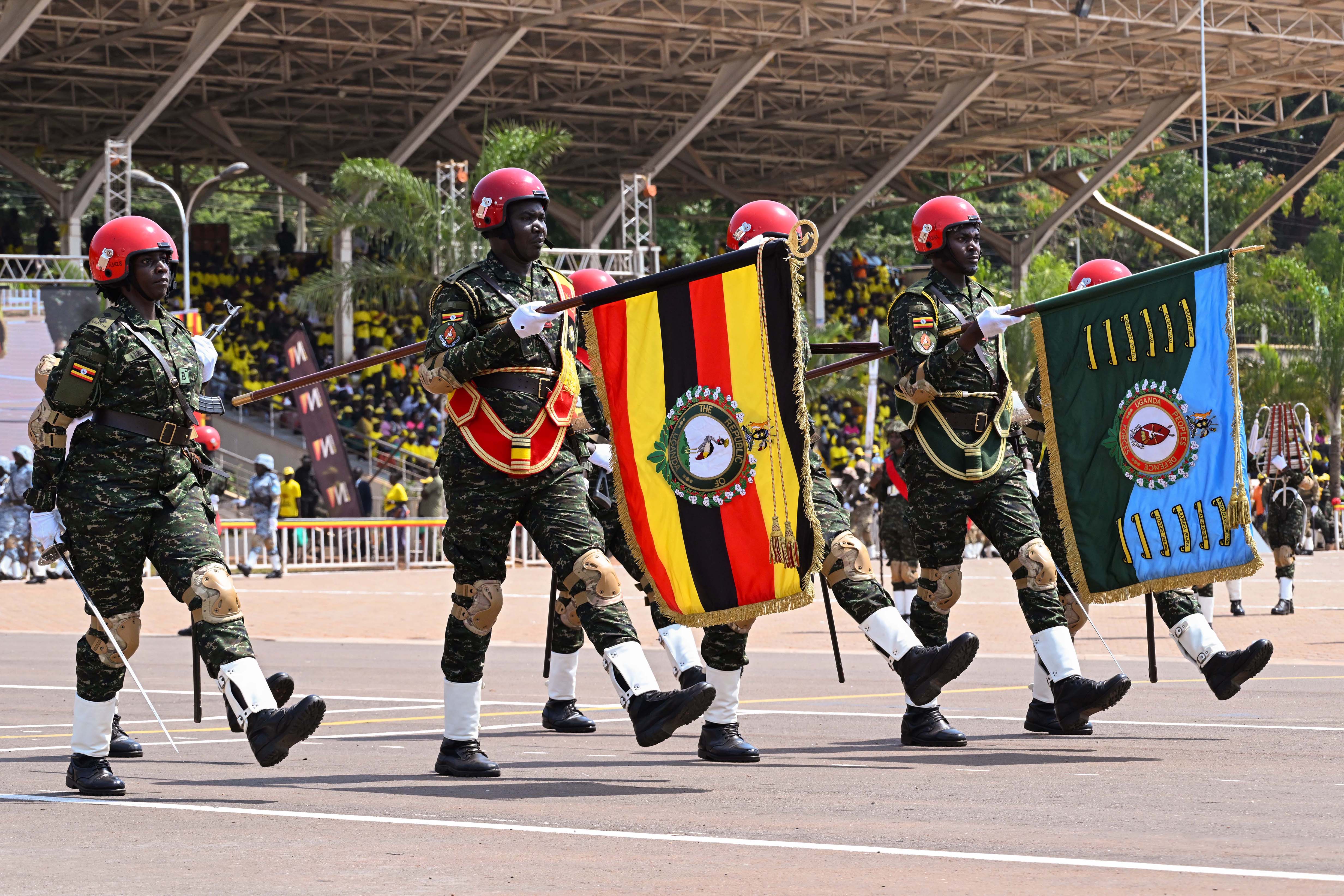
PRESIDENT MUSEVENI SAYS 70% OF UGANDANS ARE NOW IN THE MONEY ECONOMY AS NRM MARKS 40 YEARS

President Yoweri Kaguta Museveni has said that 70 percent of Ugandans are now participating in the money economy, a milestone he attributed to four decades of National Resistance Movement (NRM) rule and a series of state-led wealth creation programmes aimed at lifting households out of subsistence livelihoods. Speaking at the 40th Liberation Day celebrations held at the Kololo National Ceremonial Grounds on January 26, 2026, President Museveni said Uganda’s economic transformation had progressed steadily from post-war recovery to diversification, value addition, and, most recently, the emergence of a knowledge-based economy. The celebrations, held under the theme “Tribute to the Patriots who ushered in a fundamental change,” came just days after President Museveni secured another term in office in the recently concluded presidential elections, in which he was declared winner with 71 percent of the vote. In his address, the President thanked God and Ugandans for successfully completing the electoral process. “I thank God for having seen us through this big exercise of elections. Secondly, I salute all Ugandans for participating in the elections. I thank all the NRM members for supporting the NRM and its flag bearers,” he said. The President described the election outcome as a major political victory but expressed concern over what he termed as low voter turnout among NRM supporters. According to President Museveni, although he received about eight million votes, internal party data suggested that many more supporters were eligible to vote. “We are celebrating a big victory in politics. I got eight million votes, but ten million of my supporters of NRM did not turn up to vote,” he said, recounting challenges encountered during the party’s registration exercise and the national voters’ register verification process. He said that while the NRM had registered about 21 million supporters—18 million of whom were ready to vote—only eight million initially appeared on the Electoral Commission register. Although the party later ensured that at least 14 million supporters were registered in time, many still failed to cast their ballots. “But I got eight million votes. So where are the rest of the votes? That means some of our people did not turn up to vote,” he said. Gen. Museveni attributed the low turnout to two main factors: intimidation by opposition supporters and indiscipline within sections of the NRM leadership. “I hear the opposition wasting time talking nonsense. They are lucky because not all of my supporters turned up. If they had all turned up, there would be no opposition in Uganda,” President Museveni said. He alleged that some NRM supporters were threatened and attacked during the campaign period, while law enforcement agencies failed to act decisively. “People were threatening our supporters, telling them, ‘you are the reason why Museveni is still leading us.’ You have no right to say that. Why would the police hear this and do nothing?” he asked. The President also criticised what he described as selfishness and indiscipline among some NRM leaders, which he said discouraged citizens from exercising their civic rights. The Economy is moving very fast: Turning to the economy, President Museveni said Uganda was currently growing at about seven percent annually and projected even faster growth once oil production begins. “The economy is moving very fast, growing at seven percent now, and with the oil, we are going to go into double digits. This year, your oil will start flowing,” he said, adding that Uganda had resisted external attempts to control its petroleum resources. However, he acknowledged that despite overall growth, a significant segment of the population remained trapped in subsistence production. “These are the ones who are still in poverty,” President Museveni said, tracing the challenge back to colonial economic structures that excluded the majority of Africans from meaningful participation in the money economy. At independence in 1962, President Museveni said, only about nine percent of Ugandans were involved in the money economy. Although the proportion increased over time, progress remained slow until the NRM introduced wealth creation programmes, starting with early initiatives such as Entandikwa, which provided micro-credit to small-scale entrepreneurs. By 2013, he said, only about 32 percent of households were in the money economy, while 68 percent were producing mainly for subsistence. This, he explained, prompted the launch of Operation Wealth Creation (OWC), under which the Uganda People’s Defence Forces (UPDF) distributed seedlings and agricultural inputs across the country. “When we checked in 2019, 61 percent of Ugandans were in the money economy, while 39 percent were still in the subsistence economy,” President Museveni said. However, concerns emerged over what he described as “beegabira bokka”—elite capture of government programmes, leading to the introduction of the Parish Development Model (PDM), which channels funds directly to communities at the parish level. According to President Museveni, the proportion of Ugandans in the money economy has now risen to 70 percent, leaving about 30 percent still outside. “We don’t want a country of 70 percent rich people while 30 percent are poor,” he said, issuing a stern warning against the misuse of PDM funds, citing cases where local officials and committees had diverted money for personal gain. In some areas, he said, PDM resources had been monopolised by a few individuals, including parish chiefs and so-called focal persons, contrary to programme guidelines. “That’s not how the PDM is supposed to be. PDM needs a general meeting of the whole parish with everybody above 18 years, and the general meeting should elect a committee,” he said. President Museveni said the government would amend PDM guidelines, increase funding, especially in urban areas where parishes have larger populations, and enforce strict accountability. “We may have to put 300 or 400 million shillings per parish in towns because the homes there are many,” he said, adding that rural households could be fully covered within three years if funds are properly utilised. He warned that parish chiefs who violate PDM rules would be arrested, noting that officials in Buwambo, Maracha, and Iganga had already been apprehended following complaints from residents. While those who improperly formed committees would be barred from leadership positions and required to refund money, President Museveni said individuals who extorted funds from beneficiaries would face prosecution. Beyond PDM, President Museveni said the government would continue supporting other groups, including boda boda riders, ghetto youth, cultural and religious leaders, unemployed university graduates, and political leaders at the parish level. The goal, he said, was to ensure that all Ugandans are actively involved in wealth creation. “This will be emphasis number one,” President Museveni said. He added that once household incomes improve, the government would intensify investment in education and health, particularly in addressing curative health challenges, while preventive programmes such as immunisation continue to perform well. Infrastructure development, especially maintenance of rural roads, will also remain a priority. “We don’t want any unrepaired roads, whether tarmac or marram,” he said. Justice and corruption: On governance, President Museveni said the fight against corruption would extend to the judiciary, praising the new Chief Justice Dr Flavian Zeija, for taking a firm stance. “We don’t want corruption in the courts. The new Chief Justice is very active on that,” he said. The President also dismissed criticism from sections of the media and opposition figures who claim that Uganda has not changed over the last 40 years. “You have been hearing people say that the NRM has done nothing in the last 40 years,” President Museveni said, referencing a newspaper headline that read ‘No change for 40 years.’ To counter such claims, President Museveni presented what he described as five phases of Uganda’s economic recovery and transformation since 1986. These include minimum economic recovery after years of instability, expansion of the small colonial economy, diversification and value addition, and the current transition into a knowledge economy. He showcased video footage highlighting four key sectors he said define Uganda’s modern economy: commercial agriculture, manufacturing, services, and Information and Communication Technology (ICT). The films featured large-scale sugarcane plantations, coffee and cocoa farms, palm oil estates, livestock projects, and major industrial parks, including Namanve, Mbale-Sino, Kapeka, and Mukono–Mbalala. “That’s why somebody told me that when you go to the supermarkets now, 65 percent of the products are made in Uganda. In the past, it was 100 percent imported,” President Museveni said. He also reflected on Uganda’s troubled past, recalling the 1972 expulsion of Asians by former president Idi Amin. “At that time, there were only about 4,000 properties owned by Asians in the whole of Uganda. Now we have millions of properties owned by Ugandans,” he said, questioning the rationale behind Amin’s actions. On industrialisation, President Museveni cited the progress of the Kiira Motors project, noting that locally assembled vehicles had recently completed a return journey to South Africa. The Minister for the Presidency, Hon. Babirye Milly Babalanda, congratulated President Museveni on his re-election, describing the 40-year journey of the NRM as transformative. “Today’s commemoration is a reflection on four decades that have profoundly reshaped the destiny of our nation,” Hon. Babalanda said, thanking God for President Museveni’s leadership and resilience. She said the election victory reflected continued public confidence in President Museveni and the NRM. “Now that the elections are behind us, we face the greater responsibility of building Uganda. Let us move forward in unity, mutual respect, and shared national purpose,” she said. During the ceremony, the government awarded national medals to 33 distinguished Ugandans in recognition of their contributions to the liberation struggle and national development. January 26 marks the day in 1986 when National Resistance Army fighters captured Kampala, ending the rule of the UNLA junta led by the late Gen Tito Okello Lutwa. President Museveni, who led the NRA, was subsequently sworn in as Uganda’s ninth President. The event was attended by Vice President, H.E Jessica Alupo, Speaker of Parliament, Rt. Hon. Anita Among, Chief Justice, His Lordship Flavian Zeija, Deputy Speaker, Rt Hon. Thomas Tayebwa, Prime Minister, Rt. Hon. Robinah Nabbanja, senior NRM leaders, ministers, service chiefs, diplomats, religious and cultural leaders, and former national leaders, including Edward Kiwanuka Ssekandi, Ruhakana Rugunda, Amama Mbabazi, and Kintu Musoke. ENDS
img
25 January 2026
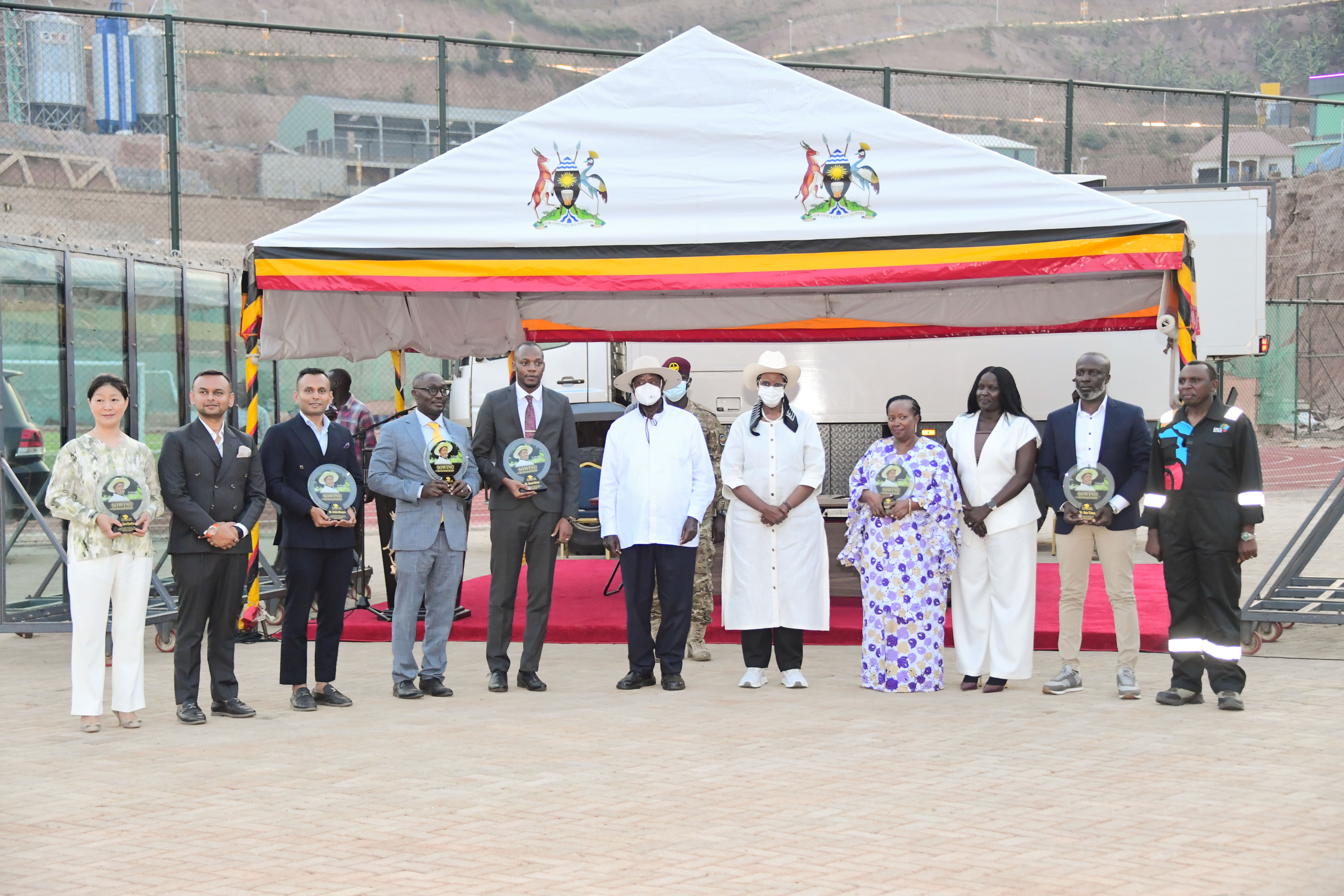
PRESIDENT MUSEVENI AWARDS SIX OUTSTANDING ENTREPRENEURS FOR THEIR CONTRIBUTION TO UGANDA’S ECONOMY

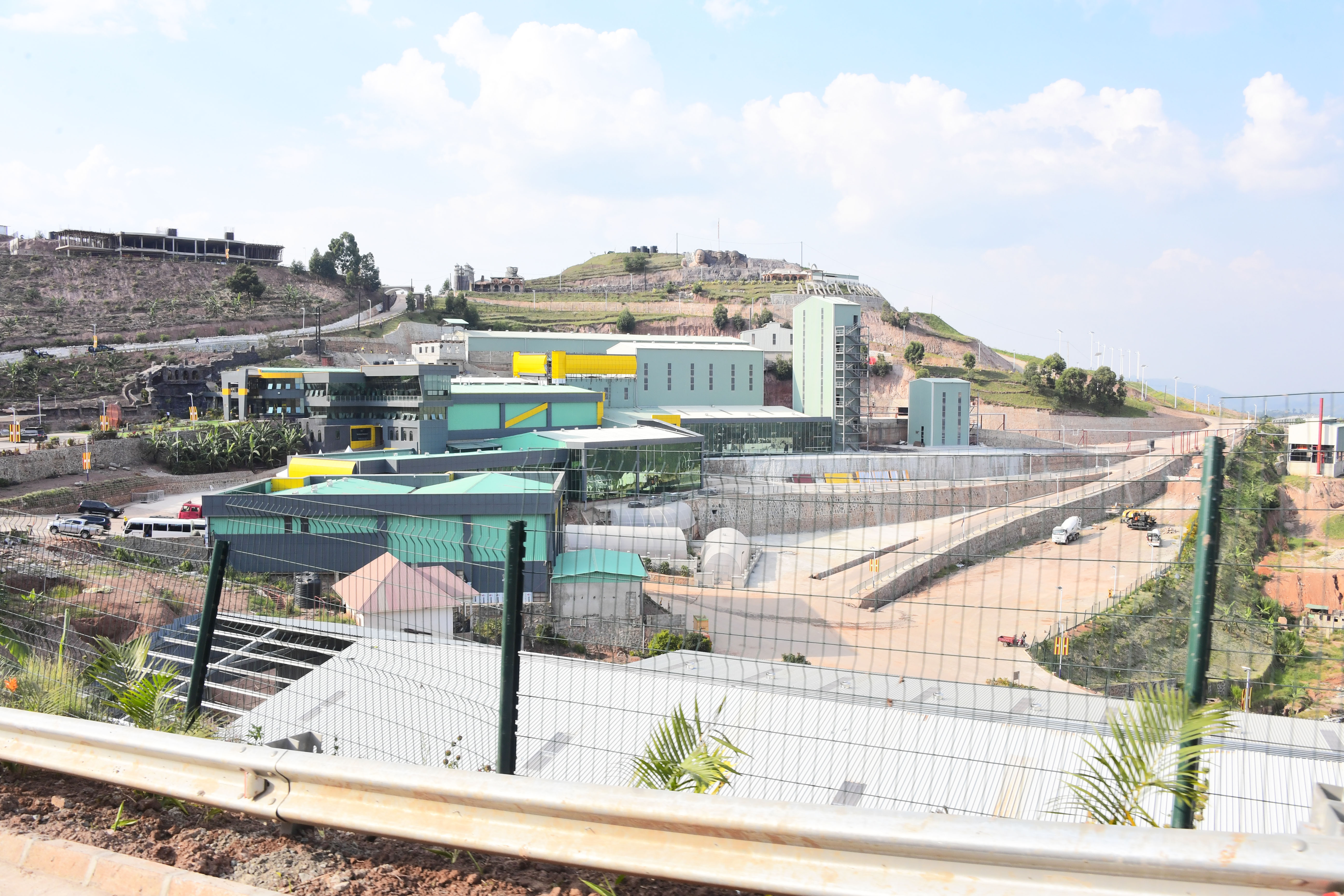
President Yoweri Kaguta Museveni yesterday awarded six (6) outstanding entrepreneurs and industrialists for their contribution to Uganda’s economic transformation at the Mustard Seed Awards 2025, held at Africa Coffee Park in Rwashameire, Ntungamo District. The event organised by Inspire Africa Coffee, was in celebration of 40 years of growth, and part of the President's third project inspection visit to Africa Coffee Park, a 150-acre state-of-the-art industrial hub positioned to become the largest coffee-processing and value-addition center in Eastern and Central Africa. The award recipients included among others, Jennifer Mwijukye, Chief Executive Officer and Founder of Unifreight Cargo Handling Ltd; Hao Zhang, Managing Director and Chairman of Liao Shen Industrial Park; Idro Taban, Chief Executive Officer Zero Waste; Barak Orland, Chief Executive Officer BAR Aviation. In his remarks, President Museveni who was in the company of the First Lady and Minister of Education and Sports, Maama Janet Museveni, congratulated the awardees and appreciated Uganda’s export earnings, which he said, are for the first time more than the import bill attributing it to value addition. “I’m so glad many people are waking up, and the rebirth of knowledge is now making sense. People like Nelson Tugume [CEO of Inspire Africa Coffee] are very useful having been provoked by my message. That is why we have supported and shall continue to support them,” he said. Referring to the four factors of production (land, labour, capital and entrepreneurship), which are the basis of production of goods and services, the President called on the people to mainly focus on entrepreneurship, describing it as the major coordinator. However, the President warned against uncontrolled hemorrhage /ekyejwiso /ekikulukuto, which he said is a major problem in Africa. “Africa's landmass is 12 times the size of India, with 1.5 billion people, yet its GDP is only $3 trillion, while the USA, which is about 1/4 of the land of Africa with 300million people, has a GDP of $32trillion,” he said. “It's a shame for such a small country to be 30 times richer than us.” The President saluted Mr. Tugume and all his colleagues at the Inspire Africa Coffee for not only being exemplary in emulating his wealth creation message, but also unlocking the potential of coffee husk organic fertilizer at the establishment to improve soil structure for long term productivity. President Museveni also expressed gratitude for the overwhelming support during the recently concluded presidential elections and the election of the NRM leaders. On her part, Maama Janet commended Mr. Tugume and Inspire Africa Coffee for its job creation potential. She noted that the massive investment into the coffee value chain has set a new trajectory for the sector. The Deputy Speaker of Parliament, Rt. Hon. Thomas Tayebwa, in celebration of President Museveni's resounding victory, thanked the people of Ntungamo for making history by scooping the second highest vote tally in the country, after Isingiro District. “This is a result of the trust people have in President Museveni's good leadership and the progress our country continues to make,” he noted. Rt. Hon. Tayebwa thanked Mr. Tugume for the establishment of a fertilizer plant that will provide affordable fertilisers to farmers to boost coffee yields and improve livelihoods. He further appreciated the establishment of a coffee resort to promote coffee tourism and the transformation Inspire Africa Coffee has done to the coffee sector. The Minister for Presidency, Hon Babirye Milly Babalanda, appreciated President Museveni's wealth creation philosophy that has empowered Ugandans into meaningful development. Hon. Babalanda further applauded the stewardship of Mr. Tugume who has demonstrated a big testimony of the power of vision, perseverance, and faith in one's country. Driven by conviction and enthusiasm, Hon. Babalanda revealed that what began as a heartfelt conversation between a son and a mother about coffee prices at their farm in 2018, has exposed coffee from the regions of Buganda, Kigezi, Ankole and Bugisu to the shelves of Turkey, USA and China. “This is how nations arise when private ambitions align with national purpose,” she said The Minister of Science, Technology and Innovation, Dr. Monica Musenero, on behalf of all scientists and innovators, hailed President Museveni for his full support that has enabled the sector to attain tangible results. “Science is now visible, and its impact on the economy can be understood by many,” she remarked. Mr. Tugume, a second coffee generation farmer taken after his late father, highlighted a remarkable display of a resilience journey he has undergone to achieve success. “I am so grateful to you, Your Excellency. This dream wouldn't have taken shape had it not been you.” The Inspire Africa Coffee project is aligned with Uganda’s 4th National Development Plan (NDP IV 2025/26–2029/30). With coffee identified as one of six priority agricultural value chains for value addition, the project aims to shift Uganda from a bulk coffee exporter to a high-value coffee producer and increase Uganda’s coffee value from USD 2 billion to USD 5 billion by 2030. Earlier in the day, President Museveni and the First Lady toured the fertiliser production plant on the shores of Lake Nyabihoko. The President later addressed the unstoppable victory rally that was organised to celebrate his recent election victory. The event was attended by Ministers, Members of Parliament, NRM Central Executive Committee (CEC) members, Senior Presidential Advisors, the clergy, RDCs, Ntungamo District Leadership and the business community.

img
24 January 2026
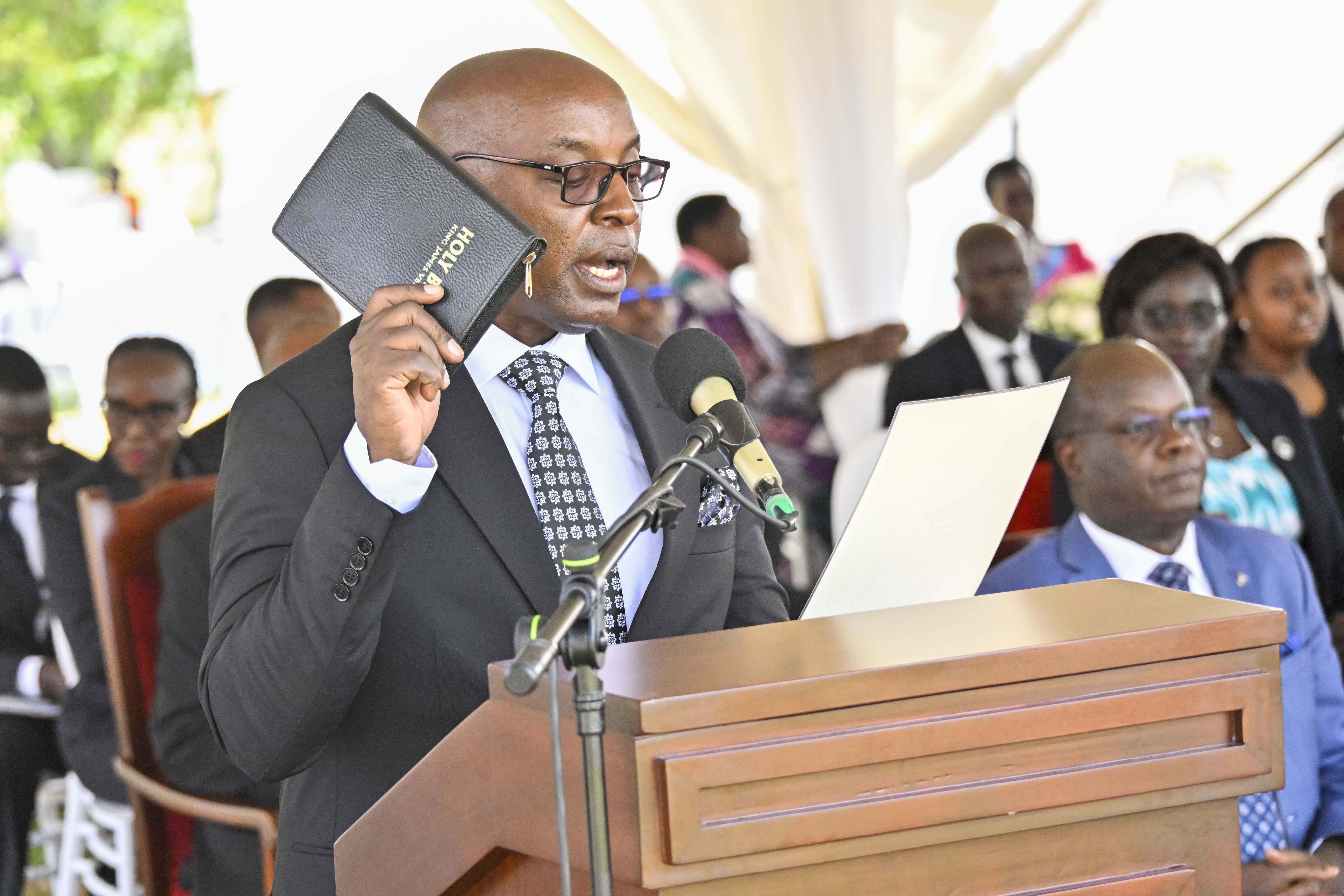
PRESIDENT MUSEVENI HAILS JUDICIAL CONVERGENCE AS DR. FLAVIAN ZEIJA TAKES OATH AS CHIEF JUSTICE

President Yoweri Kaguta Museveni has commended the growing judicial convergence in Uganda, saying it has strengthened stability and service delivery in the country. The President who was in the company of the First Lady and Minister of Education and Sports, Maama Janet Museveni, made the remarks today while presiding over the swearing-in of Dr. Flavian Zeija as Chief Justice at his country home in Kisozi, Gomba District. President Museveni said since the National Resistance Movement (NRM) came into power, leaders have been pursuing patriotism and transformation, thus enabling the Judiciary and the Executive to coexist and work harmoniously. He commended the outgoing Chief Justice, His Lordship Alfonse Owiny-Dollo, for efforts to rationalise court operations and improve efficiency. The President particularly welcomed the Judiciary’s focus on Alternative Dispute Resolution (ADR), noting that it provides an opportunity to blend cultural justice systems with modern courts, easing case backlog and promoting reconciliation. He also applauded Dr. Zeija for declaring zero tolerance to corruption, describing the vice as a major challenge undermining public trust in the justice system. President Museveni said listening to public opinion and using the “intelligence of the people” was critical, noting that during his recent countrywide engagements, he prioritised hearing citizens’ views rather than campaigning. The President further expressed support for the proposed dedicated unit to handle government infrastructure cases, saying it would help protect public investments and speed up project implementation. In his remarks, Dr. Zeija said leadership in public service is demanding and credited his journey to God’s grace. He thanked President Museveni for the continued trust placed in him, noting that this appointment marks his fourth presidential appointment within the Judiciary. Dr. Zeija outlined an ambitious reform agenda aimed at improving efficiency, accountability and access to justice. He pledged to operationalise magistrates’ courts, enforce strict action against absenteeism and underperformance, and conduct independent assessments of court performance. He also committed to reducing case delays by enforcing timelines, expanding the use of information and communication technology, and fully automating court systems to improve monitoring and evaluation. Dr. Zeija said automation would also help track the attendance and performance of judicial officers. He further promised to strengthen ADR mechanisms, prioritise judicial officers’ wellbeing, and train judges in artificial intelligence to keep pace with global developments. He pledged to transform the Industrial Court, run paperless courts supported by functional laptops and reliable internet, and enforce zero tolerance to corruption throughout his tenure. The Deputy Attorney General Jackson Kafuuzi, who represented the Minister of Justice and Constitutional Affairs, thanked President Museveni for providing exceptional leadership that ensures national stability and smooth institutional transitions, including the orderly change of leadership within the Judiciary. The outgoing Chief Justice, His Lordship Owiny-Dollo congratulated President Museveni on his electoral victory, saying the results reflected strong public support. He praised Dr. Zeija as energetic and hands-on, recalling that as Principal Judge, he traversed courts across the country and remained fully informed about judicial operations. Hon. Justice Owiny-Dollo said the incoming Chief Justice would firmly defend judicial independence and the rule of law. He also thanked the President for the opportunity to serve, noting that he was the first Deputy Chief Justice to rise to the position of Chief Justice. He attributed improvements during his tenure partly to increased funding for the Judiciary and appealed for further budget enhancement to ensure each district has a Chief Magistrate. Before his appointment as Chief Justice, Dr. Zeija was serving as Deputy Chief Justice. He also served as the Principal Judge.

img
21 January 2026
PRESIDENT MUSEVENI BIDS FAREWELL TO OUTGOING CHINESE AMBASSADOR

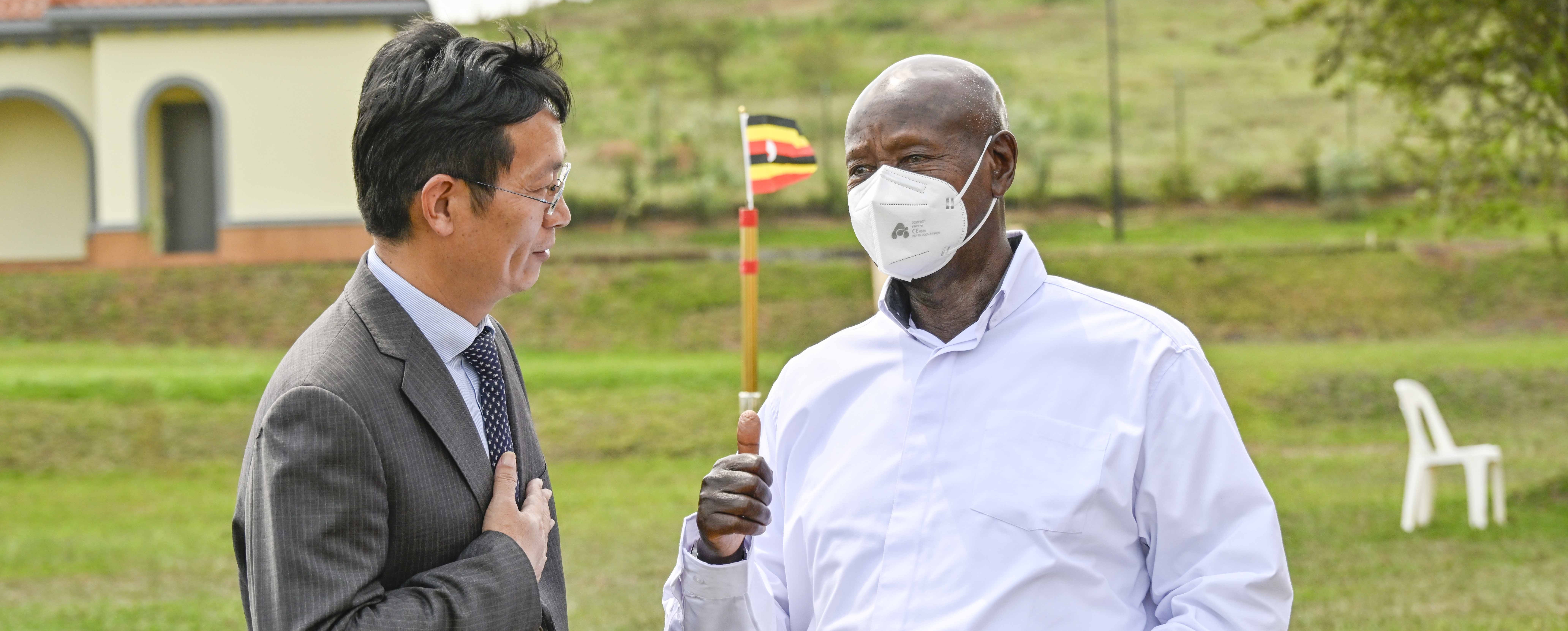
President Yoweri Kaguta Museveni has today bid farewell to the outgoing Ambassador of China to Uganda, H.E Zhang Lizhong who paid a courtesy call on him at his country home in Kisozi, Gomba District. During the meeting, President Museveni congratulated H.E Lizhong upon completing his tour of duty in Uganda. “I wish you well in your next assignment.” The President also expressed gratitude that the bilateral relationship between Uganda and China continues to grow stronger. “I am happy to note that Uganda’s exports to China have increased to USD 138 million, although this is still not enough and we should be able to do much more,” he said. President Museveni further welcomed the decision by the Chinese Government to remove taxes on Ugandan exports, which he said will greatly support the country’s trade and wealth creation efforts. “Regarding Chinese investments in Uganda, we have been supporting Chinese interests for a long time, and we shall continue to do so,” he noted. On his part, Ambassador Lizhong expressed gratitude to the President and the Ugandan government for the support and collaboration extended to him throughout his tenure.

img
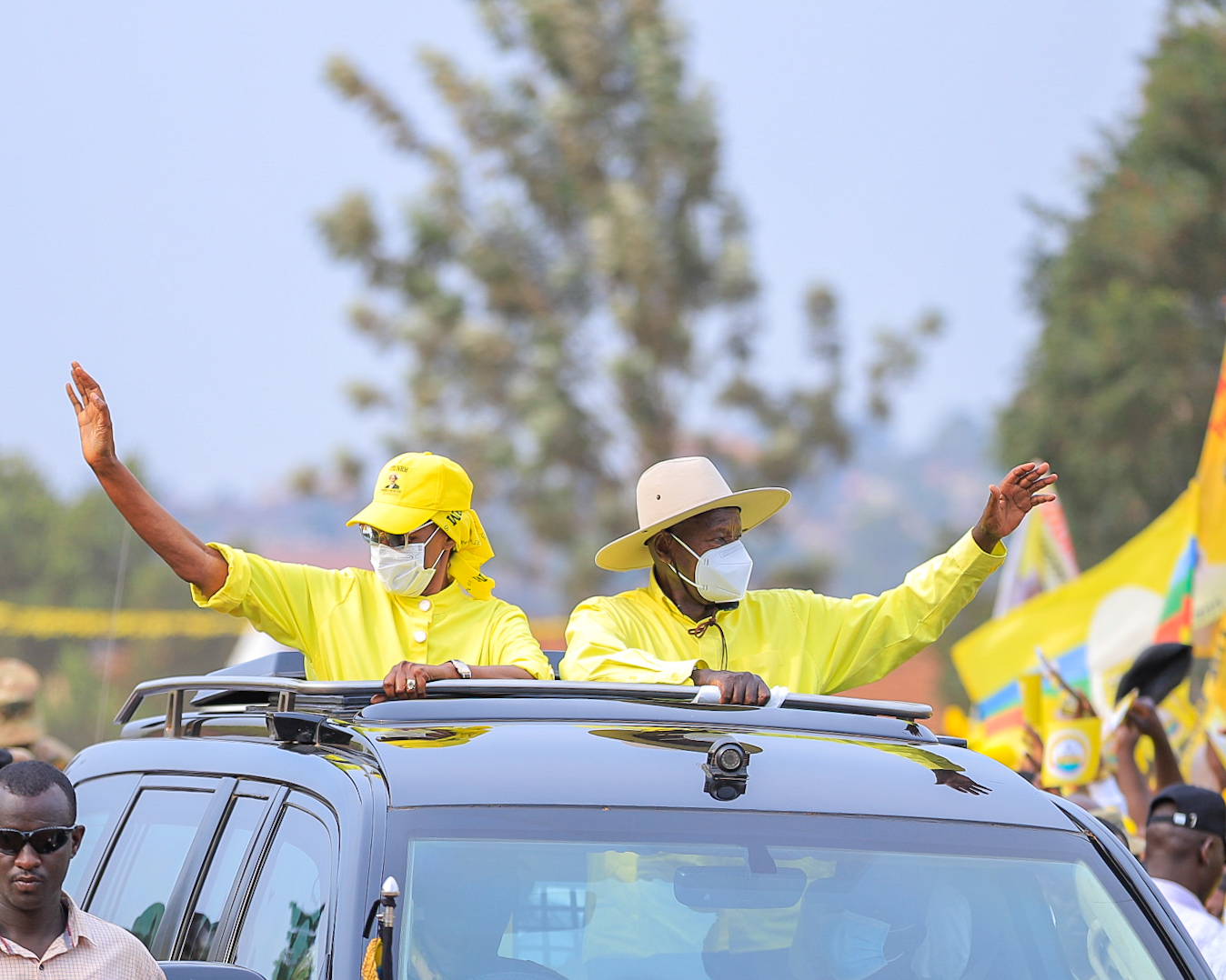
18 January 2026
PRESIDENT MUSEVENI RECEIVES OFFICIAL DECLARATION OF VICTORY, PLEDGES ECONOMIC GROWTH AND POVERTY ERADICATION

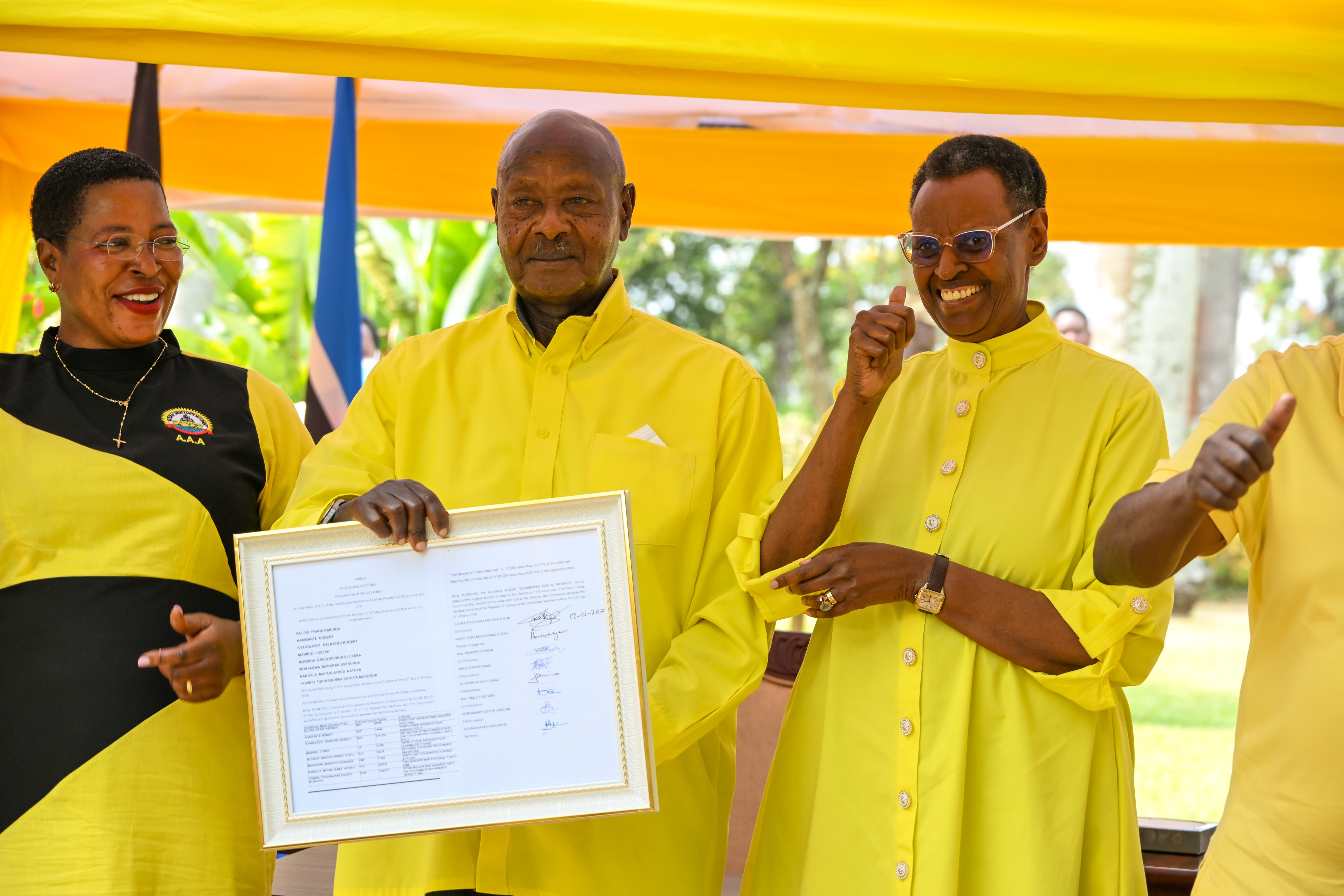
President Yoweri Kaguta Museveni has today formally received the declaration of his re-election as President of Uganda, pledging to prioritize poverty eradication, unity, and disciplined governance in the new term. President Museveni, who won the recently concluded Presidential elections with more than 7 million votes according to provisional Electoral Commission figures, was officially presented with the declaration form by the National Resistance Movement (NRM) Central Executive Committee (CEC) at his country home in Rwakitura. In his acceptance remarks, the President began by thanking God and the First Lady, Maama Janet Museveni, for her steadfast support. “I want to thank God for this victory and for all the victories we have had over the last 55 years of struggle since 1971,” President Museveni said. “I also thank Maama Janet for her support.” He credited the win to collective effort, praising NRM members, party leaders, and institutions that he said played a critical role. “I want to thank the NRM members and all the leaders because they all played a critical role in this victory,” he said. The President also acknowledged the contribution of national institutions and community leaders, including the armed forces, religious leaders, and cultural leaders. “I thank the armed forces for their role, the religious leaders for praying for us, and the cultural leaders for being responsive and working for peace,” President Museveni said. Reflecting on voter turnout, President Museveni said a significant number of NRM supporters did not vote, a matter he said the party must study going forward. “About 10 million of our people did not turn up. Many of them are our members, and we must find out why.” He linked this reflection to what he described as a return to the founding principles of the NRM, emphasizing unity and stability, particularly in regions that had previously experienced conflict. “That atmosphere of maximum unity is coming back,” he said, citing peace in parts of northern and eastern Uganda. President Museveni highlighted government programs such as the Parish Development Model (PDM) and presidential skilling hubs, saying they have begun to restore hope among Ugandans. “PDM has given people hope that we can get rid of poverty,” he said, adding that skilling hubs are equipping young people with practical abilities. However, he acknowledged uneven implementation and said the government must critically assess what is working and what is not. “We must analyze and find out,” he said. On security, the President warned against what he described as isolated acts of violence linked to political extremism, while stressing that peace in Uganda is maintained not only by security forces but by citizens themselves. “It is not just the security forces who are maintaining peace,” President Museveni said. “It is all Ugandans, including members of the opposition.” He cautioned groups he accused of working with foreign interests to abandon violence. “This is a free warning from me,” he said. “Stop what you are doing. We shall maintain peace in Uganda.” Looking ahead to the new term, President Museveni outlined two broad economic priorities: supporting wealth creators to grow the economy and intensifying efforts to eliminate household poverty. “For about 70 percent of the people in the money economy, we must support them to continue growing,” he said. “For the remaining 30 percent, this is where we must decisively address poverty.” He said PDM funds are central to that effort, insisting that poverty must be eliminated at the household level. “We must end poverty in the homesteads,” he said. The President also emphasized the importance of free education in government schools, improved healthcare delivery, and strict action against corruption. “Corruption annoys our people,” President Museveni said, calling on elected leaders to closely monitor government programs, including drug availability in hospitals, justice delivery, land protection, road maintenance, and water access. “I will be very harsh in this Kisanja,” he warned. On job creation, President Museveni said the focus would remain on agriculture, manufacturing, and the private sector, rather than public service employment. Turning to regional integration and natural resources, the President said Uganda’s internal market is insufficient on its own and pointed to the East African Community as a critical economic opportunity. He confirmed that Uganda’s oil production is expected to begin this year and said revenues would be invested in long-term national assets. “Our oil will start flowing this year,” he said. “This money must be used for things that will last, like railways, power stations, roads, and science education.” President Museveni cautioned against proposals to directly distribute oil revenues to local governments, arguing that oil is a finite resource. “This oil will last about 20 years,” he said. “If you care about your country, you must use this exhaustible resource to build things that will endure.” He concluded by urging unity and discipline as Uganda looks toward the next electoral cycle. “If we do these things. We shall unite our people and build a stronger country.” In her remarks, the First Lady and Minister of Education and Sports, Maama Janet Museveni congratulated the extended National Resistance Movement family for the party’s electoral victory, calling on leaders to remain faithful to God and recommit themselves to guiding Ugandans on the right path. “I want to congratulate the extended family of the NRM,” the First Lady said. “I am deeply grateful to God for allowing this to be the first programme of this Kisanja, where we meet with the Central Executive Committee and the Secretariat to first thank Him, because only God made this possible.” She said the gathering was an opportunity not only to give thanks to God, but also to appreciate the collective effort that led to the victory. “God gives us the opportunity, and then we thank every one of you,” she said. Reflecting on the campaign period, Maama Janet commended party leaders and mobilizers for standing firmly with President Museveni throughout the process. “When I look at you, I remember that none of you left the President alone,” she said. “The contribution of each one of you made God’s divine purpose possible.” The First Lady also expressed gratitude to President Museveni, the NRM Central Executive Committee, the Secretariat, and religious leaders across the country, saying their efforts were instrumental in guiding the nation. “I thank the President himself, the CEC, the Secretariat, religious leaders, and above all, I thank God for His faithfulness,” she said. In her closing remarks, the First Lady urged leaders to reflect, renew themselves, and continue serving with purpose. “We must now re-educate ourselves,” she said. “If we do so, God will bless our efforts just as He did during these campaigns.” The Vice President, H.E. Jessica Alupo called on Ugandans to remain grateful to God and united following the recent presidential elections, saying the outcome is a moment for thanksgiving and national reflection. “On a day like this, we can only say glory be to God and thanks be to God,” H.E. Alupo said. She thanked President Museveni for inviting them to listen to his address to the nation, describing the occasion as significant for the country’s democratic journey. H.E. Alupo congratulated President Museveni, for what she described as an overwhelming victory in the just-concluded presidential elections. “Allow me to congratulate you, Your Excellency, and Maama for securing an overwhelming victory. Congratulations,” she said. The Vice President praised President Museveni’s resilience throughout the campaign period, noting that his leadership style helped galvanize support across the country. “This is not the day to give a detailed account of the campaign, but Your Excellency demonstrated a very fatherly approach that brought together people from all walks of life across Uganda.” She further applauded the National Resistance Movement Secretariat, led by the Secretary General, for working in a united and coordinated manner throughout the electoral process. The Electoral Commission (EC) was also praised for delivering the election results peacefully. “I would like to thank the EC for delivering the results in a very peaceful way,” H.E. Alupo said, adding that civic education efforts helped maintain calm across the country. She thanked the people of Uganda for demonstrating unity and overwhelmingly backing President Museveni. “I thank the people of Uganda for throwing their weight behind you, Your Excellency,” she said. The Speaker of Parliament and NRM Second National Vice Chairperson (Female), Rt. Hon. Anita Annet Among congratulated the President on what she described as a well-deserved victory in the recently concluded general elections, citing strong public confidence in the ruling party. “On my behalf, the NRM fraternity, and the people of Uganda, I want to congratulate you upon your win and this well-deserved victory,” she said. She also congratulated the President and the party on the landslide performance in the parliamentary elections, noting that so far, 352 Members of Parliament have been elected under the NRM flag. Rt. Hon. Among paid special tribute to the First Lady, Maama Janet for her role in mobilizing women across the country. “We thank Maama for standing up for this country. As women of Uganda, we were energized. We left our homes, mobilized, and here is the victory we have achieved. No wonder most women turned up to vote.” The Speaker said the declaration of the election results was a clear sign of the trust Ugandans have in the National Resistance Movement and in President Museveni’s leadership. “Yesterday’s declaration is a testament to the trust that the people of Uganda have in NRM and in you, Your Excellency,” she said. She commended the President for running a consistent and inclusive campaign, noting that he remained open to ideas from party leaders throughout the process. “We thank you for your consistent campaign and for always accepting our ideas as leaders, whether to add value or improve our approach,” Rt. Hon. Among said. She also praised the Central Executive Committee (CEC) and the NRM Secretariat, led by Rt. Hon. Richard Todwong, for strengthening the party’s campaign strategy. “I thank the CEC and the Secretariat for the work you did,” she said. “No wonder we moved from 58 percent to 72 percent. You incorporated new ideas and made a real difference in the campaign.” Speaking on behalf of the Parliament of Uganda, the Speaker thanked President Museveni for his continued support of the legislature and pledged Parliament’s commitment to work with the executive. “On behalf of the Parliament of Uganda, we thank you for your support, and we pledge to continue working with you as one government for the people of Uganda,” Rt. Hon. Among said. On the other hand, the NRM Secretary General, Rt. Hon. Todwong hailed the party’s performance in the recently concluded elections, describing the results as a clear demonstration of the National Resistance Movement’s strength as both a political party and a national movement. He said the outcome reflected deep-rooted support for the NRM across the country. “I can speak with pride that this percentage has demonstrated that the party has truly become a movement,” Rt. Hon. Todwong said. He noted that the NRM performed strongly at all levels, particularly in local government elections, where the party secured the majority of leadership positions. “At the local government level, we are winning across the board and we are well-positioned,” he said. Rt. Hon. Todwong said the party’s success was the result of an inclusive campaign strategy that deliberately reached out to members at the grassroots, re-energizing the NRM base. “We campaigned and reached out to every NRM member we could,” he said. “We saw that our base was awakened, and people responded.” He paid tribute to President Museveni for heeding the call of party members to once again contest for the presidency, recalling that the appeal was made during Parish Development Model tours across the country. “I want to thank you, Your Excellency, for accepting the call of your party members to contest. We remember asking you during the PDM tours, and you listened.” The Secretary General also acknowledged the role played by the First Lady, Maama Janet, in supporting the party throughout the campaign period. “Allow me to thank the First Lady, Maama, for always standing with us,” he said. “The support you give us encourages and strengthens the party.” He concluded by reaffirming the Secretariat’s commitment to strengthening party structures and supporting the President as he begins a new term in office. The event was attended by all members of the NRM Central Executive Committee (CEC), and several religious leaders, including Bishop Joshua Lwere, Pastor Robert Kayanja, Apostle Joseph Sserwadda, Bishop Nathan Ahimbisibwe, and the Rt. Rev. Alfred Muhoozi, Bishop of North Ankole Diocese.

img
11 January 2026
PRESIDENT MUSEVENI MEETS NUP CONVERTS, MUSLIM LEADERS, STUDENTS AND YOUTH GROUPS AT KOLOLO, REAFFIRMS FREE EDUCATION, WEALTH CREATION AND ANTI-CORRUPTION DRIVE

President Yoweri Kaguta Museveni today met thousands of converts from the National Unity Platform (NUP), Muslim leaders, students from higher institutions of learning and youth groups at Kololo Ceremonial Grounds. Addressing over 10,000 NUP converts, President Museveni welcomed them to the National Resistance Movement (NRM) and said it has historically been a party of the poor, founded on empowering citizens to elect their leaders from the village level (LC1) up to the presidency. He said this conviction informed his decision in 1997 to introduce free primary and secondary education, noting that many parents could not afford school fees. However, the President expressed concern that free education has been sabotaged by some leaders and head teachers, urging Ugandans to elect leaders who can effectively enforce government policies. He emphasized that free education must be implemented fully so that all children benefit. He urged the youth to strongly reject illegal charges in government schools, saying free education was introduced in 1997 but has not been properly implemented due to failure by school administrators. He also raised concerns over poor maintenance of murram roads despite annual government funding, calling for accountability and proper reporting where funds are insufficient. On wealth creation, President Museveni reiterated that government programs such as the Parish Development Model (PDM), Emyooga and other initiatives were designed to lift households out of poverty. He called on every Ugandan to join their parish SACCOs and ensure parish committees help all members benefit. The President warned against the sabotage and theft of PDM funds, urging citizens to report those involved. Turning to health services, President Museveni said the government supplies medicines to public hospitals, but the persistent shortage is largely due to poor supervision and theft. He stressed that leaders must be held accountable to ensure drugs reach patients. President Museveni also addressed the issue of jobs, explaining that employment is largely generated through commercial agriculture, factories, services and ICT. He cited an example of Mr. Johnson Basangwa of Kamuli, who started poultry farming on a 50-by-100 plot and now employs over 300 people, demonstrating that wealth creation is possible even with limited land. Muslim leaders, including Sheikhs, pledged to support President Museveni in the upcoming elections. Sheikh Sulaiman Ssemakula, from Greater Mpigi thanked President Museveni for supporting Muslims and promoting unity, noting that the NRM respects all faiths without discrimination. The President assured Muslims that his role is to ensure all Ugandans, regardless of religion, access free education, healthcare, and opportunities for wealth creation. President Museveni also hailed the over 8,000 students from institutions across the country under Sauti ya Vijana, for complementing party structures. On corruption, the President urged the youth to decisively reject the vice, saying it undermines service delivery and development. Presidential Advisor, Ms. Hope Mazirwe thanked President Museveni for supporting students and establishing free education, further pledging continued student support to the NRM government. Mr. Jacob Eyeru, head of Sauti ya Vijana, said the initiative was created to engage over 3.1 million students who were in school during campaigns yet are eligible voters. He noted that the group is sensitizing students about NRM wealth creation programs and has established a WhatsApp platform to engage them during holidays on the party manifesto. In a separate engagement, President Museveni met the Unstoppable Group, led by Mr. Nelson Tugume, who assured him that the group has been traversing the country mobilizing support for the NRM. President Museveni reiterated that Uganda has made significant progress over the last 40 years, with about 70 percent of homesteads now in the money economy, and stressed that the government’s focus is to bring all households into the money economy through existing programs. He emphasized that free education in government schools and the fight against corruption remain non-negotiable priorities. The various groups reaffirmed their commitment to support President Museveni and the NRM in the forthcoming elections.

Latest Press Releases

Opinion Posts

author's photo
24 January 2026
POLITICAL CASUALTIES OF 2026 ELECTIONS; MAYBE WE NEED A REHABILITATION CENTRE FOR THEM

The electoral political season is getting almost done. The victors are in celebrations. The losers are counting their losses. It’s more difficult for the losers. This is largely due to the nature of investment, both financially and emotionally. The biggest problem with African and indeed Ugandan political actors is conceding defeat where it is clearly deserving. It is indeed hard for those that did not have it in their favour. There are those that might even develop mental breakdown. Others might withdraw from society to first recover from the shock. However, the earlier they recollect themselves and move on the better. After all, in this exercise winners and losers were inevitable. The attrition rate for the sitting Members of Parliament (MPs) is way above 70% and to most Ugandans this was meant to happen. President Yoweri Museveni has warned the MPs on several occasions not to use money or give unstainable promises to the voters. However, the desperation of the contesters to win the election make them go overboard and give false promises that they later fail to achieve. The result is that they get voted out on the next round of the election. Therefore, reading Hon. Medard Sseggona and Hon. Ibrahim Ssemuju’s conceding defeat in the just concluded parliamentary elections sounded rare and shocking. Comments on the why they lost elections were mature, something that is not common in Uganda. They conceded defeat honourably and congratulated the victors. Hon. Ssegona took this a notch higher when he promised to offer any useful advice to the man who defeated him in the event, he requested it. The two members of Parliament were quoted by several media houses accepting the outcome of the concluded parliamentary elections. This is a rare gesture in Uganda where losing an election is unacceptable. In fact, some losers end up doing the most despicable acts like organising goons to attack and harm the victors. Competing for the political offices, however rewarding they can be, should not make people look at each other as enemies. There is always more to live for beyond the rewards that come with such positions. In any case, those positions are not permanent; the very reason they are competed for every five years. To such bad losers, an election is a zero-sum game where the participant expects nothing short of victory. It is a do or die affair. Indeed, in such circumstances the losers end up losing their heads as well and if not restrained can end up with suicidal thoughts. Accepting a political loss after a hot, intensely contested election—often characterized by a public concession speech—is a fundamental, though non-legally binding tradition in healthy democracies. It represents a "graceful celebration of democracy" that signals the end of electoral "warfare," promotes national stability and facilitates the peaceful transfer of power. A concession is a voluntary act where the losing candidate acknowledges the winner, often via a personal call followed by a public, televised speech. This also serves as a necessary ceremony that allows supporters to accept the outcome and begin healing, preventing long-term bitterness between opposing factions. Conceding defeat is not cowardly or showing you weren’t the best candidate, to the contrary it shows humility and maturity. It is a moment to place the country above personal disappointment. It encourages supporters to accept the results, ensuring that the winner can govern effectively. Both Hon. Ssemujju and Hon. Ssegona had represented their constituencies for not less than 15 terms. They had offered all they could to their voters. True, they felt they still had some energy to represent their constituencies, but the majority voters felt they were more convinced by their opponents. This is not to say that they had not represented their constituencies good enough. Far from that. But mankind, being who they are, tend to surprise you when you least expect them. And that is what they exactly did. Graceful acceptance of defeat reinforces the democratic norm that "partisan feeling must yield to patriotism". As a people, we must encourage such a culture if we to advance our democratic gains. A prompt concession signals that the electoral system, despite a heated contest, is legitimate. In contentious elections, refusing to concede defeat can cause deep political divisions and threaten social order. As I write, one of the losers in the last presidential election, Hon. Robert Kyagulanyi has denied conceding defeat and gone into self-imposed hiding. Refusing to concede defeat, won’t change the results the Electoral Commission announced. The only remedy available can only be courts of law that Hon. Kyagulanyi is reluctant to engage. Elections come and go. The 2026 general elections are literally done. It is time to heal and we move on with our lives. It is time to allow peace to return to our towns and villages. Work that propels self improvement had stalled because of the political season. Our people need peace and calm to return to their gardens and other forms of enterprises to work and add value to their lives. The writer is the Ag. Executive Director Uganda Media Centre

author's photo
14 January 2026
DON’T LET POLITICS CAUSE DIVISION; LIFE CONTINUES AFTER ELECTIONS

It is essential to ensure a peaceful election process as we approach January 15th, the election day, because life must go on after the votes are counted. Politics often divides people and fuels hostility. One musician sang: “Tugende tulonde naye tulonde mudembe obululu tebutwawula, Tuve mukuyomba olwabo abesimbyewo obululu tebutwawula,” which means “we all go and vote in peace; votes should not divide us.” This meaningful message emphasizes the importance of citizens participating peacefully in elections, promoting unity over tribal or personal conflicts, and discouraging internal strife. Besides encouraging peaceful voting, it is also important to focus on informed voter participation. Being an educated voter is just as vital as casting a ballot. Voters should take time to learn about the candidates, their platforms, and the potential impact of proposed policies and measures. When people make informed decisions, it strengthens democracy and reduces the chances of manipulation by those seeking to exploit societal divisions for personal gain. It is wise to follow the Electoral Commission's guidelines to ensure a calm election. We all know that elections will produce both winners and losers, as determined by the voters. By following the rules and accepting the authority of the Electoral Commission, citizens can participate in a process that reflects the true will of the people and helps build trust in democratic institutions. Trust in the electoral process is essential to the long-term health of our democracy and encourages more people to participate. Recognizing defeat and congratulating the winner is not a sign of weakness; it shows understanding that there will always be opportunities to run again. In many democracies, graciously conceding is seen as a sign of political maturity. It demonstrates respect for the democratic process and the collective decision-making that elections symbolize. If dissatisfaction with the election results arises, legal options are available for review, provided there is sufficient evidence to justify a recount or annulment, rather than causing disorder that could threaten peace and stability, requiring police to maintain law and order and the military to ensure national security. Ignoring election outcomes can have serious consequences. We are aware that deploying security forces may include using tear gas, rubber bullets, and making arrests. Such actions not only risk personal safety but can also discourage people from voting in future elections, creating a cycle of voter disenfranchisement and disillusionment. It is vital to understand that a peaceful election benefits everyone and sets an example for future elections, showing that respectful dialogue is possible even during disagreements. It is important to face the truth, even if it’s uncomfortable. The military will not remain idle if someone tries to destabilize the country; it must defend the nation, while the police are responsible for maintaining law and order. Our country has experienced enough unrest and conflict recently. We should not reopen that chapter, as it threatens our progress. Promoting peaceful participation today inspires hope for future generations, reminding them of the value of unity and shared responsibility in exercising democratic rights. Furthermore, community efforts to promote dialogue and understanding among different groups can be very beneficial during the election period. Workshops, town hall meetings, and social media campaigns focused on peace and unity can significantly improve the electorate's readiness to engage respectfully with opposing views. Working together to understand one another strengthens our society and helps us move forward as one, prepared to face the realities of democracy. Ultimately, our goal should be to build a culture that values reflection, cooperation, and peaceful transfer of power, creating a brighter, more stable future for all citizens. This election isn’t just an event; it is a pivotal moment that can redefine our national identity, emphasizing cooperation over conflict. conflict. The writer works with the Uganda Media Centre

author's photo
10 January 2026
MUSEVENI’S MEDIATION ROLE IN SUDAN AND THE QUEST FOR REGIONAL STABILITY CAN’T BE TAKEN FOR GRANTED

In November 2025, the African Union (AU) appointed President Yoweri Museveni to mediate the conflict in Sudan. This war has plunged the country into one of the gravest humanitarian crises in recent history. The conflict, which began in April 2023, has claimed more than 24,000 lives and displaced over 13 million people. It sets the Sudanese Armed Forces (SAF), led by Gen. Abdel Fattah al-Burhan, against the Rapid Support Forces (RSF) commanded by Gen. Mohamed Hamdan Dagalo. The AU believes President Museveni’s long experience in regional diplomacy makes him a suitable choice to lead mediation efforts, especially after several international initiatives failed to bring the warring parties to the negotiating table. Under this mandate, President Museveni is expected to urge an immediate cessation of hostilities, facilitate the opening of humanitarian corridors, and promote inclusive political dialogue aimed at restoring peace, stability, and national reconciliation in Sudan. In March 2025, President Museveni also deployed the Uganda People’s Defence Forces (UPDF) to South Sudan at the request of President Salva Kiir Mayardit. This intervention followed deadly clashes in which soldiers loyal to then Vice President Riek Machar mutinied and killed troops loyal to President Kiir in Nasir and parts of Juba. At the time, South Sudan stood on the brink of another devastating civil war that would likely have collapsed the government and created yet another failed state in the region. The UPDF remains deployed as regional leaders continue to pursue a lasting political solution through dialogue. South Sudan has lived on the edge of instability since the death of its founding leader, Dr John Garang, in a plane crash on July 30, 2005. His successor, President Salva Kiir, has struggled to build a cohesive leadership with his former deputy, Dr Riek Machar, whose political ambitions have repeatedly fueled internal conflict. The country’s fragile tribal dynamics have further deepened divisions, leaving scars that may take generations to heal. The Dinka, led politically by President Kiir, often view themselves as the principal architects of South Sudan’s liberation struggle, having sacrificed immensely in the fight against domination from the Arab north. They accuse the Nuer, led by Dr Machar, of collaborating with the Khartoum regime during the war. Conversely, the Nuer regard themselves as more educated and internationally exposed, pointing to Dr Machar’s academic credentials, including a PhD in Strategic Planning, as evidence of his suitability to lead the country. What South Sudan urgently needs, however, is a reconstituted and professional national army, guided by patriotism rather than ethnic/tribal loyalties. Despite repeated calls for the Intergovernmental Authority on Development (IGAD), the African Union, and the European Union to deploy peacekeeping forces before the eventual withdrawal of the UPDF, little tangible action has been taken. As a result, Uganda has shouldered a disproportionate burden in preventing what could have escalated into genocide. Ironically, rather than being commended, some actors, both within the region and internationally, have accused President Museveni of being a partisan actor in the South Sudan conflict. This narrative is far from the truth. As efforts intensify to restore peace and stability in both Sudans, President Museveni deserves the support of all peace-loving global actors. The two countries remain the “sick men” of the region and require sustained international attention and assistance. Beyond Sudan and South Sudan, Uganda continues to play a stabilising role elsewhere in the region. The deployment of the UPDF in Somalia and eastern Democratic Republic of Congo (DRC) is yet another sacrifice aimed at restoring peace. Somalia, once considered a failed state dominated by clan militias and Al-Shabaab terrorists, is steadily rebuilding, thanks in part to Uganda’s contribution alongside other partners. In eastern DR Congo, the UPDF, at the invitation of the Kinshasa government, entered Ituri Province in November 2021 and dismantled Allied Democratic Forces (ADF) cells responsible for mass killings and displacement. Working jointly with the Armed Forces of the Democratic Republic of the Congo (FARDC), the UPDF has helped restore relative stability, allowing communities to return home and cross-border trade between Uganda and DR Congo to flourish once again. The spirit of Pan Africanisim will forever be his DNA. Reason why Ugandans should without blinking an eye vote for the man with a hut come January 15th 2026. The writer is Ag. Executive Director Uganda Media Centre

author's photo
27 December 2025
DISCREDITING THE ELECTORAL COMMISSION (EC) IS SHEER OPPORTUNISM

Scholars have defined political opportunism as aiming to increase one's political influence at any price, or a political style that involves seizing every and any opportunity to extend political influence, whenever such opportunities arise. Typically, opportunist political behavior is criticized for being short-sighted or narrow-minded. However, most politicians especially those in developing countries like Uganda have no sense of shame to grab any opportunity to make both short and long term gains. Like they say, wonders never cease to happen especially in our dear country Uganda. Why on earth would a presidential candidate like Robert Kyagulanyi of the National Unity Platform (NUP) spend most his time discrediting the Electoral Commission a body mandated by law to organize an election where he is fully a participant. Kyagulanyi has made many statements to the effect that the EC chaired by Justice Simon Byabakama Mugenyi is up for a mischief come the voting day in 2026. What is ironical though is that Kyagulanyi, like most of his supporters at parliamentary and local council, have registered to participate in the January 2026 elections and without a doubt they expect a free and fair outcome. This in my view is sheer opportunism and blackmail. The very EC NUP leadership is now discrediting is the same election body that declared 57 members of parliament in their favour in 2021General Election making them the biggest opposition party in Uganda. It is the same EC that announced Kyagulanyi’s legitimately earned votes of 3,631,437 million people in the same election. One wonders why this same body is now under such attacks. Of course all this attacks are calculated attempts to malign EC as an independent arbiter such that in the event results are not in their favour, they will cry foul and say we saw it coming. The EC is a credible arbiter the reason hundreds of thousands from all political parties are running as independent candidates after they were not satisfied with the results in their party primary elections. Ugandans might look naïve and gullible but what is very clear is that they are not that daft like some of our political actors tend to think. They have rejected such parochial attempts by their leaders every now and then and who selfishly want to mislead them. The NUP call can only depict them as potential bad losers who are unwilling to accept any result as long as it is not in their favour. In fact, they risk being isolated by those moderate Ugandans who prefer peaceful and mutual coexistence irrespective of what the coming elections will present as the final outcome. NUP should know that elections are not a zero same game. Irrespective of our political affiliations we must tolerate each other and live and work together and trust institutions mandated to do their work. Mistrust and incitement is a clear way of inviting anarchy where everybody is s loser. Mature politics calls for respect to the institutions mandated to play certain roles in this critical role of General Elections. Any deliberate efforts to undermine these critical institutions can only bring on board situations that we shall all can only regret. Political tolerance and respect among other things calls for the willingness to extend basic civility and respect to persons and institutions that play different roles in this exercise. It is a central tenet of a liberal democracy. This respect applies to either group….the political players and the various institutions mandated to manage this exercise. Therefore, for NUP to continue casting doubt on the impartiality of the EC call is not only politically very absurd but equally dangerous. The EC has done everything possible in openness including but not limited to the following; open registration of all eligible voters, open display of all the registered voters and displayed them all parishes in Uganda, brought in Biometric Machines to be used during elections in order to curb multiple voting during election day and, open voting and tallying that will done on each polling stations. These on top of many other mitigating procedures that are meant to deliver a free and fair election. Of course building and maintaining faith in democratic institutions is a crucial and ongoing global challenge, requiring concerted efforts from both citizens and governments. Therefore, the need to exercise caution and maturity in such circumstances is what is needed. Finally, NUP and its leadership had better realize that all attempts to blackmail the EC in this exercise are attempts in vain. What is interesting is that majority of NUP supporters and participants are very reasonable Ugandans and have total faith in the EC. This explains the reason they have participated in large numbers. They hate incitement of nay form against the institutions meant to govern them and appreciate the benefits of an all inclusive society where people must live and work together irrespective of their political differences. The Writer is the Ag. Executive Director Uganda Media Centre

author's photo
21 December 2025
DESPERATE VOTE HUNTING AND THE NEED TO CONTROL RECKLESS TONGUES TURN INTO UPPERCASE

In one of our animated discussions in a journalists’ chat group, a colleague, Derrick Wandera of the Daily Monitor, questioned why the National Resistance Movement (NRM), and particularly the security agencies, are placing so much emphasis on what he described as “ghetto political slogans” used by NUP presidential candidate Robert Kyagulanyi. According to Wandera, slogans such as Tubayisemu Egaali (a ghetto expression implying the subduing of those one disagrees with through force), Kuzoganya (unsettling one’s enemies), and Mukakuume mukabanje (protect the vote and demand answers if one is dissatisfied with the results) are harmless political statements. In his view, the government, especially security agencies, is panicking by reading too much into these rallying calls, which, he argues, should not be interpreted beyond their face value. He is wrong. To security agencies, these are not innocent slogans. They are deliberately coded statements designed to incite sections of the population to take the law into their own hands during an election season. To understand why security is concerned about such language, one does not need to look far; our region offers painful lessons on what political incitement can do in a highly charged political environment. During the 1994 genocide in Rwanda, perpetrators began by coining coded language to incite ethnic Hutus against Tutsis. Words such as Inyenzi (cockroaches) were used to dehumanise Tutsis and justify violence against them. This systematic use of language was a powerful tool of incitement. We all know what people do when cockroaches invade their homes: they exterminate them. The result of this dehumanisation was the genocide against the Tutsi, which claimed close to one million lives in just three months. Similarly, during Kenya’s 2007–2008 post-election violence, explicit and coded language was widely used to incite ethnic hatred and violence. Politicians and their supporters employed terms such as Madoadoa (blemishes or spots), a coded reference in the Rift Valley to “non-host” communities, particularly Kikuyu and Kisii, who were accused of supporting the wrong political choices. The implication was that these “spots” needed to be removed. Other phrases included “beasts from the west,” reportedly used by some Kikuyu politicians to describe Luo supporters of opposition leader Raila Odinga, while some Kalenjin supporters retaliated by referring to the Kikuyu as “vermin.” The phrase “clear the weeds from the grass” echoed Rwanda’s genocidal rhetoric and was a coded call for the physical removal of non-Kalenjin communities from the Rift Valley. Another expression, “the mongoose has stolen the chickens,” alluded to historical land grievances, portraying the Kikuyu as land grabbers. The consequences were devastating. Tribal clashes, particularly between the Luo and the Kikuyu, displaced thousands of people. Property, infrastructure, and industries were destroyed; about 1,000 people were killed; and many more were displaced. For the first time, Uganda received hundreds of Kenyan refugees fleeing the violence. Therefore, when security agencies act cautiously in response to inciting statements and innuendoes, they should not be dismissed as panicky or overzealous. Instead, they should be commended for restraining desperate political actors who seek votes by any means, including those that endanger communities and national stability. The use of coded language and slogans by the leadership of the National Unity Platform (NUP) to incite citizens must be condemned by all. While campaigning in Luweero District, NUP presidential candidate Robert Kyagulanyi crossed a dangerous line when he told a cheering crowd that if one is a true son of Buganda and votes for President Museveni, then “something is wrong with your head.” Such rhetoric is deeply inciting, and his team and advisers should restrain him. Ironically, before entering the often reckless world of politics, he once sang, “Akalulu tekatwawula” (elections should never divide us). For Christians, the Bible offers a sobering warning about the power of words. In James 3:5–6, the apostle uses vivid imagery, comparing the tongue to a small spark capable of setting an entire forest ablaze. He illustrates how reckless speech can cause immense destruction, corrupting individuals and communities alike. The scripture reads: “So also the tongue is a small member, yet it boasts of great things. How great a forest is set ablaze by such a small fire! And the tongue is a fire, a world of unrighteousness. The tongue is set among our members, staining the whole body, setting the course of life on fire, and itself set on fire by hell.” These biblical words highlight the disproportionate power of the tongue to cause immense destruction, comparing its small size to the massive scale of a blaze that can consume an entire forest or wild bush.” The writer is Ag. Executive Director Uganda Media Centre

National News

article img

PRESIDENT MUSEVENI SAYS 70% OF UGANDANS ARE NOW IN THE MONEY ECONOMY AS NRM MARKS 40 YEARS

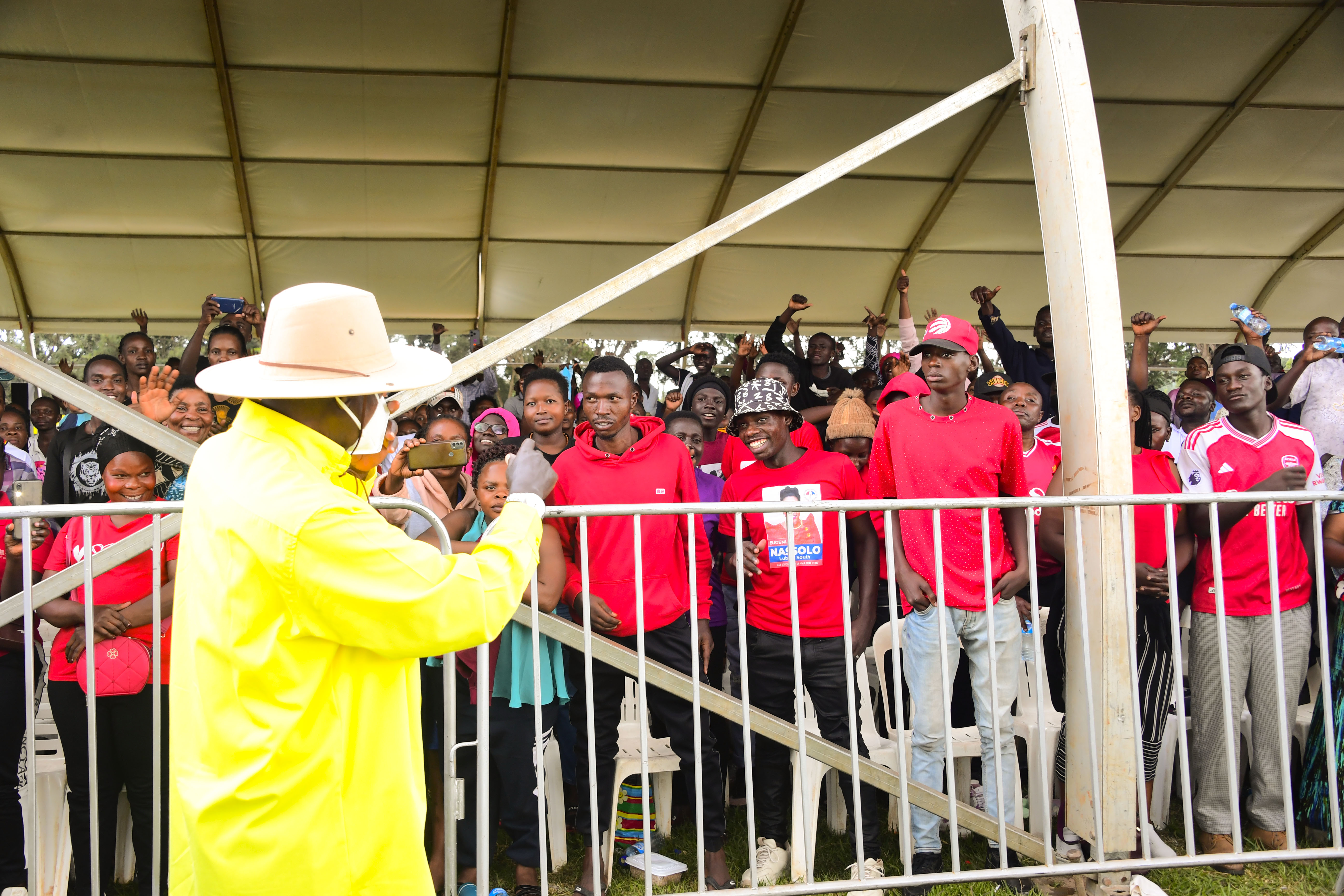
President Yoweri Kaguta Museveni has said that 70 percent of Ugandans are now participating in the money economy, a milestone he attributed to four decades of National Resistance Movement (NRM) rule and a series of state-led wealth creation programmes aimed at lifting households out of subsistence livelihoods. Speaking at the 40th Liberation Day celebrations held at the Kololo National Ceremonial Grounds on January 26, 2026, President Museveni said Uganda’s economic transformation had progressed steadily from post-war recovery to diversification, value addition, and, most recently, the emergence of a knowledge-based economy. The celebrations, held under the theme “Tribute to the Patriots who ushered in a fundamental change,” came just days after President Museveni secured another term in office in the recently concluded presidential elections, in which he was declared winner with 71 percent of the vote. In his address, the President thanked God and Ugandans for successfully completing the electoral process. “I thank God for having seen us through this big exercise of elections. Secondly, I salute all Ugandans for participating in the elections. I thank all the NRM members for supporting the NRM and its flag bearers,” he said. The President described the election outcome as a major political victory but expressed concern over what he termed as low voter turnout among NRM supporters. According to President Museveni, although he received about eight million votes, internal party data suggested that many more supporters were eligible to vote. “We are celebrating a big victory in politics. I got eight million votes, but ten million of my supporters of NRM did not turn up to vote,” he said, recounting challenges encountered during the party’s registration exercise and the national voters’ register verification process. He said that while the NRM had registered about 21 million supporters—18 million of whom were ready to vote—only eight million initially appeared on the Electoral Commission register. Although the party later ensured that at least 14 million supporters were registered in time, many still failed to cast their ballots. “But I got eight million votes. So where are the rest of the votes? That means some of our people did not turn up to vote,” he said. Gen. Museveni attributed the low turnout to two main factors: intimidation by opposition supporters and indiscipline within sections of the NRM leadership. “I hear the opposition wasting time talking nonsense. They are lucky because not all of my supporters turned up. If they had all turned up, there would be no opposition in Uganda,” President Museveni said. He alleged that some NRM supporters were threatened and attacked during the campaign period, while law enforcement agencies failed to act decisively. “People were threatening our supporters, telling them, ‘you are the reason why Museveni is still leading us.’ You have no right to say that. Why would the police hear this and do nothing?” he asked. The President also criticised what he described as selfishness and indiscipline among some NRM leaders, which he said discouraged citizens from exercising their civic rights. The Economy is moving very fast: Turning to the economy, President Museveni said Uganda was currently growing at about seven percent annually and projected even faster growth once oil production begins. “The economy is moving very fast, growing at seven percent now, and with the oil, we are going to go into double digits. This year, your oil will start flowing,” he said, adding that Uganda had resisted external attempts to control its petroleum resources. However, he acknowledged that despite overall growth, a significant segment of the population remained trapped in subsistence production. “These are the ones who are still in poverty,” President Museveni said, tracing the challenge back to colonial economic structures that excluded the majority of Africans from meaningful participation in the money economy. At independence in 1962, President Museveni said, only about nine percent of Ugandans were involved in the money economy. Although the proportion increased over time, progress remained slow until the NRM introduced wealth creation programmes, starting with early initiatives such as Entandikwa, which provided micro-credit to small-scale entrepreneurs. By 2013, he said, only about 32 percent of households were in the money economy, while 68 percent were producing mainly for subsistence. This, he explained, prompted the launch of Operation Wealth Creation (OWC), under which the Uganda People’s Defence Forces (UPDF) distributed seedlings and agricultural inputs across the country. “When we checked in 2019, 61 percent of Ugandans were in the money economy, while 39 percent were still in the subsistence economy,” President Museveni said. However, concerns emerged over what he described as “beegabira bokka”—elite capture of government programmes, leading to the introduction of the Parish Development Model (PDM), which channels funds directly to communities at the parish level. According to President Museveni, the proportion of Ugandans in the money economy has now risen to 70 percent, leaving about 30 percent still outside. “We don’t want a country of 70 percent rich people while 30 percent are poor,” he said, issuing a stern warning against the misuse of PDM funds, citing cases where local officials and committees had diverted money for personal gain. In some areas, he said, PDM resources had been monopolised by a few individuals, including parish chiefs and so-called focal persons, contrary to programme guidelines. “That’s not how the PDM is supposed to be. PDM needs a general meeting of the whole parish with everybody above 18 years, and the general meeting should elect a committee,” he said. President Museveni said the government would amend PDM guidelines, increase funding, especially in urban areas where parishes have larger populations, and enforce strict accountability. “We may have to put 300 or 400 million shillings per parish in towns because the homes there are many,” he said, adding that rural households could be fully covered within three years if funds are properly utilised. He warned that parish chiefs who violate PDM rules would be arrested, noting that officials in Buwambo, Maracha, and Iganga had already been apprehended following complaints from residents. While those who improperly formed committees would be barred from leadership positions and required to refund money, President Museveni said individuals who extorted funds from beneficiaries would face prosecution. Beyond PDM, President Museveni said the government would continue supporting other groups, including boda boda riders, ghetto youth, cultural and religious leaders, unemployed university graduates, and political leaders at the parish level. The goal, he said, was to ensure that all Ugandans are actively involved in wealth creation. “This will be emphasis number one,” President Museveni said. He added that once household incomes improve, the government would intensify investment in education and health, particularly in addressing curative health challenges, while preventive programmes such as immunisation continue to perform well. Infrastructure development, especially maintenance of rural roads, will also remain a priority. “We don’t want any unrepaired roads, whether tarmac or marram,” he said. Justice and corruption: On governance, President Museveni said the fight against corruption would extend to the judiciary, praising the new Chief Justice Dr Flavian Zeija, for taking a firm stance. “We don’t want corruption in the courts. The new Chief Justice is very active on that,” he said. The President also dismissed criticism from sections of the media and opposition figures who claim that Uganda has not changed over the last 40 years. “You have been hearing people say that the NRM has done nothing in the last 40 years,” President Museveni said, referencing a newspaper headline that read ‘No change for 40 years.’ To counter such claims, President Museveni presented what he described as five phases of Uganda’s economic recovery and transformation since 1986. These include minimum economic recovery after years of instability, expansion of the small colonial economy, diversification and value addition, and the current transition into a knowledge economy. He showcased video footage highlighting four key sectors he said define Uganda’s modern economy: commercial agriculture, manufacturing, services, and Information and Communication Technology (ICT). The films featured large-scale sugarcane plantations, coffee and cocoa farms, palm oil estates, livestock projects, and major industrial parks, including Namanve, Mbale-Sino, Kapeka, and Mukono–Mbalala. “That’s why somebody told me that when you go to the supermarkets now, 65 percent of the products are made in Uganda. In the past, it was 100 percent imported,” President Museveni said. He also reflected on Uganda’s troubled past, recalling the 1972 expulsion of Asians by former president Idi Amin. “At that time, there were only about 4,000 properties owned by Asians in the whole of Uganda. Now we have millions of properties owned by Ugandans,” he said, questioning the rationale behind Amin’s actions. On industrialisation, President Museveni cited the progress of the Kiira Motors project, noting that locally assembled vehicles had recently completed a return journey to South Africa. The Minister for the Presidency, Hon. Babirye Milly Babalanda, congratulated President Museveni on his re-election, describing the 40-year journey of the NRM as transformative. “Today’s commemoration is a reflection on four decades that have profoundly reshaped the destiny of our nation,” Hon. Babalanda said, thanking God for President Museveni’s leadership and resilience. She said the election victory reflected continued public confidence in President Museveni and the NRM. “Now that the elections are behind us, we face the greater responsibility of building Uganda. Let us move forward in unity, mutual respect, and shared national purpose,” she said. During the ceremony, the government awarded national medals to 33 distinguished Ugandans in recognition of their contributions to the liberation struggle and national development. January 26 marks the day in 1986 when National Resistance Army fighters captured Kampala, ending the rule of the UNLA junta led by the late Gen Tito Okello Lutwa. President Museveni, who led the NRA, was subsequently sworn in as Uganda’s ninth President. The event was attended by Vice President, H.E Jessica Alupo, Speaker of Parliament, Rt. Hon. Anita Among, Chief Justice, His Lordship Flavian Zeija, Deputy Speaker, Rt Hon. Thomas Tayebwa, Prime Minister, Rt. Hon. Robinah Nabbanja, senior NRM leaders, ministers, service chiefs, diplomats, religious and cultural leaders, and former national leaders, including Edward Kiwanuka Ssekandi, Ruhakana Rugunda, Amama Mbabazi, and Kintu Musoke. ENDS
2026-01-26

article img

PRESIDENT MUSEVENI AWARDS SIX OUTSTANDING ENTREPRENEURS FOR THEIR CONTRIBUTION TO UGANDA’S ECONOMY

President Yoweri Kaguta Museveni yesterday awarded six (6) outstanding entrepreneurs and industrialists for their contribution to Uganda’s economic transformation at the Mustard Seed Awards 2025, held at Africa Coffee Park in Rwashameire, Ntungamo District. The event organised by Inspire Africa Coffee, was in celebration of 40 years of growth, and part of the President's third project inspection visit to Africa Coffee Park, a 150-acre state-of-the-art industrial hub positioned to become the largest coffee-processing and value-addition center in Eastern and Central Africa. The award recipients included among others, Jennifer Mwijukye, Chief Executive Officer and Founder of Unifreight Cargo Handling Ltd; Hao Zhang, Managing Director and Chairman of Liao Shen Industrial Park; Idro Taban, Chief Executive Officer Zero Waste; Barak Orland, Chief Executive Officer BAR Aviation. In his remarks, President Museveni who was in the company of the First Lady and Minister of Education and Sports, Maama Janet Museveni, congratulated the awardees and appreciated Uganda’s export earnings, which he said, are for the first time more than the import bill attributing it to value addition. “I’m so glad many people are waking up, and the rebirth of knowledge is now making sense. People like Nelson Tugume [CEO of Inspire Africa Coffee] are very useful having been provoked by my message. That is why we have supported and shall continue to support them,” he said. Referring to the four factors of production (land, labour, capital and entrepreneurship), which are the basis of production of goods and services, the President called on the people to mainly focus on entrepreneurship, describing it as the major coordinator. However, the President warned against uncontrolled hemorrhage /ekyejwiso /ekikulukuto, which he said is a major problem in Africa. “Africa's landmass is 12 times the size of India, with 1.5 billion people, yet its GDP is only $3 trillion, while the USA, which is about 1/4 of the land of Africa with 300million people, has a GDP of $32trillion,” he said. “It's a shame for such a small country to be 30 times richer than us.” The President saluted Mr. Tugume and all his colleagues at the Inspire Africa Coffee for not only being exemplary in emulating his wealth creation message, but also unlocking the potential of coffee husk organic fertilizer at the establishment to improve soil structure for long term productivity. President Museveni also expressed gratitude for the overwhelming support during the recently concluded presidential elections and the election of the NRM leaders. On her part, Maama Janet commended Mr. Tugume and Inspire Africa Coffee for its job creation potential. She noted that the massive investment into the coffee value chain has set a new trajectory for the sector. The Deputy Speaker of Parliament, Rt. Hon. Thomas Tayebwa, in celebration of President Museveni's resounding victory, thanked the people of Ntungamo for making history by scooping the second highest vote tally in the country, after Isingiro District. “This is a result of the trust people have in President Museveni's good leadership and the progress our country continues to make,” he noted. Rt. Hon. Tayebwa thanked Mr. Tugume for the establishment of a fertilizer plant that will provide affordable fertilisers to farmers to boost coffee yields and improve livelihoods. He further appreciated the establishment of a coffee resort to promote coffee tourism and the transformation Inspire Africa Coffee has done to the coffee sector. The Minister for Presidency, Hon Babirye Milly Babalanda, appreciated President Museveni's wealth creation philosophy that has empowered Ugandans into meaningful development. Hon. Babalanda further applauded the stewardship of Mr. Tugume who has demonstrated a big testimony of the power of vision, perseverance, and faith in one's country. Driven by conviction and enthusiasm, Hon. Babalanda revealed that what began as a heartfelt conversation between a son and a mother about coffee prices at their farm in 2018, has exposed coffee from the regions of Buganda, Kigezi, Ankole and Bugisu to the shelves of Turkey, USA and China. “This is how nations arise when private ambitions align with national purpose,” she said The Minister of Science, Technology and Innovation, Dr. Monica Musenero, on behalf of all scientists and innovators, hailed President Museveni for his full support that has enabled the sector to attain tangible results. “Science is now visible, and its impact on the economy can be understood by many,” she remarked. Mr. Tugume, a second coffee generation farmer taken after his late father, highlighted a remarkable display of a resilience journey he has undergone to achieve success. “I am so grateful to you, Your Excellency. This dream wouldn't have taken shape had it not been you.” The Inspire Africa Coffee project is aligned with Uganda’s 4th National Development Plan (NDP IV 2025/26–2029/30). With coffee identified as one of six priority agricultural value chains for value addition, the project aims to shift Uganda from a bulk coffee exporter to a high-value coffee producer and increase Uganda’s coffee value from USD 2 billion to USD 5 billion by 2030. Earlier in the day, President Museveni and the First Lady toured the fertiliser production plant on the shores of Lake Nyabihoko. The President later addressed the unstoppable victory rally that was organised to celebrate his recent election victory. The event was attended by Ministers, Members of Parliament, NRM Central Executive Committee (CEC) members, Senior Presidential Advisors, the clergy, RDCs, Ntungamo District Leadership and the business community.

2026-01-25

article img

PRESIDENT MUSEVENI HAILS JUDICIAL CONVERGENCE AS DR. FLAVIAN ZEIJA TAKES OATH AS CHIEF JUSTICE

President Yoweri Kaguta Museveni has commended the growing judicial convergence in Uganda, saying it has strengthened stability and service delivery in the country. The President who was in the company of the First Lady and Minister of Education and Sports, Maama Janet Museveni, made the remarks today while presiding over the swearing-in of Dr. Flavian Zeija as Chief Justice at his country home in Kisozi, Gomba District. President Museveni said since the National Resistance Movement (NRM) came into power, leaders have been pursuing patriotism and transformation, thus enabling the Judiciary and the Executive to coexist and work harmoniously. He commended the outgoing Chief Justice, His Lordship Alfonse Owiny-Dollo, for efforts to rationalise court operations and improve efficiency. The President particularly welcomed the Judiciary’s focus on Alternative Dispute Resolution (ADR), noting that it provides an opportunity to blend cultural justice systems with modern courts, easing case backlog and promoting reconciliation. He also applauded Dr. Zeija for declaring zero tolerance to corruption, describing the vice as a major challenge undermining public trust in the justice system. President Museveni said listening to public opinion and using the “intelligence of the people” was critical, noting that during his recent countrywide engagements, he prioritised hearing citizens’ views rather than campaigning. The President further expressed support for the proposed dedicated unit to handle government infrastructure cases, saying it would help protect public investments and speed up project implementation. In his remarks, Dr. Zeija said leadership in public service is demanding and credited his journey to God’s grace. He thanked President Museveni for the continued trust placed in him, noting that this appointment marks his fourth presidential appointment within the Judiciary. Dr. Zeija outlined an ambitious reform agenda aimed at improving efficiency, accountability and access to justice. He pledged to operationalise magistrates’ courts, enforce strict action against absenteeism and underperformance, and conduct independent assessments of court performance. He also committed to reducing case delays by enforcing timelines, expanding the use of information and communication technology, and fully automating court systems to improve monitoring and evaluation. Dr. Zeija said automation would also help track the attendance and performance of judicial officers. He further promised to strengthen ADR mechanisms, prioritise judicial officers’ wellbeing, and train judges in artificial intelligence to keep pace with global developments. He pledged to transform the Industrial Court, run paperless courts supported by functional laptops and reliable internet, and enforce zero tolerance to corruption throughout his tenure. The Deputy Attorney General Jackson Kafuuzi, who represented the Minister of Justice and Constitutional Affairs, thanked President Museveni for providing exceptional leadership that ensures national stability and smooth institutional transitions, including the orderly change of leadership within the Judiciary. The outgoing Chief Justice, His Lordship Owiny-Dollo congratulated President Museveni on his electoral victory, saying the results reflected strong public support. He praised Dr. Zeija as energetic and hands-on, recalling that as Principal Judge, he traversed courts across the country and remained fully informed about judicial operations. Hon. Justice Owiny-Dollo said the incoming Chief Justice would firmly defend judicial independence and the rule of law. He also thanked the President for the opportunity to serve, noting that he was the first Deputy Chief Justice to rise to the position of Chief Justice. He attributed improvements during his tenure partly to increased funding for the Judiciary and appealed for further budget enhancement to ensure each district has a Chief Magistrate. Before his appointment as Chief Justice, Dr. Zeija was serving as Deputy Chief Justice. He also served as the Principal Judge.

2026-01-24

article img

PRESIDENT MUSEVENI BIDS FAREWELL TO OUTGOING CHINESE AMBASSADOR

President Yoweri Kaguta Museveni has today bid farewell to the outgoing Ambassador of China to Uganda, H.E Zhang Lizhong who paid a courtesy call on him at his country home in Kisozi, Gomba District. During the meeting, President Museveni congratulated H.E Lizhong upon completing his tour of duty in Uganda. “I wish you well in your next assignment.” The President also expressed gratitude that the bilateral relationship between Uganda and China continues to grow stronger. “I am happy to note that Uganda’s exports to China have increased to USD 138 million, although this is still not enough and we should be able to do much more,” he said. President Museveni further welcomed the decision by the Chinese Government to remove taxes on Ugandan exports, which he said will greatly support the country’s trade and wealth creation efforts. “Regarding Chinese investments in Uganda, we have been supporting Chinese interests for a long time, and we shall continue to do so,” he noted. On his part, Ambassador Lizhong expressed gratitude to the President and the Ugandan government for the support and collaboration extended to him throughout his tenure.

2026-01-21

article img

PRESIDENT MUSEVENI RECEIVES OFFICIAL DECLARATION OF VICTORY, PLEDGES ECONOMIC GROWTH AND POVERTY ERADICATION

President Yoweri Kaguta Museveni has today formally received the declaration of his re-election as President of Uganda, pledging to prioritize poverty eradication, unity, and disciplined governance in the new term. President Museveni, who won the recently concluded Presidential elections with more than 7 million votes according to provisional Electoral Commission figures, was officially presented with the declaration form by the National Resistance Movement (NRM) Central Executive Committee (CEC) at his country home in Rwakitura. In his acceptance remarks, the President began by thanking God and the First Lady, Maama Janet Museveni, for her steadfast support. “I want to thank God for this victory and for all the victories we have had over the last 55 years of struggle since 1971,” President Museveni said. “I also thank Maama Janet for her support.” He credited the win to collective effort, praising NRM members, party leaders, and institutions that he said played a critical role. “I want to thank the NRM members and all the leaders because they all played a critical role in this victory,” he said. The President also acknowledged the contribution of national institutions and community leaders, including the armed forces, religious leaders, and cultural leaders. “I thank the armed forces for their role, the religious leaders for praying for us, and the cultural leaders for being responsive and working for peace,” President Museveni said. Reflecting on voter turnout, President Museveni said a significant number of NRM supporters did not vote, a matter he said the party must study going forward. “About 10 million of our people did not turn up. Many of them are our members, and we must find out why.” He linked this reflection to what he described as a return to the founding principles of the NRM, emphasizing unity and stability, particularly in regions that had previously experienced conflict. “That atmosphere of maximum unity is coming back,” he said, citing peace in parts of northern and eastern Uganda. President Museveni highlighted government programs such as the Parish Development Model (PDM) and presidential skilling hubs, saying they have begun to restore hope among Ugandans. “PDM has given people hope that we can get rid of poverty,” he said, adding that skilling hubs are equipping young people with practical abilities. However, he acknowledged uneven implementation and said the government must critically assess what is working and what is not. “We must analyze and find out,” he said. On security, the President warned against what he described as isolated acts of violence linked to political extremism, while stressing that peace in Uganda is maintained not only by security forces but by citizens themselves. “It is not just the security forces who are maintaining peace,” President Museveni said. “It is all Ugandans, including members of the opposition.” He cautioned groups he accused of working with foreign interests to abandon violence. “This is a free warning from me,” he said. “Stop what you are doing. We shall maintain peace in Uganda.” Looking ahead to the new term, President Museveni outlined two broad economic priorities: supporting wealth creators to grow the economy and intensifying efforts to eliminate household poverty. “For about 70 percent of the people in the money economy, we must support them to continue growing,” he said. “For the remaining 30 percent, this is where we must decisively address poverty.” He said PDM funds are central to that effort, insisting that poverty must be eliminated at the household level. “We must end poverty in the homesteads,” he said. The President also emphasized the importance of free education in government schools, improved healthcare delivery, and strict action against corruption. “Corruption annoys our people,” President Museveni said, calling on elected leaders to closely monitor government programs, including drug availability in hospitals, justice delivery, land protection, road maintenance, and water access. “I will be very harsh in this Kisanja,” he warned. On job creation, President Museveni said the focus would remain on agriculture, manufacturing, and the private sector, rather than public service employment. Turning to regional integration and natural resources, the President said Uganda’s internal market is insufficient on its own and pointed to the East African Community as a critical economic opportunity. He confirmed that Uganda’s oil production is expected to begin this year and said revenues would be invested in long-term national assets. “Our oil will start flowing this year,” he said. “This money must be used for things that will last, like railways, power stations, roads, and science education.” President Museveni cautioned against proposals to directly distribute oil revenues to local governments, arguing that oil is a finite resource. “This oil will last about 20 years,” he said. “If you care about your country, you must use this exhaustible resource to build things that will endure.” He concluded by urging unity and discipline as Uganda looks toward the next electoral cycle. “If we do these things. We shall unite our people and build a stronger country.” In her remarks, the First Lady and Minister of Education and Sports, Maama Janet Museveni congratulated the extended National Resistance Movement family for the party’s electoral victory, calling on leaders to remain faithful to God and recommit themselves to guiding Ugandans on the right path. “I want to congratulate the extended family of the NRM,” the First Lady said. “I am deeply grateful to God for allowing this to be the first programme of this Kisanja, where we meet with the Central Executive Committee and the Secretariat to first thank Him, because only God made this possible.” She said the gathering was an opportunity not only to give thanks to God, but also to appreciate the collective effort that led to the victory. “God gives us the opportunity, and then we thank every one of you,” she said. Reflecting on the campaign period, Maama Janet commended party leaders and mobilizers for standing firmly with President Museveni throughout the process. “When I look at you, I remember that none of you left the President alone,” she said. “The contribution of each one of you made God’s divine purpose possible.” The First Lady also expressed gratitude to President Museveni, the NRM Central Executive Committee, the Secretariat, and religious leaders across the country, saying their efforts were instrumental in guiding the nation. “I thank the President himself, the CEC, the Secretariat, religious leaders, and above all, I thank God for His faithfulness,” she said. In her closing remarks, the First Lady urged leaders to reflect, renew themselves, and continue serving with purpose. “We must now re-educate ourselves,” she said. “If we do so, God will bless our efforts just as He did during these campaigns.” The Vice President, H.E. Jessica Alupo called on Ugandans to remain grateful to God and united following the recent presidential elections, saying the outcome is a moment for thanksgiving and national reflection. “On a day like this, we can only say glory be to God and thanks be to God,” H.E. Alupo said. She thanked President Museveni for inviting them to listen to his address to the nation, describing the occasion as significant for the country’s democratic journey. H.E. Alupo congratulated President Museveni, for what she described as an overwhelming victory in the just-concluded presidential elections. “Allow me to congratulate you, Your Excellency, and Maama for securing an overwhelming victory. Congratulations,” she said. The Vice President praised President Museveni’s resilience throughout the campaign period, noting that his leadership style helped galvanize support across the country. “This is not the day to give a detailed account of the campaign, but Your Excellency demonstrated a very fatherly approach that brought together people from all walks of life across Uganda.” She further applauded the National Resistance Movement Secretariat, led by the Secretary General, for working in a united and coordinated manner throughout the electoral process. The Electoral Commission (EC) was also praised for delivering the election results peacefully. “I would like to thank the EC for delivering the results in a very peaceful way,” H.E. Alupo said, adding that civic education efforts helped maintain calm across the country. She thanked the people of Uganda for demonstrating unity and overwhelmingly backing President Museveni. “I thank the people of Uganda for throwing their weight behind you, Your Excellency,” she said. The Speaker of Parliament and NRM Second National Vice Chairperson (Female), Rt. Hon. Anita Annet Among congratulated the President on what she described as a well-deserved victory in the recently concluded general elections, citing strong public confidence in the ruling party. “On my behalf, the NRM fraternity, and the people of Uganda, I want to congratulate you upon your win and this well-deserved victory,” she said. She also congratulated the President and the party on the landslide performance in the parliamentary elections, noting that so far, 352 Members of Parliament have been elected under the NRM flag. Rt. Hon. Among paid special tribute to the First Lady, Maama Janet for her role in mobilizing women across the country. “We thank Maama for standing up for this country. As women of Uganda, we were energized. We left our homes, mobilized, and here is the victory we have achieved. No wonder most women turned up to vote.” The Speaker said the declaration of the election results was a clear sign of the trust Ugandans have in the National Resistance Movement and in President Museveni’s leadership. “Yesterday’s declaration is a testament to the trust that the people of Uganda have in NRM and in you, Your Excellency,” she said. She commended the President for running a consistent and inclusive campaign, noting that he remained open to ideas from party leaders throughout the process. “We thank you for your consistent campaign and for always accepting our ideas as leaders, whether to add value or improve our approach,” Rt. Hon. Among said. She also praised the Central Executive Committee (CEC) and the NRM Secretariat, led by Rt. Hon. Richard Todwong, for strengthening the party’s campaign strategy. “I thank the CEC and the Secretariat for the work you did,” she said. “No wonder we moved from 58 percent to 72 percent. You incorporated new ideas and made a real difference in the campaign.” Speaking on behalf of the Parliament of Uganda, the Speaker thanked President Museveni for his continued support of the legislature and pledged Parliament’s commitment to work with the executive. “On behalf of the Parliament of Uganda, we thank you for your support, and we pledge to continue working with you as one government for the people of Uganda,” Rt. Hon. Among said. On the other hand, the NRM Secretary General, Rt. Hon. Todwong hailed the party’s performance in the recently concluded elections, describing the results as a clear demonstration of the National Resistance Movement’s strength as both a political party and a national movement. He said the outcome reflected deep-rooted support for the NRM across the country. “I can speak with pride that this percentage has demonstrated that the party has truly become a movement,” Rt. Hon. Todwong said. He noted that the NRM performed strongly at all levels, particularly in local government elections, where the party secured the majority of leadership positions. “At the local government level, we are winning across the board and we are well-positioned,” he said. Rt. Hon. Todwong said the party’s success was the result of an inclusive campaign strategy that deliberately reached out to members at the grassroots, re-energizing the NRM base. “We campaigned and reached out to every NRM member we could,” he said. “We saw that our base was awakened, and people responded.” He paid tribute to President Museveni for heeding the call of party members to once again contest for the presidency, recalling that the appeal was made during Parish Development Model tours across the country. “I want to thank you, Your Excellency, for accepting the call of your party members to contest. We remember asking you during the PDM tours, and you listened.” The Secretary General also acknowledged the role played by the First Lady, Maama Janet, in supporting the party throughout the campaign period. “Allow me to thank the First Lady, Maama, for always standing with us,” he said. “The support you give us encourages and strengthens the party.” He concluded by reaffirming the Secretariat’s commitment to strengthening party structures and supporting the President as he begins a new term in office. The event was attended by all members of the NRM Central Executive Committee (CEC), and several religious leaders, including Bishop Joshua Lwere, Pastor Robert Kayanja, Apostle Joseph Sserwadda, Bishop Nathan Ahimbisibwe, and the Rt. Rev. Alfred Muhoozi, Bishop of North Ankole Diocese.

2026-01-18

article img

PRESIDENT MUSEVENI MEETS NUP CONVERTS, MUSLIM LEADERS, STUDENTS AND YOUTH GROUPS AT KOLOLO, REAFFIRMS FREE EDUCATION, WEALTH CREATION AND ANTI-CORRUPTION DRIVE

President Yoweri Kaguta Museveni today met thousands of converts from the National Unity Platform (NUP), Muslim leaders, students from higher institutions of learning and youth groups at Kololo Ceremonial Grounds. Addressing over 10,000 NUP converts, President Museveni welcomed them to the National Resistance Movement (NRM) and said it has historically been a party of the poor, founded on empowering citizens to elect their leaders from the village level (LC1) up to the presidency. He said this conviction informed his decision in 1997 to introduce free primary and secondary education, noting that many parents could not afford school fees. However, the President expressed concern that free education has been sabotaged by some leaders and head teachers, urging Ugandans to elect leaders who can effectively enforce government policies. He emphasized that free education must be implemented fully so that all children benefit. He urged the youth to strongly reject illegal charges in government schools, saying free education was introduced in 1997 but has not been properly implemented due to failure by school administrators. He also raised concerns over poor maintenance of murram roads despite annual government funding, calling for accountability and proper reporting where funds are insufficient. On wealth creation, President Museveni reiterated that government programs such as the Parish Development Model (PDM), Emyooga and other initiatives were designed to lift households out of poverty. He called on every Ugandan to join their parish SACCOs and ensure parish committees help all members benefit. The President warned against the sabotage and theft of PDM funds, urging citizens to report those involved. Turning to health services, President Museveni said the government supplies medicines to public hospitals, but the persistent shortage is largely due to poor supervision and theft. He stressed that leaders must be held accountable to ensure drugs reach patients. President Museveni also addressed the issue of jobs, explaining that employment is largely generated through commercial agriculture, factories, services and ICT. He cited an example of Mr. Johnson Basangwa of Kamuli, who started poultry farming on a 50-by-100 plot and now employs over 300 people, demonstrating that wealth creation is possible even with limited land. Muslim leaders, including Sheikhs, pledged to support President Museveni in the upcoming elections. Sheikh Sulaiman Ssemakula, from Greater Mpigi thanked President Museveni for supporting Muslims and promoting unity, noting that the NRM respects all faiths without discrimination. The President assured Muslims that his role is to ensure all Ugandans, regardless of religion, access free education, healthcare, and opportunities for wealth creation. President Museveni also hailed the over 8,000 students from institutions across the country under Sauti ya Vijana, for complementing party structures. On corruption, the President urged the youth to decisively reject the vice, saying it undermines service delivery and development. Presidential Advisor, Ms. Hope Mazirwe thanked President Museveni for supporting students and establishing free education, further pledging continued student support to the NRM government. Mr. Jacob Eyeru, head of Sauti ya Vijana, said the initiative was created to engage over 3.1 million students who were in school during campaigns yet are eligible voters. He noted that the group is sensitizing students about NRM wealth creation programs and has established a WhatsApp platform to engage them during holidays on the party manifesto. In a separate engagement, President Museveni met the Unstoppable Group, led by Mr. Nelson Tugume, who assured him that the group has been traversing the country mobilizing support for the NRM. President Museveni reiterated that Uganda has made significant progress over the last 40 years, with about 70 percent of homesteads now in the money economy, and stressed that the government’s focus is to bring all households into the money economy through existing programs. He emphasized that free education in government schools and the fight against corruption remain non-negotiable priorities. The various groups reaffirmed their commitment to support President Museveni and the NRM in the forthcoming elections.

2026-01-11